Trump Asks Xi for China’s Help Lowering Gas, Diesel Prices
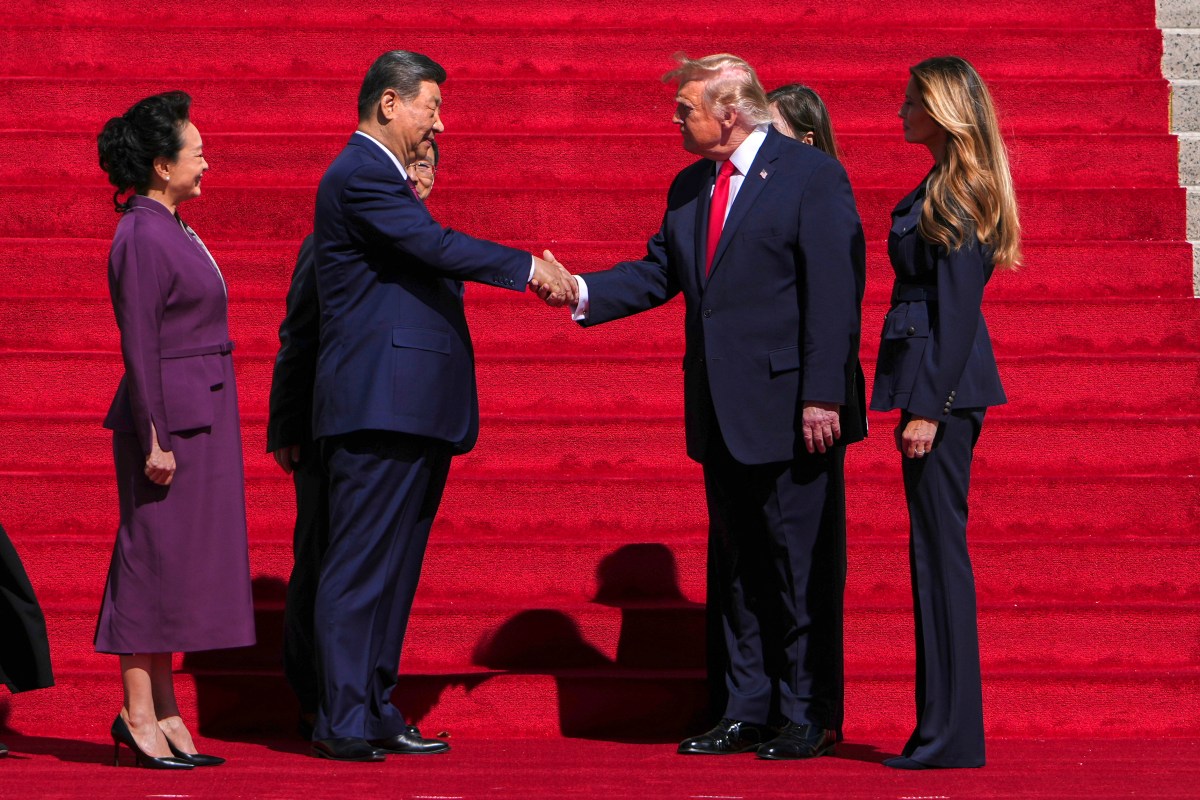
President Donald Trump asked Chinese President Xi Jinping to increase Beijing's production of certain types of petroleum products as the White House contends with high gas and diesel prices ahead of November's crucial midterm elections.
During the Chinese leader's first state visit to American soil in more than a decade, Trump "urged President Xi to increase production of refined petroleum products to stabilize global supply," according to a Friday White House readout.
Global energy markets have faced persistent turmoil following the outbreak of the Iran war, which began with U.S. and Israeli strikes on Tehran in late February.
Iran's continued control over the vital Strait of Hormuz, an international waterway, has choked off a corridor through which roughly a fifth of the world's oil and gas supplies previously transited. Nearly seven months into the conflict, Washington and Tehran have failed to reach a peace agreement, with Trump reportedly rejecting an Iranian proposal to reopen the waterway within seven days.
House Foreign Affairs Committee chairman Brian Mast, a Florida Republican, said in an interview on Fox News earlier this week that if Trump "can secure that China will stop arming Iran, who is trying to destabilize this key oil route through the globe, then the president will have done something very important for affordability, especially in terms of global crude prices, which equal prices at the pump here in the United States."
Compounding the crisis, Russia, another major energy exporter, remains under Western sanctions that were imposed following its 2022 invasion of Ukraine. Ukrainian drone and missile strikes on Russian refineries this year have slashed Moscow's diesel production by nearly 30 percent and forced cuts to foreign exports.
As supply fears mounted in March, Beijing, a major producer of refined oil products, restricted its exports of gasoline and diesel to safeguard its domestic inventories.
By the end of 2025, China had amassed a stockpile of nearly 1.4 billion barrels of oil, according to the U.S. Energy Information Administration, which estimated that Beijing added an average of 1.1 million barrels of crude to its reserves daily last year.
Some experts say China's government could allow more of its gasoline, diesel and jet fuel to be exported to the global market, which could ease anxieties over supplies and soften price hikes, according to RBN Energy, an analytics company known for its energy markets consultancy.
Beijing relaxed its refined fuel exports in the summer, and its exports of refined oil products rose nearly 13 percent year-on-year as the Iran war continued, Reuters reported earlier this month, adding that China's jet fuel exports also hit record levels in August.
High diesel prices have hit many American households, farmers, truckers and construction businesses relying on the costly fuel particularly hard.
Average diesel prices stood at nearly $6.50 a gallon early on Saturday, according to data from the American Automobile Association (AAA). This is up from just under $3.70 a gallon a year ago.
Diesel prices peaked at just shy of $6.53 a gallon on Tuesday. Gasoline prices, while still surging, haven't risen as high as diesel costs and sat at almost $4.49 a gallon on Saturday morning. Six states are currently exceeding $5 a gallon. The U.S. national average cost of a gallon of regular gasoline rose by nearly 5 cents in a week, the AAA said on Thursday.
The start of fall usually ushers in lower gas prices, AAA said, but "lingering volatility in the Strait of Hormuz and the high cost of crude oil are driving up pump prices."
Prices are on course to set a new September record, the association added.
The spike in energy prices has created a political liability for the White House as vulnerable Republicans face voters in November.
Trump has downplayed the economic impact of the war, calling rising costs a "very inexpensive price to pay for what we’ve done" in Iran. However, several Republicans have proposed halting diesel exports and suspending gas taxes, and Trump has weighed a 90-day export ban ahead of the midterms, Politico reported.
An unnamed White House official told the outlet, however, that it was “another fake news story from Politico.”
Iowa Republican Senate nominee Ashley Hinson, who is in a tight race for a crucial seat and is endorsed by Trump, has called for an immediate end to the Iran war, saying Iowans should not have to pay for it “at the pump or the checkout line.”
Michigan Senate candidate Mike Rogers, who is locked in a close battle for a Senate seat with Democrat Abdul El-Sayed, called for the war to end quickly and proposed temporarily halting U.S. diesel exports to help reduce domestic fuel prices while disruption linked to the conflict continued.
Ohio Senator Jon Husted, who is in a tight race with former Democratic Senator Sherrod Brown, called for the war to end as quickly as possible, linking his position to rising gasoline prices.
“The war needs to come to an end as quickly as possible so that we can lower gas prices,” Husted told Politico, adding that Iran needed to reach an agreement with Trump.
"Gas prices matter because they’re one of the few economic indicators voters experience and see in real time," Republican strategist Chris Wilson told the Associated Press. "The price is literally staring them in the face several times a week. So, I wouldn’t minimize the frustration we’re seeing, particularly among working- and middle-class voters.”
The White House's Friday readout said the U.S. and China had reached a "consensus on recommendations" on tariffs for roughly $30 billion in goods traded between the two countries.
China separately said it had agreed with the U.S. on a two-way tariff cut on $30 billion worth of goods, Xinhua, Beijing's official state news agency, reported.
This came just days after U.S. Treasury Secretary Scott Bessent said the U.S. and China had agreed to extend a trade truce originally agreed last year after a bitter tariff war between the world's two biggest economies by two months. The truce is now set to expire on January 10, 2027, Bessent said during an appearance on Fox News.
A new "Board of Investment" has been set up to talk about possible investment opportunities and roadblocks, the White House said.
The two countries also agreed to put together a new channel discussing "risks and benefits" of artificial intelligence, with the next "exchange" scheduled for November. Both nations will refer to AI as "super intelligence," the White House said.
The White House also said China had committed to importing at least 10 million metric tons of coal from the U.S. each year throughout 2027 and 2028.
Beijing and Washington "agreed that Iran can never have a nuclear weapon and that no country or institution can be allowed to impose tolls on international waterways," according to the White House, referencing the Strait of Hormuz.
Newsweek’s reporters and editors used Martyn, our AI assistant, to produce this story. Learn more about Martyn here.
Contact Newsweek editors for this story: Matthew Cannon and Anthony Murray.