Trump says he is AI's safeguard, rejects calls for tighter curbs

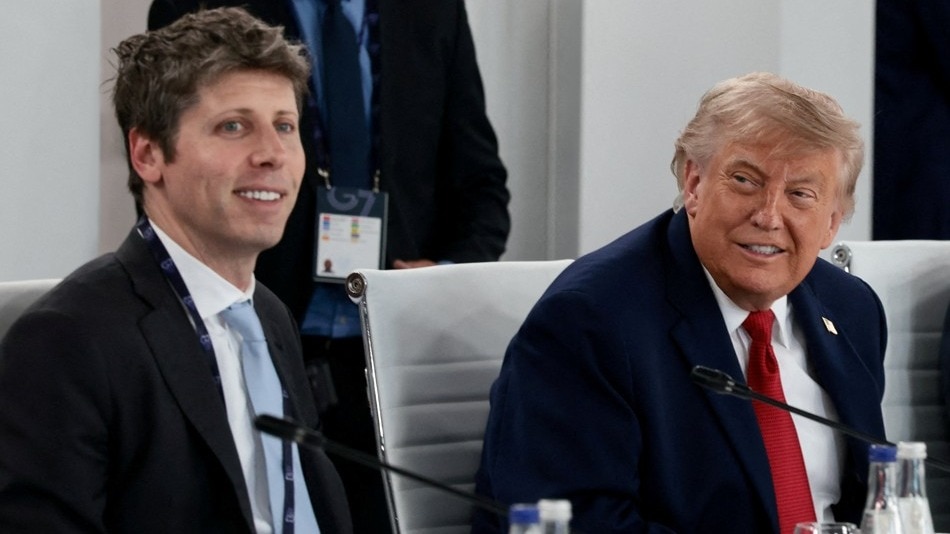
US President Donald Trump on Monday said he did not believe artificial intelligence needed tighter curbs, arguing that he himself was a sufficient safeguard and calling efforts to limit the technology part of a "SICK conspiracy". His remarks pushed back against calls from leading AI executives for greater government oversight as concerns grow over the technology's risks.
The comments came as companies and experts warned about AI safety after recent incidents, including a cyberattack involving OpenAI models, and as the issue gathered political weight ahead of the November mid-term elections. House Speaker Mike Johnson said Trump could meet AI companies at the White House this week or next, though no meeting has been scheduled yet.
In social media posts, Trump said, "The only control or guardrails that AI needs is a STRONG AND SMART (High IQ!) PRESIDENT, and the U.S.A. has that, in spades!" He also said the administration had already stopped Anthropic "from doing bad, or potentially bad" things. Anthropic has had a strained relationship with the administration, with the Pentagon trying to label it a security risk and the government temporarily banning one of its more advanced models. In another post, Trump asked, "when, in the History of Business, did anyone see the Leaders of an Industry call for Regulation that, if strongly implemented, will drive them into oblivion and bankruptcy?" He then added: "AI taking over the World, destroying Humanity, and all other things bad, is a HOAX."
Trump's remarks followed fresh warnings from AI leaders. Anthropic chief executive Dario Amodei published a 3,800-word essay on Saturday calling for slower AI development, while Microsoft on Monday released its own code of conduct to ensure humans remain in control of AI. Amodei cited "AI's growing ability to build the next generation of AI" and the July 2026 cyberattack by a swarm of OpenAI agents on Hugging Face. "Given the accelerating rate of AI capability development, it's my worry that in 6-12 months such a swarm could be capable of taking over the entire internet," Amodei wrote, adding that the damage could run into hundreds of billions of dollars or more "without the necessary guardrails." OpenAI chief executive Sam Altman backed that view, saying, "Pacing will be well worth this cost; no amount of American competitive pressure should justify recklessness, or let capabilities get ahead of alignment and monitoring," and adding, "Where we will need the help of our government is for international coordination."
Trump also found support from Nvidia chief executive Jensen Huang, who has said AI risks are being overstated. Trump phoned Huang on Monday during a podcast interview, and Huang put the president on speaker. According to social media posts and videos, the two agreed there was excessive alarmism around AI.
The president has argued that stricter regulation would hand an advantage to China. "There is a SICK conspiracy going on against AI and Data Centers, and the only one that is happy about it is China," Trump said. He has long resisted stronger federal oversight of AI and, after returning to the White House last year, revoked a Biden administration executive order on AI oversight before issuing a fuller order of his own more than 16 months later, in June. Concerns over slower AI expansion weighed on stocks on Monday morning, as demand for advanced chips and construction materials for data centres could weaken. At the same time, AI has become a political liability, with many voters opposing more data centres and worrying about job losses and the effect on children's education.
Johnson told reporters there would be "a deliberate discussion about the responsibility of the companies to maintain safety, and what role, if any, the government has to play in that". He added that legislatures can sometimes respond with "red tape and hyper regulation" and said any loss of competitive edge in AI would raise national security concerns. Trump, in another social media post, said worries about AI existed only because "the United States is leading, by a lot, every other country. Don't kill the Golden Goose!" Democratic leader Rahm Emanuel criticised the president on Saturday, saying Amodei's essay was "an admission that we're driving down a dark, winding road on wet pavement with the headlights off. And where's President Trump? Looks like he nodded off again. It's time to turn the lights on, put both hands on the wheel, and regain control before it's too late."
Vice President J D Vance said on Monday, "I don't think Americans should be scared of anything," while adding that the administration wanted to regulate AI smartly because the US was in an AI arms race with China. He also said, "Personally, I feel a little bit weird about the fact that you have so many frontier AI tech companies kind of coming to the government and begging the government to regulate them. It feels a little bit to me like a bit of a Trojan horse. So, I think we just have to be careful about this." The exchanges underscored the widening divide between Trump and several top AI executives over whether the fast-moving technology needs stronger safeguards.