Trump Shares Tom Cotton’s Cell Number as Daylight Saving Time Fight Escalates - Newsweek
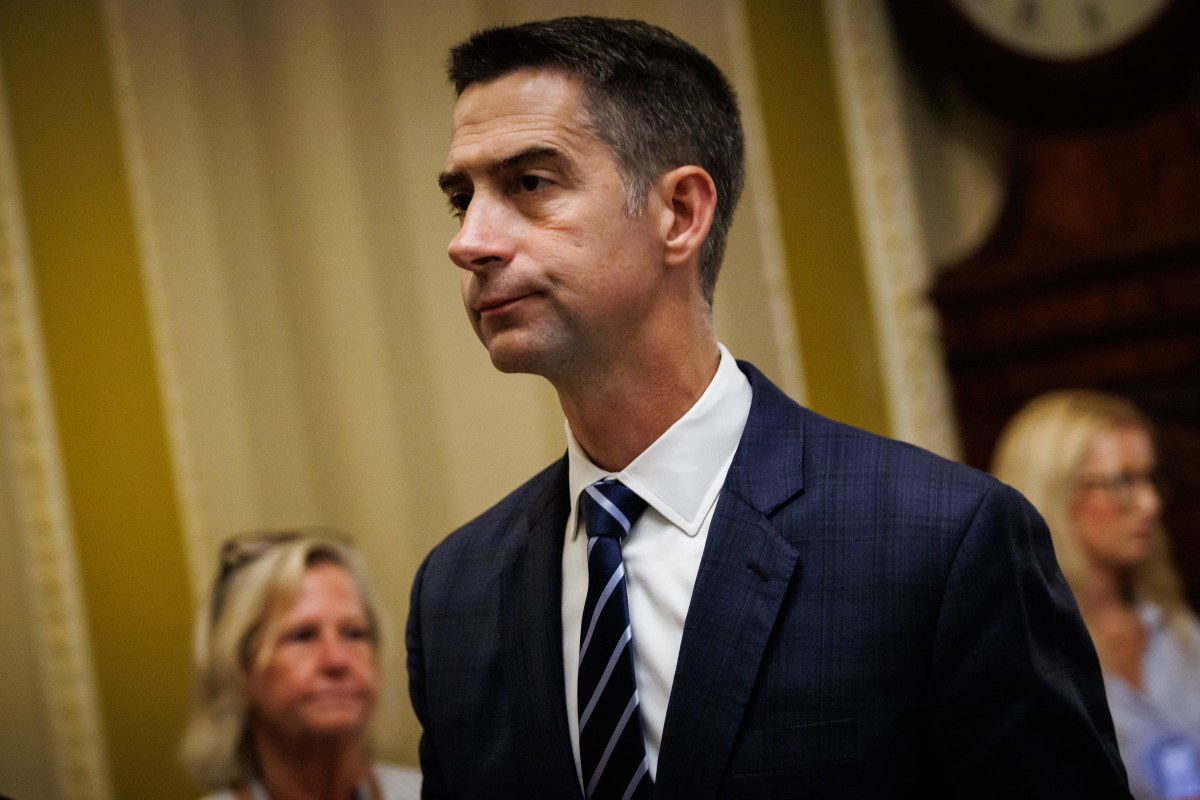
President Donald Trump shared Senator Tom Cotton's cellphone number in a Truth Social post on Saturday morning as part of a campaign to pressure lawmakers into backing legislation that would make daylight saving time (DST) permanent.
The move came after Trump previously criticized the Arkansas Republican for helping stall the Sunshine Protection Act, a bipartisan bill that would end the twice-yearly clock changes and keep the nation on DST year-round.
In his Truth Social post, Trump, who called Cotton "a friend," urged supporters to contact the senator directly.
"For some reason, Tom is stopping the Bill and, in the Senate, it’s very easy to do, it only takes one! It should pass overwhelmingly, in a Bipartisan fashion...To the Great People of Arkansas, please let your Senator know it would be a GREAT Bipartisan WIN for the United States Senate, and for America, itself. Call Tom on his cellphone,” the president wrote.
In a follow up post, Trump added, "I don’t know about anyone else, but a table full of very distinguished people just told me that they HATE, immediately after a mandatory time change, going home at night – and it’s DARK. It’s depressing!"
"One of the gentleman stated that, 'I just hate going home in darkness.' It’s also, in Crime Ridden Blue States, a lot more dangerous to be walking home in the dark!" Trump continued.
When Newsweek called the number provided by Trump, the call immediately went to voicemail with a message saying, "Sorry the mailbox is full."
When reached by Newsweek via email Saturday, Cotton's office pointed to his statement posted on X, which read, "No one likes changing the clock, me included, but Congress has enacted permanent Daylight Savings Time multiple times before and repealed it each time once Americans experienced absurdly late sunrises in the winter. Arkansans don’t want their kids going to school in the pitch dark, and I’ll always put Arkansas first."
Meanwhile, Americans are set to turn their clocks back on Sunday, November 1, returning to standard time. With the Senate in recess until after the midterm elections, the legislation faces significant procedural and political obstacles despite passing the House with bipartisan support in a 308-117 vote in July.
The president has argued that ending the clock changes would benefit public health, reduce crime and traffic accidents, and boost economic activity.
“Nobody wants to spend their precious time running all over the place, turning Clocks back twice a year and, having sunshine in the afternoon is better than early in the morning!” Trump wrote Saturday. “The PGA TOUR, as an example, needs more Daylight in the afternoon in order to finish their Tournaments. Likewise, regular Golfers, Tennis Players, Hunters and, perhaps most importantly, Farmers who want more Daylight to play or work.”
Among the first to share public opposition to permanent DST were sleep medicine experts.
In July, the American Academy of Sleep Medicine praised the introduction of a competing bill that would also end twice yearly clock changes, but would instead establish permanent standard time nationwide.
AASM spokesperson Karin Johnson previously told Newsweek permanent DST would leave clocks "out of sync with our biology year-round" by shifting light later into the day and reducing exposure to morning sunlight, which helps regulate sleep and alertness.
Meanwhile, the dispute highlights a growing split among Republicans over a proposal that polls suggest is broadly popular with voters. According to a YouGov survey conducted in February, 64 percent of Americans said they would like to eliminate changing clocks twice a year, while just 16 percent opposed ending the practice. While Trump has made permanent DST a priority and rebranded the proposal as the "No More Changing of Clocks Act," Cotton, chairman of the Senate Intelligence Committee, remains one of its most prominent opponents.
The senator has repeatedly argued that permanent DST would create dangerously dark winter mornings.
During a Senate floor speech last year, he warned that children would be heading to school before sunrise and that commuters, farmers and construction workers would begin their days in darkness. In some parts of Arkansas, he said, winter sunrises could occur after 8 a.m. if the policy were adopted.
South Dakota Republican Senator Mike Rounds argued the proposal would be especially problematic in northern states where some communities would not see sunrise until after 9:30 a.m. during the winter.
"We'd have kids going to school in the dark until 9 o'clock, 9:30 in the morning," Rounds said.
Other Republicans who voted against advancing the bill in the Senate Commerce Committee last year included Ted Budd of North Carolina, Deb Fischer of Nebraska, Jerry Moran of Kansas, Tim Sheehy of Montana, Dan Sullivan of Alaska, Roger Wicker of Mississippi and Todd Young of Indiana. Democratic opponents included Lisa Blunt Rochester of Delaware, Tammy Duckworth of Illinois, Amy Klobuchar of Minnesota, Gary Peters of Michigan and Jacky Rosen of Nevada.
The push to eliminate twice-yearly clock changes has revived a debate that dates back more than a century.
According to the U.S. Department of Transportation and congressional records, lawmakers have repeatedly experimented with permanent DST, only to face backlash over darker winter mornings.
1918: Congress Creates DSTDST was first adopted nationwide during World War I as part of an effort to conserve fuel and energy. The measure proved unpopular in some parts of the country and was repealed after the war.
1942-1945: Wartime DST ReturnsDuring World War II, the federal government again required year-round DST, known as "War Time," to support the war effort.
1966: Uniform Time Act Establishes National RulesCongress passed the Uniform Time Act, creating a standardized schedule for DST across most of the country while allowing states to opt out.
1974: Year-Round DST Experiment Ends EarlyAccording to congressional records, the U.S. briefly adopted permanent DST during the energy crisis. However, the policy became unpopular after reports of children commuting to school before sunrise and concerns about safety during dark winter mornings. Congress reversed the change less than a year later.
2007: Current DST Schedule BeginsThe Energy Policy Act extended DST by several weeks. Under the current system, clocks move forward in March and back in November.
2022: Senate Approves Sunshine Protection ActThe Senate unanimously passed legislation that would have made DST permanent, but the measure stalled in the House and did not become law.
July 2026: House Passes Permanent DST BillThe House approved the Sunshine Protection Act in a bipartisan 308-117 vote, sending the measure to the Senate for consideration.
November 1, 2026: Next Clock Change ScheduledUnder current law, Americans are still expected to set their clocks back one hour on Nov. 1 unless Congress acts before then.
While the bill remains before the Senate's Committee on Commerce, Science and Transportation, no floor vote has been scheduled. Senate Majority Leader John Thune, a South Dakota Republican, has previously questioned whether the measure can attract the 60 votes necessary to advance.
"I just don't think we want a mandate," Thune said over the summer.
Newsweek’s reporters and editors used Martyn, our AI assistant, to produce this story. Learn more about Martyn here. Contact Newsweek editors for this story: Steve Mollman and Anthony Murray.