Trump to personally receive Xi at Andrews base in rare diplomatic gesture
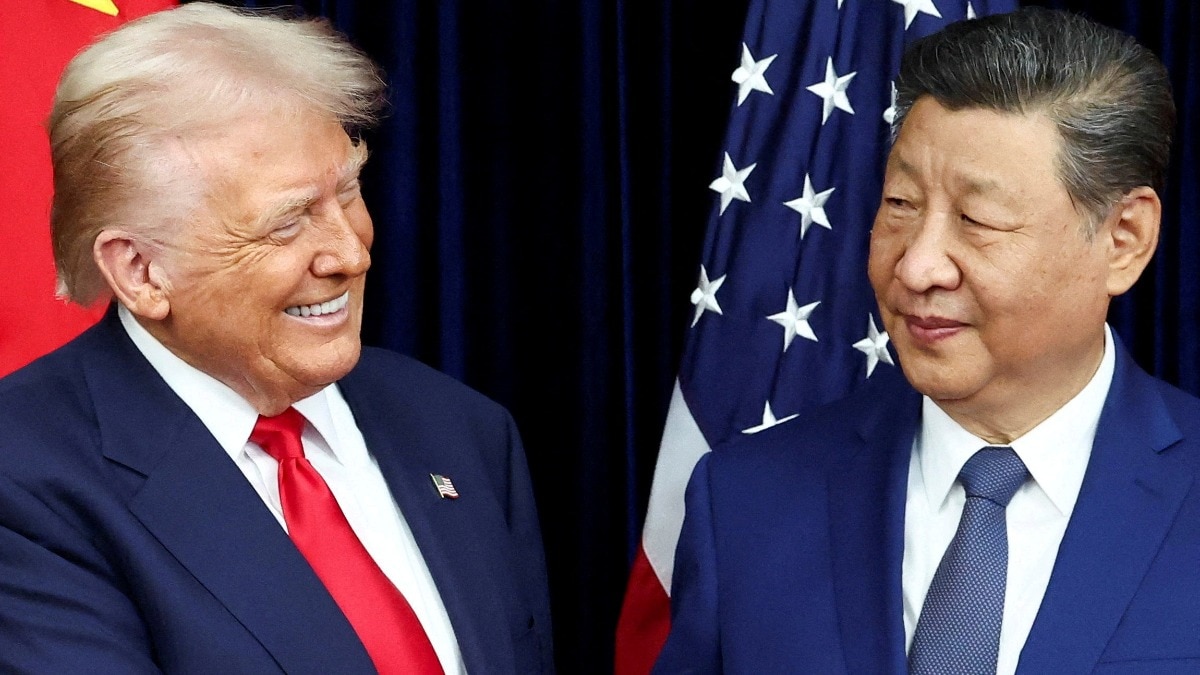
US President Donald Trump is planning to personally greet Chinese President Xi Jinping at Andrews Air Force Base when the Chinese leader arrives in Washington next Wednesday, in a rare diplomatic gesture to set the tone for a high-stakes summit between the world's two biggest economies.
According to POLITICO, it would be the first time Trump has greeted a foreign leader at Andrews during his second term. The move is being viewed inside the administration as part of an effort to woo Xi while seeking concessions from Beijing on trade, Iran and other contentious issues.
"It's all about respect and being seen as an equal to the president or to whatever leader they're meeting with," the official told POLITICO. "Xi really wants to be seen as an equal to the president, and so it will be a big deal for the Chinese."WHY TRUMP RECEIVING XI IS NOTABLE
The significance of Trump's planned reception is not that Andrews base has never been used for foreign leaders, but that Trump himself is reportedly planning to go there to greet Xi.
That would be a deliberate diplomatic gesture before the two presidents begin their formal engagements in Washington. It is particularly notable because Trump is also hosting Xi for a state dinner. Reuters reported that the dinner will be only Trump's second state dinner since returning to office, after the one held for Britain's King Charles and Queen Camilla. State dinners are considered among the highest diplomatic honours a US President can extend to a foreign leader.
The planned welcome comes after months of tensions between Washington and Beijing, with trade, Taiwan, technology and the Middle East repeatedly pulling the two sides in opposite directions.
In February, Xi raised Taiwan directly with Trump during a phone call, urging Washington to handle arms sales to the island cautiously. Taiwan President Lai Ching-te subsequently said US-Taiwan relations remained "rock-solid" and that existing cooperation would continue. The Trump administration had announced an 11.1 billion dollars arms package for Taiwan in December, the largest US weapons package for the island at the time.
Trade tensions then intensified. In March, the Trump administration launched a new investigation into what it called unfair trade practices and excess industrial capacity, with China among 16 economies targeted. Beijing rejected Washington's overcapacity argument as a "false proposition" and accused the US of manipulation.
The relationship was further complicated by the war involving Iran. After the US and Israel launched attacks on Iran on February 28, Tehran effectively shut the Strait of Hormuz. Trump later said Xi agreed that Iran should reopen the strait, although Beijing gave no indication that it would pressure Tehran to do so. China instead said the conflict "should never have happened" and had no reason to continue.
Trump and Xi subsequently met in Beijing in May, with Iran and Taiwan featuring prominently alongside trade. Trump later said Xi had repeatedly raised Taiwan, including questions about US arms sales and whether Washington would defend the island. Trump also said he was holding up a further 14 billion dollar US arms package for Taiwan and called it a "very good negotiating chip".
Since then, Washington and Beijing have tried to keep their dialogue alive even as disputes over tariffs, technology and strategic security have continued.
Now, AI has added another major fault line. Washington and Beijing are competing for an edge in advanced AI, while the US continues to restrict China's access to sophisticated semiconductors and chipmaking technology. Washington has also accused Chinese companies of using "distillation" to copy capabilities from US AI models, allegations Beijing has rejected.
The US President also rejected calls for a slowdown in AI development, vowing to keep the US ahead of China.TRADE AND IRAN ADD TO THE AGENDA
Trade will be another major test for Trump and Xi. Washington and Beijing have sought to stabilise economic ties while continuing to disagree over tariffs, market access and restrictions on strategic technology.
China has also stepped up purchases of US soybeans ahead of Xi's visit. Reuters reported that Chinese buyers purchased about 1 million metric tons of US soybeans earlier this month, taking purchases closer to a commitment Beijing made to buy 25 million tons annually through 2028.
Against that backdrop, Trump's decision to give Xi a high-level welcome at Andrews carries significance beyond ceremony. With Taiwan, tariffs, AI, Iran and technology all competing for attention, the September 24 meeting will test whether diplomacy can produce concrete agreements.- EndsPublished By: Satyam SinghPublished On: Sep 17, 2026 19:34 IST