Trump vowed to identify more of the donors to his ballroom project. That hasn’t happened yet.
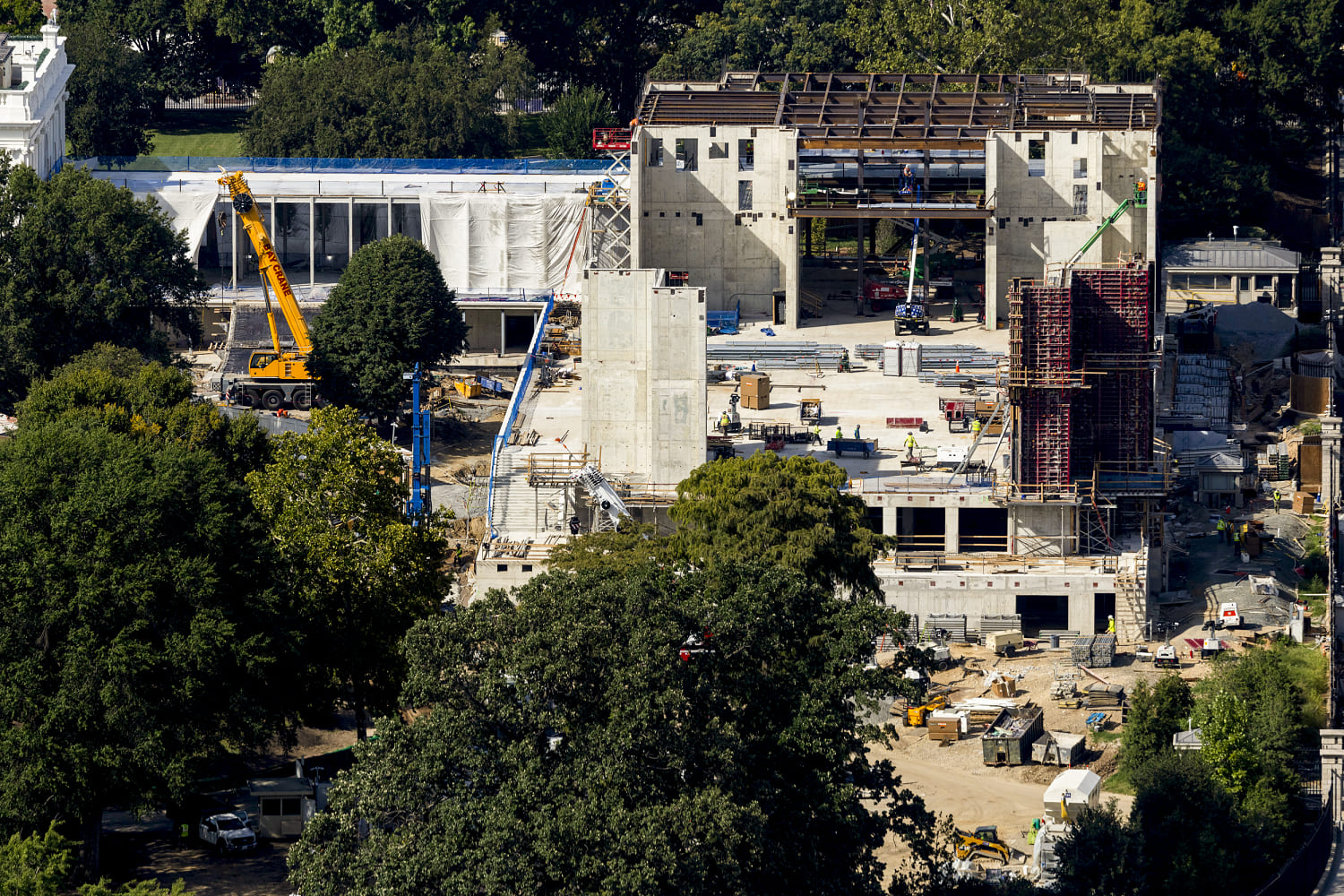
Work continues on the White House ballroom on Tuesday.Finn Gomez / Getty ImagesShareAdd NBC News to GoogleSept. 14, 2026, 5:42 PM EDT / Updated Sept. 14, 2026, 5:54 PM EDTBy Monica AlbaWASHINGTON — President Donald Trump has repeatedly promised to share the names of the private donors funding his massive ballroom. But nearly a year after he tore down the White House’s East Wing to make room for the roughly $400 million project, only a partial list of contributors has been made public.
“I’ll give you names,” Trump said in the Oval Office just last month. “In fact, I wanted to put them out today, but we got a little busy.”
The White House released in October an initial list of 37 donors whom Trump feted at an East Room dinner event to “Establish the Magnificent White House Ballroom,” an official said at the time. The list included corporations, individuals and family foundations. Among them were Comcast Corp., NBCUniversal’s parent company; Apple, Amazon, Microsoft, Google, Meta, Lockheed Martin and Coinbase.
Add to GoogleJustices give Trump major legal victory on ballroom project03:56The White House did not disclose how much each company donated or whether they made additional donations after the initial 2025 dinner. Since then, no additional donors have been made public by the Trump administration, though a few have acknowledged donations on their own, including Nvidia and Vantive Healthcare.
Democrats in Congress and government transparency groups have raised concerns about potential conflicts of interest and federal favoritism toward anonymous donors.
Trump initially estimated that the ballroom would cost $200 million, paid for entirely by donors, including himself, though it is not clear if he has contributed to the project. Since then, the price tag has risen to at least $400 million, according to the administration’s latest estimate, with additional taxpayer funding going to security improvements for the White House writ large, which could include the ballroom site.
The White House declined to comment for this story.
The donations are funneled through the Trust for the National Mall, a tax-exempt nonprofit organization which did not respond to a request for comment. Individual and corporate donors can typically deduct the amount they contributed from their federal income taxes. A person raising money for the ballroom told NBC News last year that they were asking for donations of $2.5 million to $5 million and that the deduction is one reason people choose to give.
Last month, congressional Democrats pushed for more information about the donors, saying the public has a right to know if entities are making donations to a project Trump has personally prioritized in order to seek benefits from his administration, an indication they will likely probe the project if they win back the House in November’s midterm elections. The House Natural Resources Committee and the Oversight and Investigations Subcommittee have requested more information from the National Park Service and Trust for the National Mall.
“The Trust may have been used as a vehicle for billionaires and corporations to curry political favor with the Trump administration in a potential violation of federal law,” the lawmakers wrote.
Democratic senators, including Sen. Richard Blumenthal, have also pressed the donors directly for more details, as groups like Public Citizen, a progressive consumer rights advocacy group, have raised questions about possible conflicts of interest.
Over half of the publicly identified corporate ballroom donors, 14 out of 27, have received new or bigger government contracts since October, totaling over $50 billion, according to Public Citizen’s analysis. The group also found that 16 of the 27 donors are either currently facing federal enforcement actions or have had them suspended by the Trump administration.
The president has insisted the ballroom and military complex are essential for national security, a case the Trump administration made to several lower courts before going to the Supreme Court to justify its ongoing construction. In late August, the justices ruled 5-4 to allow it to move forward.
Chief Justice John Roberts joined the court’s three liberals in dissent, writing that the plans are “likely unlawful.”
Trump has insisted that no taxpayer money is being used for the ballroom, but at least $300 million of Secret Service funds were redirected to the White House for security enhancements to the overall complex, according to Office of Management and Budget documents, which could apply to the ballroom as well. Republicans in May suggested using $1 billion in taxpayer dollars to secure the ballroom project, but that funding did not get off the ground.
Trump has continued to make a security case for the ballroom, particularly after a gunman attempted to gain access to the White House Correspondents’ Dinner earlier this year. Such events could take place in a much more secure ballroom on the White House campus in the future, he’s suggested, though the event is independent and hosted by an outside nonprofit of journalists.
“The people that are opposing the ballroom are people that, in my opinion, are very disloyal to our country, very, very disloyal to our country,” Trump told reporters last month.
The Trump administration says the project is about 65% complete, with 250 crew members working 20 hours a day to get it done. It’s expected to be completed by the summer of 2028.
“It’s a gift from great patriots of this country,” Trump said in August.
Monica AlbaMonica Alba is a White House correspondent for NBC News.