Trump's import ban on Canadian alcohol and dairy takes effect - Toronto Star
Donald Trump's U.S. import ban on Canadian beer, wine, spirits, whey and motorcycles starts midnight. Here is how exporters are reacting.
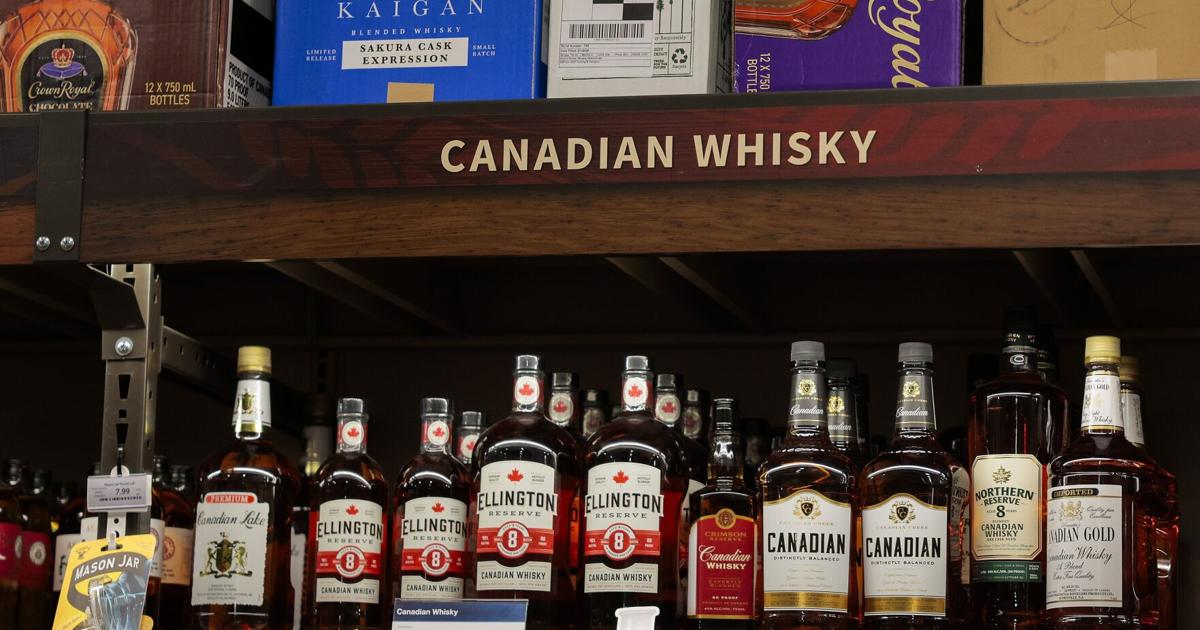
Donald Trump’s ban on the import on all Canadian beer, wine and spirits begins Tuesday and follows on the heels of 50 per cent import tariffs extended to a wider variety of Canadian products Sept. 15.
A U.S. import ban on Canadian alcohol, motorcycles and dairy products kicked in Tuesday morning, the latest salvo in Donald Trump’s trade war.
The ban started at 12:01 a.m. Tuesday, and applies to beer, wine, spirits, and a variety of whey-based products.
While the ban covers less than half a per cent of Canadian exports to the U.S., it’s still a dangerous precedent, trade lawyers and Canadian business groups said.
“The point of this was to say ‘we have a number of tools and we’re willing to use them’,” said Andrew Di Capua, chief economist at the Canadian Chamber of Commerce.
Veteran international trade lawyer John Boscariol said that booze and whey bans could be the thin end of the wedge.
“The fact the U.S. is now saying to a major trade partner ‘we’re actually going to ban your product,’ it’s a huge symbolic step,” said Boscariol, head of the international trade group at McCarthy Tetrault. “It could set the precedent for other bans.”
There has been no public indication of serious last minute negotiations ahead of the ban, Boscariol added.
“There haven’t been any signals on either side we’re going to avert this,” said Boscariol.
The U.S. is also showing that it’s willing to ignore protections once given under the Canada-U.S.-Mexico agreement on trade, said Barry Appleton, a veteran international trade lawyer.
“The importance is the precedent. For the first time, Washington has told Canadian producers that no rate of duty will get them in. And CUSMA origin buys nothing here,” Appleton said. “The bans apply whether or not a good qualifies under the trade agreement.”
Appleton, co-director of the Center for International Law at New York Law School, and a fellow at the University of Waterloo’s Balsillie School of International Affairs added, “for these particular goods, the existing trade agreement has no real meaning. And that’s a big change.”
A spokesperson for Dominic LeBlanc, minister responsible for Canada-U.S. trade, said the government is trying to keep focused on diversifying Canadian exports to become less dependent upon the U.S.
“We take note of the coming into force of the Administration’s previously announced trade measures,” Leblanc spokesperson Gabriel Brunet said. “As has been the case for the last 18 months, our first priority remains on protecting and supporting Canadian workers, farmers, families, and businesses from these unjustified actions. Our core focus is on what we can control: building strength at home, diversifying our partnerships abroad, and building Canada strong for all Canadians.”
The import ban follows on the heels of 50 per cent import tariffs being extended to a wider range of Canadian products on Sept. 15.
“Obviously this is very concerning for the Canadian spirits industry,” said Cal Bricker, CEO of Spirits Canada. “We urge both sides to return to the table as soon as possible to resolve the dispute so we can return to free trade in spirits in North America.”
Roughly half of the $2 billion worth of spirits produced in Canada each year go to the U.S., according to Spirits Canada estimates.
In a presidential proclamation earlier this month, Trump cited what he called a Canadian import ban on American products as justification for his move.
The proclamation was titled “Excluding certain Canadian products from importation into the United States in response to continued discrimination against the commerce of the United States with respect to alcoholic beverages.”
For small Canadian wineries, the effect of the ban will be negligible, said Kris Barnier, CEO of Ontario Craft Wineries.
“Even the biggest guys, maybe one per cent of their product goes directly into the U.S.,” said Barnier, who nonetheless said some of his members are concerned about the potential impact on wine-country tourism.
“They’re wondering what happens to tourists who want to bring something back,” Barnier said. “As far as we can tell, small quantities for personal use or gifts aren’t going to be affected, because they’re more concerned about commercial scale. But it could depend on the person you’re dealing with at customs.”
For small craft breweries, exporting to the U.S. really isn’t a significant part of their business.
The biggest Canadian brands, like Molson Canadian or Labatt Blue Light, are brewed in the U.S. for the American market. For Canada’s largest independent brewery, Moosehead, however, the ban has meant a rush to beat the deadline, said CEO Andrew Oland.
“We’re just trying to preserve our access to the market,” Oland said. “If we’d stopped shipping, we’d lose out altogether.”
Moosehead makes virtually all of its beer in Saint John, N.B., and Oland estimates that roughly 15 per cent of its overall volume heads south of the border.
While the Canadian dairy industry has long been a target of U.S. trade ire, the import ban applies to product made with whey, a by-product of the cheese-making process. Whey is a key ingredient used in many bodybuilding dietary supplements.
For dairy farmers themselves, the impact won’t be quite as direct, a spokesperson for Dairy Farmers of Canada said in an emailed statement.
“Canadian dairy farmers are primarily focused on producing milk for Canadians. We’re disappointed to see certain dairy exports targeted,” the spokesperson said. “The reality is that tariffs and bans will have impacts in both countries, disrupting supply chains and may make things harder for food manufacturers.”
Breaking news, interactive polls, video, and voice notes. Star stories you’ll want to share, delivered where you’re already chatting. Follow the Star on WhatsApp.
In 2025, Canada exported roughly $95 million worth of whey to the U.S., with the biggest share coming from Saskatchewan, according to data from Statistics Canada.
Just over 5,000 motorcycles were exported from Canada to the U.S. in 2025.
Josh Rubin is a Toronto-based business reporter. Follow him on Twitter: @starbeer.