Two squirrel statues went missing from a Toronto park. Now everyone’s a suspect - Toronto Star
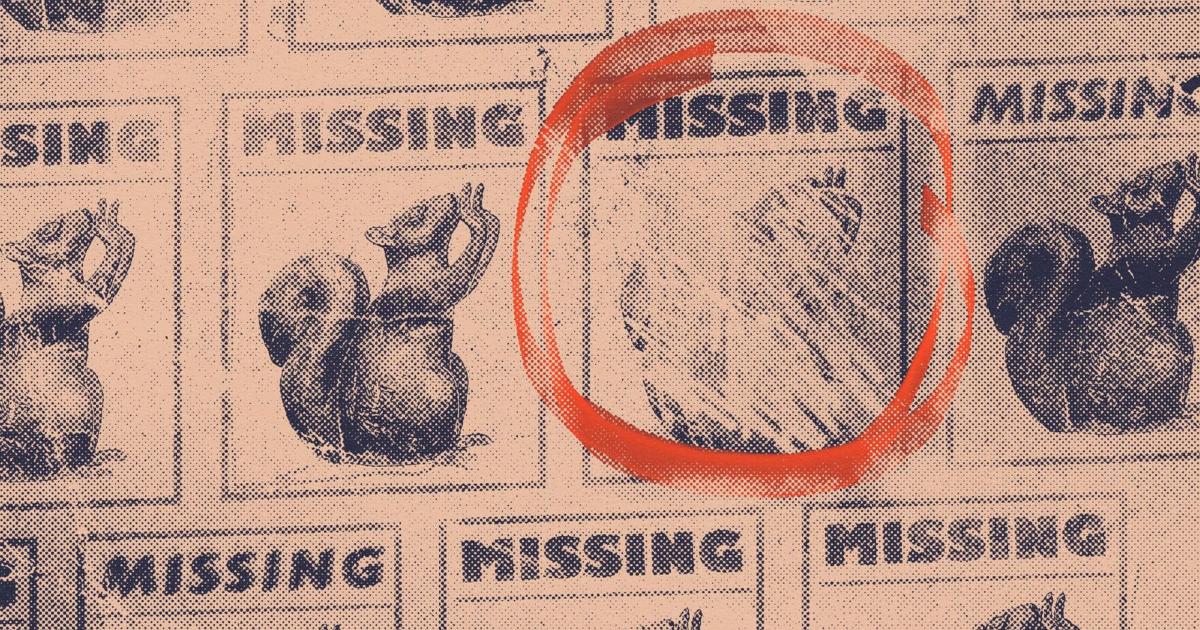
Who would steal a squirrel? The Star investigated the case of the missing squirrels.
Two squirrel sculptures disappeared from a Toronto park over the summer. No one knows who took one of them.
It must have been violent. A reciprocating saw perhaps, or angle grinder, chewing away at the stainless steel rods and industrial-strength epoxy. It must have been loud, and it must have been intentional.
The sculpture of four bronze squirrels worshipping an oversized acorn at Joel Weeks Park, near Queen Street East and Broadview Avenue, has delighted locals since it was installed 12 years ago. But one day this summer, one of the squirrels disappeared. Some time later, so did another.
Who would steal a bronze squirrel? The Star investigated, but the search yielded more questions than answers.
Could it have been the group a neighbour saw, dressed as squirrels, lighting candles underneath the acorn late one night? How did someone cut through such strong material without being noticed? And could the same person who stole a squirrel once before be responsible again?
When a squirrel goes missing, everyone’s a suspect.
It turns out one of the squirrels, no bigger than their flesh and blood counterparts that wander the park, is safe. Emily Ricketts, a public art conservator with the city, first learned one was missing in late August. When she inspected the site, she noticed that a second was loose and worried it might soon be stolen, too. So she removed it for safekeeping.
She is hesitant to share specifics on how. “I couldn’t just lift it up myself,” she said cryptically on a recent visit to the park. “It needed more than just my hands.”
Emily Ricketts, a public art conservator with the city, said someone stealing a squirrel is “kind of, like, a compliment, almost, in a way, to a work that’s so beloved.”
Mary Anne Barkhouse, the Haliburton Highlands-based artist behind the sculpture, is willing to share more.
The squirrels were designed to “withstand seismic activity,” she said over the phone, attached by stainless steel rods to the granite base and glued on with an “incredibly strong space-age adhesive.” Removing one would not have been easy — especially after the squirrels were reinforced when one went missing in 2019. (The missing squirrel was found nearby and reinstalled.)
The call dropped. Barkhouse called back a few minutes later. “I guess someone decided,” she laughed, “that I had said enough.”
But why steal a squirrel in the first place?
“You’re asking me to be Squirrel CSI,” Barkhouse said. “That’ll be the new ‘Law & Order Toronto.’ The case of the missing squirrels.”
Brandon Vickerd has his own suspicions. He is the dean of York University’s school of the arts, media, performance and design and responsible for Toronto’s other squirrel statue: a six-foot-tall, 3,000-pound white squirrel outside CAMH. That may make him Toronto’s preeminent urban squirrel sculpture expert.
“I guess I’m honoured by that statement,” he said. “Sure.”
The squirrels were attached to the granite base with industrial-strength epoxy and two stainless steel rods.
Art such as this is stolen for one of three reasons, Vickerd explained. The thief may have hoped to resell the squirrel to a dealer — although no reputable dealer would accept such obviously stolen work. And while there are plenty of bronze statues available locally on Facebook Marketplace, including a bust of the esteemed Polish composer Frédéric Chopin, Barkhouse’s squirrel is not one of them.
Alternatively, the plan may have been to melt down the sculpture at a scrap yard. Both Barkhouse and Vickerd found this less likely. “No scrap yard in their right mind,” Vickerd said, “is going to accept a bronze sculpture that has clearly been damaged or ripped off.”
To Vickerd, that leaves only one likely suspect: A “squirrel aficionado,” someone who has an existing collection of squirrel-based artwork and couldn’t help but add to it.
Hearing Vickerd speak, reality set in. He is a squirrel aficionado. He has an interest in squirrel-based artwork. Did he steal Barkhouse’s sculpture?
“Certainly not,” he said. “Squirrels as a motif belong to everybody … I have no interest in removing such an interesting work from the public discourse.”