U.S. military leaders divided over action against the Houthis
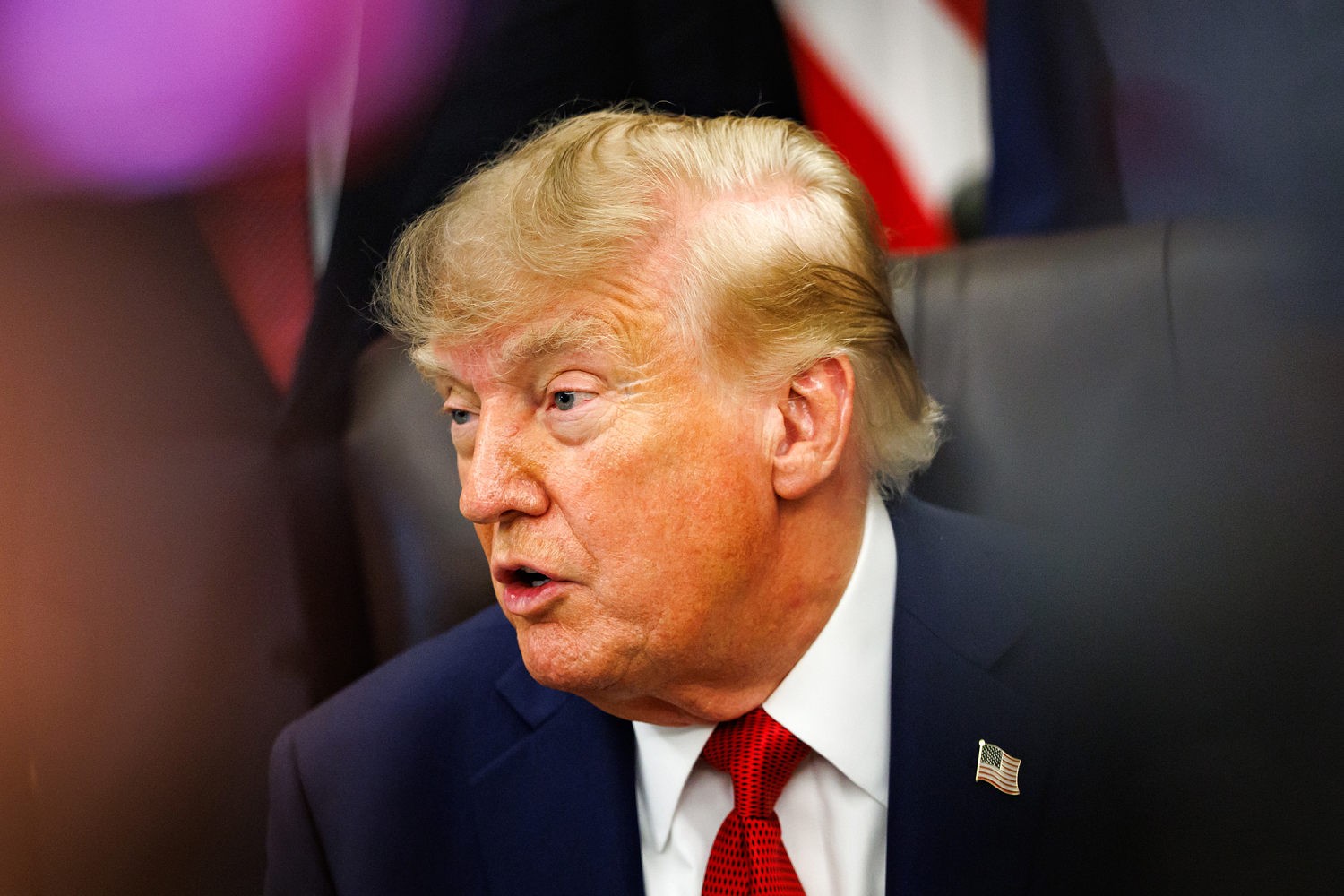
President Donald Trump speaks in the Oval Office of the White House last week.Samuel Corum / Bloomberg via Getty ImagesShareAdd NBC News to GoogleSept. 21, 2026, 6:35 PM EDTBy Courtney Kube and Mosheh GainsWASHINGTON — U.S. military leaders are divided on whether President Donald Trump should get involved with the conflict between Saudi Arabia and Iranian-backed Houthi rebels in Yemen, according to two U.S. officials.
The Saudis have been asking Trump for the U.S. military to take action against the Houthis, a request that grew more urgent in recent days as the rebels claimed they shot down a Saudi F-15 fighter jet and were quickly advancing on Marib province, which is home to Yemen’s largest oil and gas fields.
Some military leaders are making the case within the Pentagon and to Trump administration officials that opening another military front in the region is a bad idea amid concerns about the Pentagon’s dwindling supply of defensive and long-range weaponry, while noting that the Houthis are not striking U.S. ships, the U.S. officials said.
Yet other military leaders are arguing in favor of strikes, saying the U.S. should help Riyadh retaliate for Houthi strikes in Saudi Arabia and the claim of downing of the F-15 — a challenge to Saudi air superiority over Yemen, the officials said. They said these military leaders are privately expressing concern that for the U.S. not to act more forcefully is a betrayal of an important regional ally.
Trump had ordered strikes against the Houthis to begin around 5 p.m. Eastern Standard Time on Sunday, but the military was notified shortly after 2 p.m. on Sunday that the order was canceled, the two U.S. officials said. One of the officials said Trump has not taken military action off the table in the future.
One senior U.S. military leader in the region specifically warned that action against the Houthis could create unmitigated risk to U.S. troops in Middle East and the Iran war mission, including a U.S. naval blockade and security operations in the Strait of Hormuz, the two U.S. officials said. They said the military leader also made clear that U.S. forces could carry out the Iran mission and strikes against the Houthis and mitigate some of the risks, the officials said.
The internal divide underscores the bind the president is increasingly in as the U.S. remains locked in a war with Iran that he began but has struggled to end, and faces a shortage of key weaponry. The Saudis have been a critical U.S. ally in the Middle East, including throughout the war with Iran. Trump told Fox News over the weekend that he’s deciding whether to escalate the war with Iran, a position he has articulated on and off over the past few months.
The White House and a spokesperson for the Saudi Embassy in Washington, D.C., did not respond to a request for comment. The Pentagon declined to comment.
There has already been tension between the U.S. and its Middle East allies over the war. In May, Saudi Arabia was surprised by an announcement by Trump to help ships through the Strait of Hormuz and suspended the U.S. military’s ability to use its bases and airspace. Trump abruptly reversed his decision.
The U.S. has already been supporting the Saudis by sharing intelligence, helping with planning, sending military advisers forward with the Saudi forces and even providing some logistical support, NBC News has reported. But the Saudis have repeatedly asked the U.S. to do more, including help with strikes against the Houthis.
A satellite view shows the aftermath of the recent drone attack on the East-West pipeline in Saudi Arabia. The attack and the resulting fires, which occurred on Sept. 11, caused significant damage to the pumping station along the pipeline. VantorTrump had not shown interest in acting until Thursday, when Saudi Crown Prince Mohammed bin Salman told him in a phone call that the kingdom cannot succeed alone and after a series of developments — including the Houthis targeting Saudi infrastructure, downing the F-15 and threatening to take control of Yemen’s oil industry, according to one of the U.S. officials.
After the call, Trump ordered the military to provide him with fresh options for strikes against the Houthis, the official said. Chairman of the Joint Chiefs Dan Caine called a 6 p.m. emergency meeting in The Tank, the top-security conference room in the Pentagon, to discuss options, the official said, canceling a trip to Copenhagen to meet with NATO chiefs of defense.
U.S. military officials have presented Trump with options for degrading Houthi military capabilities and stopping the rebels’ recent advances several times since Thursday, the official said, adding that the Pentagon has enough assets in the region to be ready to act if ordered to do so.
Saudi Arabia has closed the East-West pipeline while Houthi fighters captured key locations at the Bab el Mandeb straitJavier Zarracina and Jiachuan Wu / NBC News / ISW; Natural EarthThe New York Times reported some details of Trump’s decision-making process.
Violence escalated over the weekend, as the Houthis said they’d used missiles and drones on Saturday to attack “sensitive” sites in Riyadh and an Aramco facility in the Red Sea city of Yanbu, a key oil export hub.
The spokesperson for the coalition forces issued a statement on Saturday saying Saudi Arabia had successfully intercepted and destroyed a ballistic missile launched toward Riyadh and that the Houthis “target civilians and civilian infrastructure in the capital.”
The militant group also made a rapid advance to control the Bab el Mandeb Strait on the Red Sea, yet another oil chokepoint. The advance has posed a major challenge for the Saudis, who rely on that shipping route particularly since the Strait of Hormuz has been largely shuttered during the Iran war.
The Houthis took control of Yemen in a bloody civil war in 2014 against a Saudi-backed coalition. A fragile truce between the Houthis and the Yemeni government backed by the U.N. was reached in 2022.
Trump announced a ceasefire with the Houthis last year after weeks of punishing strikes against the militant group. Under the deal, the U.S. suspended military action and the Houthis stopped attacking U.S. ships.
Trump recently has said his administration has had discussions with the Houthis but has not offered details. “The Houthis called us, and they don’t want to fight with us,” he said earlier this month. “They would much prefer not having us involved.”
Courtney KubeCourtney Kube is a correspondent covering national security and the military for the NBC News Investigative Unit.
I am NBC News’ producer & off-air reporter covering stories about and related to the Defense Department around the world.