Ukrainian couple sits on sea turtle's back to record reel, video sparks outrage
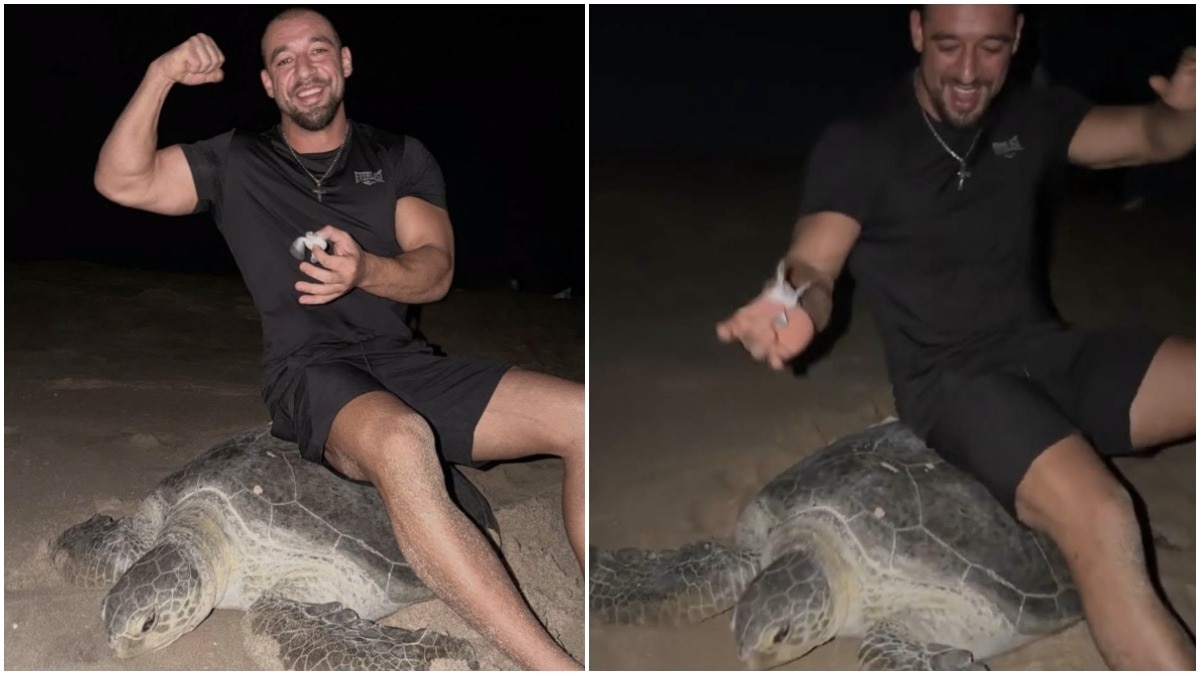
A Ukrainian couple holidaying in Oman faced strong criticism online after they shared a video which appeared to show them sitting and lying on the shell of a sea turtle, prompting a conservation group to call the behaviour unacceptable.
According to a report by LIGA.net, the footage was shared online by Ukrainian user Vadym Oleynik and later highlighted by the Italian conservation project Biologicamente.
In the now-deleted video shared by Oleynik, it showed the couple climbing onto the turtle and sitting on it as they posed for the camera, while the turtle remained on the shore.
Biologicamente criticised the interaction, stressing that sea turtles are wild animals and should not be touched, handled or used as props for photographs. The project also said the couple was accompanied by volunteers from an organisation that monitors sea turtle nesting sites in Oman.
The tourists believed they were not doing anything wrong because they were with the volunteers. However, Biologicamente questioned the conduct of the organisation, arguing that a professional conservation group should not allow tourists to sit on a wild turtle for photographs.
The controversy prompted Vadym to apologise in a series of Instagram Stories. Addressing Oman’s Environmental Protection Agency and an organisation involved in protecting green sea turtles, he acknowledged that he had failed to follow the rules concerning interactions with animals and admitted that he had made a mistake.
Biologicamente said it had contacted the relevant authorities and intended to seek an official investigation into the incident.
The clip also triggered a debate among users on Threads, with several people questioning why anyone would consider sitting on a sea turtle acceptable in the first place.
Others criticised the explanation that the couple had simply been unaware of the rules, arguing that the animal should not have been treated as a photo prop regardless.
The incident has once again raised questions about how tourists interact with wildlife, particularly when wild animals are approached for photographs or social media content.- Ends