Until she is safe on every street, none of us are free - IOL
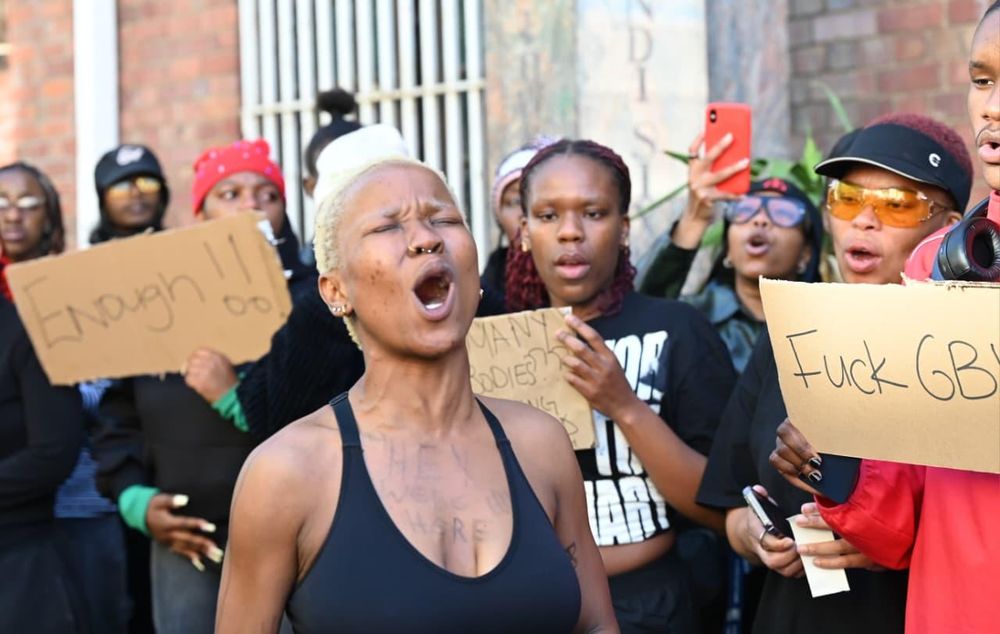
South Africans take to the streets in tribute to women killed in Ekurhuleni, with growing calls for action against GBV. South Africa has laws, institutions and strategies to combat gender-based violence and femicide. But prevention will remain out of reach unless threats are taken seriously, survivors receive protection and government is held accountable before violence becomes fatal.
South Africa knows that gender based violence and femicide constitute a national crisis. We know the numbers. We know the causes are complex. We have laws, policies, institutions, shelters, courts, police structures and community organisations.
Yet women continue to be raped, assaulted, abused and murdered.
The discovery of an eleventh woman’s body in Ekurhuleni has once again brought the reality of femicide into public view. Police are investigating the circumstances of the deaths and have not established that all the cases are connected. But whether these deaths ultimately prove to be connected or not, each woman represents a life lost and a family left to grieve.
A woman who has been murdered cannot be protected afterwards.
That is why the question cannot simply be how we investigate a murder once it has happened. We must also ask what could have been recognised earlier, what warning signs were missed, whether threats were reported, whether protection was provided, whether perpetrators were known and whether institutions acted before violence became fatal.
What must change before the next woman is killed?
That is the question at the heart of South Africa’s GBVF crisis.
Behind every number is a woman, a family and a community.
The women whose bodies have been discovered in Ekurhuleni are not simply another statistic. Their deaths remind us that femicide is not an abstract national problem. It is violence that reaches homes, relationships, streets and communities and ends with the irreversible loss of a human life.
The wider figures are equally confronting. Between April and June 2026, the verified police count recorded 569 women murdered and 1,052 women as victims of attempted murder. During the same quarter, 9,201 rape victims were recorded, of whom 8,814 were women and children.
These figures do not capture all violence that remains unreported. They do, however, make clear the scale and urgency of the crisis.
South Africa has formally recognised this seriousness. Gender based violence and femicide were classified as a national disaster in November 2025, placing the National Executive at the centre of the coordinated national response.
The National Council on Gender Based Violence and Femicide, established under the National Council on Gender Based Violence and Femicide Act of 2024, has now been constituted, with members appointed for a three year term beginning in August 2026. The Council is mandated to provide strategic leadership and coordinate a multi-sectoral and inter-sectoral response to GBVF.
The framework exists. The institutions exist. The policies exist.
The question is whether they are working early enough and effectively enough to prevent the next woman from becoming a victim.
A woman who reports a threat must not disappear into a system.
A protection order must mean protection.
A repeated threat must be treated as a warning, not simply another incident.
A survivor must be able to reach help before violence escalates.
And where an institution fails to act, that failure must have consequences.
The challenge is therefore no longer simply recognising the crisis. It is converting recognition into prevention, protection, justice and measurable results.
We have become accustomed to counting violence after it happens.
We count murders, rapes, assaults, arrests and court cases. These measures matter because they tell us the scale of the problem.
But they also tell us something else.
They tell us what happened after a woman was already harmed.
The harder task is to understand what happens before the crime.
How many women were threatened before they were attacked?
How many perpetrators had previously been reported?
How many protection orders were issued?
How many warning signs were known to families, neighbours, schools, workplaces or authorities?
How many opportunities existed to intervene before violence became fatal?
We cannot prevent every act of violence. But we can build a system that is far better at recognising danger and responding before the final act.
Prevention means identifying risk early, taking threats seriously, connecting survivors to appropriate services, following up and ensuring that institutions do what they are responsible for doing.
Femicide does not begin when a woman is killed.
The final act may be murder, but the pathway towards it can include control, intimidation, stalking, threats, assault, isolation, coercion and repeated abuse.
If we are serious about preventing femicide, we must become serious about interrupting that pathway.
Serious GBVF can occur within relationships and places that should provide safety.
That means prevention cannot begin only when a woman reaches a police station or hospital. It must also begin much earlier, in homes and families where children learn what relationships are supposed to look like.
Children learn by watching the adults around them.
They learn whether anger is expressed through violence or self control, whether rejection can be accepted without humiliation, whether strength means domination or responsibility, and whether women are treated with dignity.
This makes responsible fatherhood and positive male role models part of the prevention conversation.
The 2024 State of South Africa’s Fathers report, drawing on 2023 data, found that 35.6 percent of South African children lived in the same household as their biological father. That means 64.4 percent did not live in the same household as their biological father.
That figure must be understood carefully. Living in different households does not automatically mean that a father is absent from his child’s life. A father can live elsewhere and still remain involved, caring and responsible.
But it does highlight the importance of consistent adult presence and guidance in children’s lives.
Fatherhood is more than biology and more than sharing an address. It is a continuing responsibility. It means caring, listening, guiding, setting boundaries, showing affection, exercising self control and taking responsibility for the wellbeing of one’s children.
It also means treating the mother of one’s children with dignity, whether or not the parents remain together.
This matters particularly for boys.
They need to see men who demonstrate that strength does not mean domination, that rejection does not justify anger, that jealousy is not ownership and that violence is never an expression of manhood.
They need to see that a man can disagree without humiliation, exercise authority without abuse and accept responsibility when he is wrong.
These lessons belong in homes, schools, sports clubs, youth organisations, workplaces and faith communities.
This is not about blaming fathers or condemning men. It is about recognising that responsible fatherhood and positive male role models can contribute to the culture of respect and responsibility that prevention requires.
There is an important distinction between personal safety and shifting responsibility onto women.
Women should be able to take reasonable precautions if they choose. But a woman should never be expected to change how she dresses, where she works, when she travels, whether she exercises, whether she walks alone or whether she leaves an abusive relationship simply because men may choose to harm her.
A woman walking to work is not the problem.
A woman exercising is not the problem.
A woman travelling alone is not the problem.
A woman leaving an abusive relationship is not the problem.
The person who chooses violence is responsible for that choice.
Society must therefore be careful that safety advice does not become another way of restricting women’s freedom.
The objective is not to teach women how to live smaller lives.
It is to create a country in which women can live ordinary lives without having to organise those lives around fear.
The focus on violence against women and girls must remain central because women experience particular forms and patterns of GBVF, including intimate partner violence and femicide.
At the same time, men and boys can also be victims of violence and abuse, and children require particular protection.
Recognising this does not dilute the crisis facing women.
The central question remains: how do we prevent violence, protect those at risk and hold perpetrators accountable?
Men and boys must be part of that answer.
Men must be encouraged to speak about anger, rejection, relationships, fatherhood, alcohol, consent and emotional responsibility before these issues become crises.
Boys must learn that masculinity does not require control over women.
They must learn that jealousy is not love.
They must learn that rejection is painful but never a justification for violence.
They must learn that seeking help is not weakness.
And they must learn that responsibility is a form of strength.
The objective is not to create another conversation in which men are simply told what not to do.
It is to develop a culture in which responsible manhood is visible, respected and expected.
Communities cannot substitute themselves for the state.
Health services must treat survivors.
Municipalities must maintain infrastructure and safer public environments.
Government must coordinate these responsibilities and account publicly for performance.
The classification of GBVF as a national disaster and the establishment of the National Council provide institutional mechanisms for coordination and accountability.
But institutions cannot be judged simply by whether they exist.
They must demonstrate that they perform their responsibilities.
The existence of a protection order means little if it is not enforced.
The existence of a police station means little to a woman in danger if her complaint is not taken seriously.
The existence of a shelter means little if a survivor cannot access it.
The existence of a national strategy means little if implementation does not reach the street.
This is where accountability becomes critical.
Every institution involved in GBVF should know what it is responsible for, what resources it has, what it has achieved, what remains outstanding and who must act next.
Where something fails, the failure must be identified and corrected.
Where something works, it should be strengthened and replicated.
Government cannot stand on every street corner, enter every home or know what is happening in every relationship.
That is where responsible citizenship becomes important.
But community action must never become vigilantism.
Ordinary people should not investigate crimes, confront violent offenders or attempt to administer their own justice.
A neighbour can call for help when a woman is in danger.
A shopkeeper can provide a safe place for a frightened woman to make a call.
A teacher can recognise signs of abuse and activate the appropriate safeguarding process.
A faith leader can refuse to normalise abuse and help a survivor reach professional assistance.
A business can support safer transport, emergency communication or community safety initiatives.
A taxi driver can remain alert to passenger safety.
A clinic can ensure that a survivor knows where to obtain further assistance.
A community leader can encourage early reporting rather than silence.
None of these people has to solve GBVF.
But each can help prevent a woman at risk from falling through the cracks.
The street matters because it is where national policy meets ordinary life.
Every community should know where women and children are most vulnerable.
Which transport points feel unsafe?
Where are there recurring reports of harassment or violence?
Where do alcohol and drug related problems increase risk?
Where have repeated complaints gone unresolved?
These questions should not be left for residents to answer indefinitely.
Within seven days, communities can identify immediate environmental risks and report them to the responsible authorities.
Within 30 days, every community should be able to make available a simple directory of police contacts, emergency services, GBV support services, nearby clinics, Thuthuzela Care Centres, social workers, shelters and trusted organisations.
Within 60 days, communities can bring men and boys into practical conversations about responsibility, relationships, consent, anger, fatherhood and violence.
Within 90 days, local safety structures can bring together residents, women and men, youth, schools, health workers, faith leaders, businesses, transport representatives and local authorities.
But such structures must not become another talking shop.
That is how community concern becomes practical prevention.
Alcohol does not cause every act of violence, and intoxication never excuses an offender.
But harmful alcohol use can intensify conflict and increase risk. Substance dependency can also place enormous pressure on families and communities.
Illegal drug dealing must therefore be addressed through lawful enforcement, while people struggling with dependency need access to treatment and support.
The same principle applies to the wider environment in which violence occurs.
Prevention requires us to reduce risk without losing sight of responsibility.
No social condition excuses a perpetrator.
But understanding conditions that increase risk can help communities and institutions intervene earlier.
Success cannot be measured by the number of speeches delivered, campaigns launched or meetings held.
Are women reporting threats and receiving meaningful protection?
Are protection orders being enforced?
Are repeat offenders being identified?
Are dangerous places becoming safer?
Are broken streetlights being repaired?
Are survivors reaching appropriate services?
Are children receiving sustained education about respectful relationships?
Are men becoming more involved in responsible parenting?
Are institutions responding within reasonable timeframes?
Are failures being identified and corrected?
Most importantly, are fewer women reaching the point where violence becomes fatal?
These are the measures that matter.
Measurement is not about reducing human suffering to numbers.
It is about making failures visible and ensuring that responsibility does not disappear into the system.
South Africa has spoken about GBVF for years.
We have held summits, launched campaigns, developed strategies, passed laws and established institutions.
The next phase must be about implementation.
Transformative consciousness means moving from awareness to responsibility and from responsibility to action.
It means a citizen who refuses to normalise abuse.
It means a man who accepts responsibility for his conduct.
It means a father who understands that fatherhood is a continuing duty.
It means a community that recognises warning signs.
It means a police officer who responds when a woman reports a threat.
It means a social worker who follows through.
It means a prosecutor who pursues justice.
It means a municipality that fixes the broken light.
It means an institution that measures whether its intervention actually worked.
And it means government understanding that public power is a trust exercised on behalf of people whose constitutional rights must be protected.
The prevention process is therefore clear: identify the risk, recognise the warning sign, intervene lawfully, connect the person to professional help, follow up, hold the responsible institution accountable and measure the outcome.
Prevent the next woman from being murdered.
The ultimate test of South Africa’s response to GBVF is not another document.
It is whether a woman can walk home without fear.
It is whether a woman can leave an abusive relationship and receive protection before the threat becomes fatal.
It is whether a girl can grow up knowing that her dignity does not depend on the behaviour of men around her.
It is whether a boy grows up understanding that strength means responsibility rather than domination.
It is whether a father understands that his responsibility extends beyond biology.
It is whether a survivor can report violence and know that someone will act.
It is whether a protection order actually protects.
It is whether a police officer responds.
It is whether a social worker follows through.
It is whether a prosecutor pursues justice.
It is whether a municipality fixes the broken light.
It is whether a neighbour refuses to look away.
And it is whether government can demonstrate that its national commitments are producing safer lives.
South Africa cannot legislate its way out of GBVF alone.
Communities cannot solve it alone either.
We need something more demanding: a society that recognises danger earlier, institutions that respond before violence becomes fatal, men who accept responsibility, communities that act lawfully and government that can be held accountable for what it has promised.
The murdered women of Ekurhuleni must not become another set of names that briefly occupy our attention before the country moves on.
Every woman who is killed should force us to ask what could have been done earlier.
Every threat should be taken seriously.
Every survivor should know where to turn.
Every institution should know what it must do.
And every failure should lead to accountability and correction.
The measure of our response is not how loudly we condemn the next murder.
It is whether we prevent the next one.
That is how constitutional rights move from paper into people’s lives.
That is how prevention becomes real.
And that is how we begin to build a South Africa in which women and children can live without organising their lives around fear.
Until she is safe on every street, none of us are free.
South Africa has laws, institutions and strategies to combat gender-based violence and femicide. But prevention will remain out of reach unless threats are taken seriously, survivors receive protection and government is held accountable before violence becomes fatal, writes Abu Karolia
* Abu Karolia holds an MA from the University of Johannesburg and is a founder member of the Movement for a United South Africa (MUSA). He writes on South Africa’s democratic development, ethical leadership, governance and social transformation.
** The views expressed do not necessarily reflect the views of IOL.