US House advances first Bill addressing economic impact of data centre boom
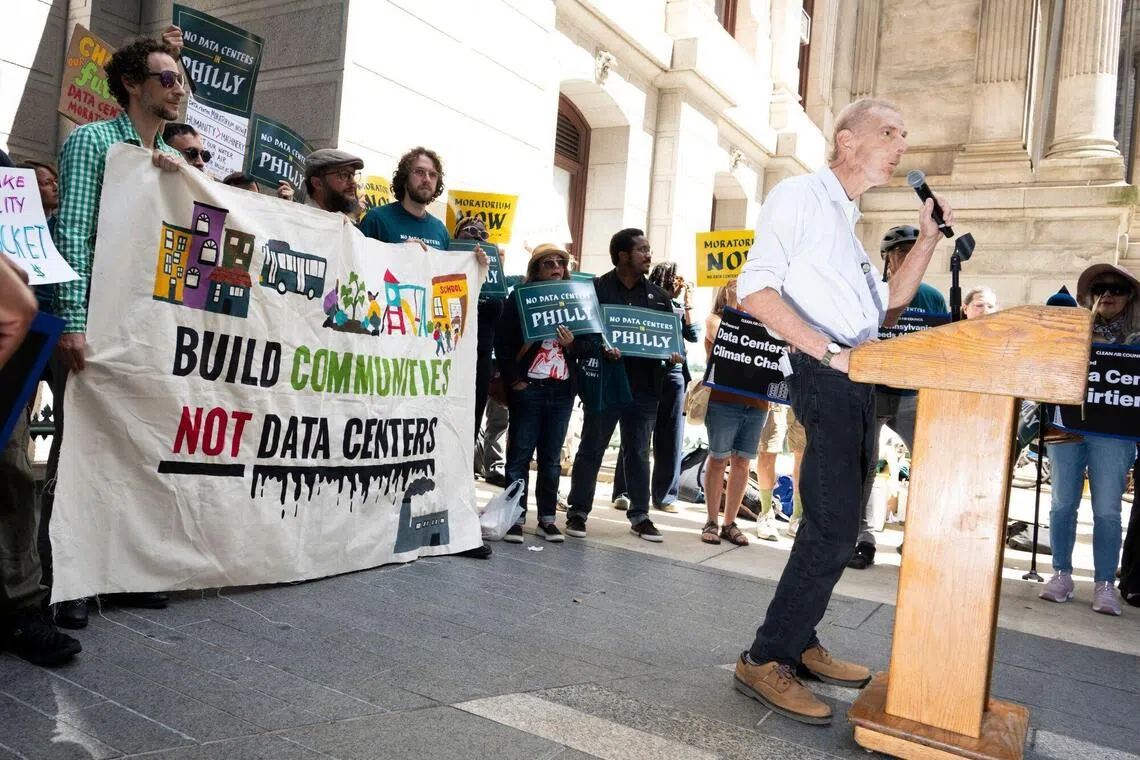
Just 11 per cent of Americans would support construction of an AI data centre in their community, according to a poll.
WASHINGTON - The United States House of Representatives on Sept 16 passed a bill aimed at protecting households from electricity cost increases tied to the expansion of data centres, the first time the chamber has advanced legislation directly addressing economic concerns linked to the industry’s growth.
The Republican-majority House voted 417 to three in favour of the Ratepayer Protection Act, which would require state utility regulators to consider whether large electricity users, including data centres, should bear the incremental costs of power infrastructure built to serve them.
The vote underscores the complicated politics surrounding the US data centre boom.
US President Donald Trump strongly backs data centre development as critical to leadership in artificial intelligence (AI).
Earlier this week, he said data centres make people and states wealthy, calling them the “oil of the next 20, 25 years”.
At the same time, lawmakers from both parties have faced growing constituent concerns over rising electricity costs associated with the industry’s surging power demand.
Just 11 per cent of Americans would support construction of an AI data centre in their community, according to a poll by the University of Massachusetts Amherst published this week.
House Republican leaders moved the Bill before lawmakers leave Washington ahead of the Nov 3 midterm elections.
US representative Derrick Van Orden, a Wisconsin Republican seeking re-election in a competitive district, said the Bill’s passage bolsters his record as he heads into the final stretch of his campaign.
Van Orden said he has worked with the Department of Defence for months to build data centres on military bases while his Democratic opponent, Rebecca Cooke, has called for a moratorium.
“The Chinese Communist Party understands that whoever wins the AI war either wins or prevents the next war,” he said. “The Chinese are not going to quit. And so we have to do this responsibly, and that ameliorates all these very, very valid concerns.”
Consumer rights non-profit Public Citizen said the legislation did not go far enough to protect Americans.
“The Ratepayer Protection Act has very limited ability to actually protect consumers from higher utility rates, as it simply asks states to ‘consider’ requiring data centres to pay for certain grid interconnection costs,” Tyson Slocum, director of the group’s energy programme, said in a statement.
“While a federal mandate forcing states to consider such a step provides opportunities for advocates to press for consumer protections, there are a myriad of other consumer and community impacts from data centres unaddressed in this Bill.”
US Representative Robert Garcia, a California Democrat, said in advance of the vote the measure does not go far enough, but would garner significant support from members who are hopeful more reforms will follow.
“Clearly, they’re trying to get in front of the data centre issue, but the reality is they’ve done nothing, really, on that,” he said of House Republicans.
“I think a lot of their base voters are really angry. There has to be actual real protections put in place for people, and this is not it.” REUTERS