
US’s Russia sanctions bill: Pressure tool and a dilemma for Trump, a worry for India - The Indian Express
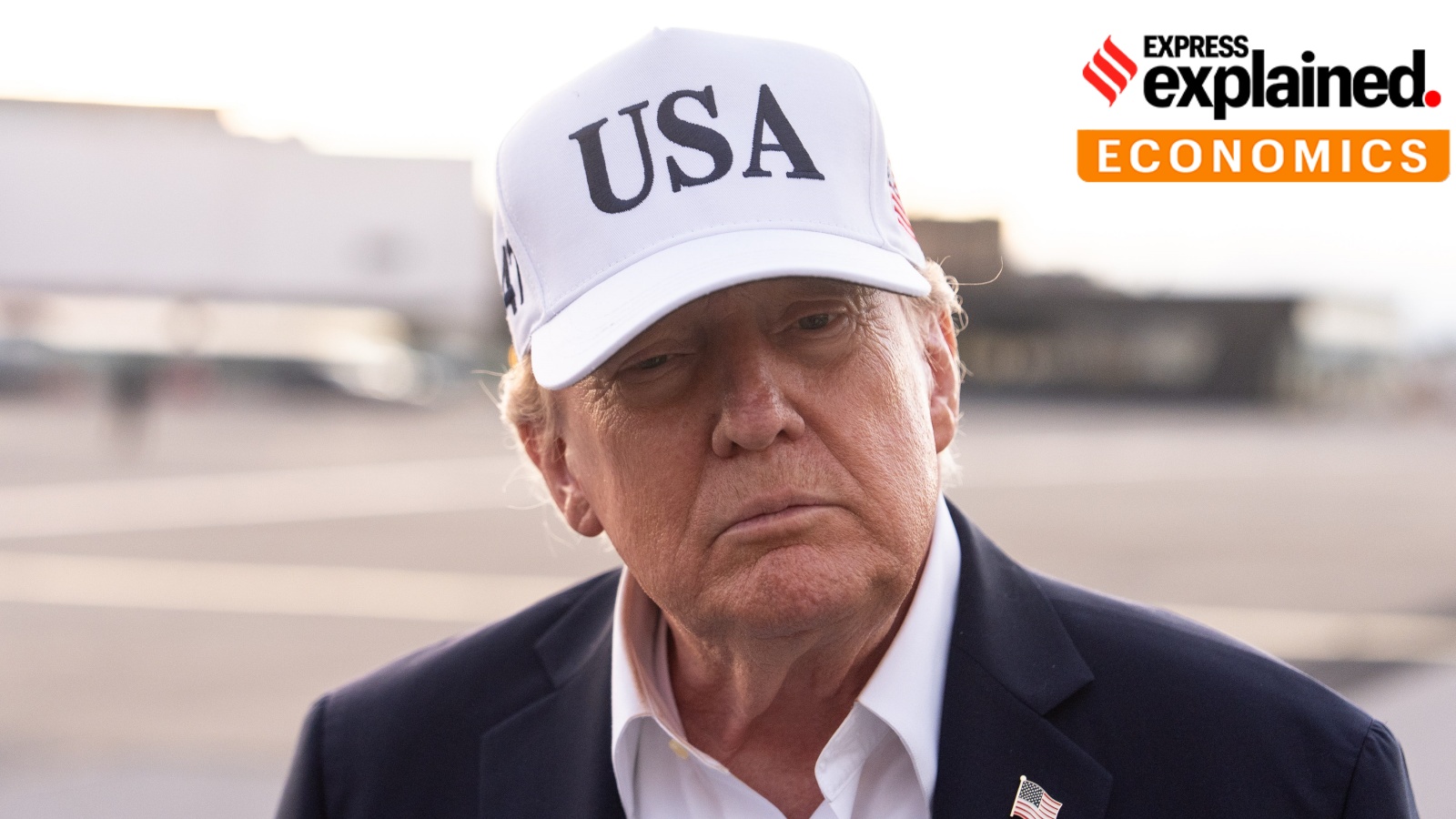
The US House of Representatives on Wednesday passed a sweeping Bill aimed at squeezing Russia’s revenue from oil and gas exports amid the war in Ukraine. The Bill includes provisions for charging up to 100% tariffs on the top five buyers of Russian energy — and India is the second-biggest export market for Russian crude.
The Lindsey O. Graham Sanctioning Russia and Iran Act of 2026 — a watered-down version of a proposed legislation initially backed by the late US senator and named after him — received the US Senate’s approval last month.
The Bill — which gives discretionary powers to Donald Trump on implementing its provisions — now just needs the US President’s sign-off.
For India, the developments are significant. The country depends on imports to meet over 88% of its crude oil needs, and Russia currently makes up over half of these imports. It remains to be seen if and when Trump turns the Bill into law through his signature, given the prevailing energy market crisis amid the West Asia conflict.
A key point to remember is that the Bill does offer some room for workarounds and concessions from Washington. India is expected to push for those, if the Bill comes into force, according to industry experts and analysts. One thing appears certain though: a law like this will give the Trump administration an additional lever to potentially exert pressure on India at a crucial stage in the bilateral trade agreement negotiations.
The Ministry of External Affairs (MEA) said on Thursday that the government remains committed to ensuring the nation’s energy security “through diversified sourcing and on the basis of evolving market dynamics”. It said in a statement that the proposed legislation’s implications for the India-US relationship as well as the global energy market have been flagged in discussions with US representatives.
The new version of the Bill proposes tariffs of up to 100% on the top five buyers of Russian oil and natural gas, against the proposal of a blanket 500% tariff on buyers of Russian energy in the original version that had been hanging fire.
While this reduction in proposed tariffs appears meaningful on paper, the cap is still too high for India, which is also working to finalise a trade deal with the US. Importantly, from New Delhi’s point of view, the new Bill does give powers to the US president to waive the application of its provisions.
For New Delhi, meaningfully reducing Russian oil imports is just not an option in the prevailing circumstances of global energy supply tightness amid the West Asia crisis. Even for Washington, taking away millions of barrels of Russian oil from the global market when energy flows from West Asia remain highly constrained wouldn’t be prudent.
In that context, it’s worth noting that earlier this week, Trump called on Ukraine to halt strikes on Russian refineries, given the runaway oil and petroleum product prices amid stifled supplies in the global market. So will he now risk taking more Russian oil off the market by imposing punitive tariffs on countries buying Russian crude in large quantities? At least till the West Asia crisis persists, Trump might want to exercise restraint and caution in implementing the proposed legislation in full force.
Doing the opposite would worsen an already worrying supply situation and send oil and fuel prices soaring even higher, something that the Donald Trump administration wouldn’t want ahead of the midterm polls in the US later this year. On its part, India would most certainly move to communicate its energy concerns to Washington, something that was done last year as well when the original draft of the Bill was mooted.
India has been in touch with US authorities over the proposed legislation. The MEA statement said: “This issue has been discussed at high levels in recent months with various US interlocutors. Its potential implications for not just the bilateral relationship but also the international energy market have been very clearly articulated by the Indian side. The Indian side has also made clear its determination to take all necessary measures to protect its trade and economic interests…”
“Passing the Bill under these circumstances would be economic insanity, even for the US itself. US diesel crack spreads (margins) have already reached $114 per barrel, largely because of the absence of Russian diesel from the market. Any logical economic assessment would argue against passing this Bill. However, given the level of political opportunism within the current administration and its apparent economic blindness, we should be prepared for anything,” Abu Dhabi-based energy analyst Natalia Katona told The Indian Express on Wednesday.
With much of the West shunning Russian crude following the country’s February 2022 invasion of Ukraine, Russia began offering discounts on its oil to willing buyers, including Indian refiners. This is how a peripheral supplier of oil to India became India’s biggest source of crude, displacing the traditional West Asian suppliers.
This proved to be a strong energy security hedge amid the West Asia crisis, as oil flows from the Gulf dried up. Analysts say that despite the threat of sanctions, Russian crude remains the most practical and competitive source of supply for Indian refiners and is extremely difficult to replace in the current market.
Following the passage of the Bill, the Ministry of External Affairs said India “remains firmly committed to ensuring energy security for its 1.4 Billion people”, and would continue to do so through diversified sourcing and evolving market dynamics. It said India had conveyed the potential implications for the bilateral relationship and international energy markets to US interlocutors.
According to vessel tracking data from commodity market analytics firm Kpler, India imported 2.08 million barrels per day (bpd) of Russian oil in August, accounting for 45% of the country’s total oil imports. The share was even higher, at over 50%, in the preceding two months.
“The US Senate’s vote to advance tougher sanctions on Russia increases policy risk around Russian crude flows, but does not change our near-term outlook for Indian or Chinese purchases,” Sumit Ritolia, modelling and refining manager at Kpler said in August when the Bill sailed through the US Senate.
“The measures still face further legislative and administrative hurdles, with the eventual impact depending largely on how aggressively the US administration chooses to implement them, including the use of exemptions or waivers. Recent experience suggests that when physical supply security becomes a concern, policymakers retain an incentive to avoid measures that could unnecessarily disrupt crude availability,” he said, adding that India would most certainly push for waivers.
Analysts and experts underscored that the proposed legislation hands another instrument of pressure and weaponisation of tariffs to the Trump administration against India. “The implementation of the Bill, once passed, would be an altogether different question. The US could use it as a pressure tool on India rather than an actual sanctions hammer,” said Katona.
A trade expert, who didn’t wish to be named, cautioned that the Bill’s provisions can potentially be used by Washington to press for more favourable terms in the India-US trade deal negotiations, which have made significant progress over the past few months after initial setbacks and hiccups.
Last year, the US did impose additional penal tariffs on India over its Russian oil imports, which was followed by a sizeable reduction in New Delhi’s imports of Moscow’s crude. But the West Asia war turned the trend on its head, as Russia was the only viable supplier of scale for an energy import-dependent India.
“How the Indian administration chooses to respond to this fear-mongering ultimately depends more on political will than on anything else. It is simply impossible to replace roughly half of the country’s crude imports overnight. So whether Indian state-owned refiners make a precautionary decision to partially step back from Russian crude, or largely disregard the pressure and continue buying, is ultimately a political decision,” said Katona.
Sukalp Sharma is a Deputy Associate Editor with The Indian Express and writes on a host of subjects and sectors, notably energy and aviation. He has over 16 years of experience in journalism with a body of work spanning areas like politics, development, equity markets, corporates, trade, and economic policy. He considers himself an above-average photographer, which goes well with his love for travel. ... Read More

