Venezuela leader admits ‘abusive’ use of anti-hate law
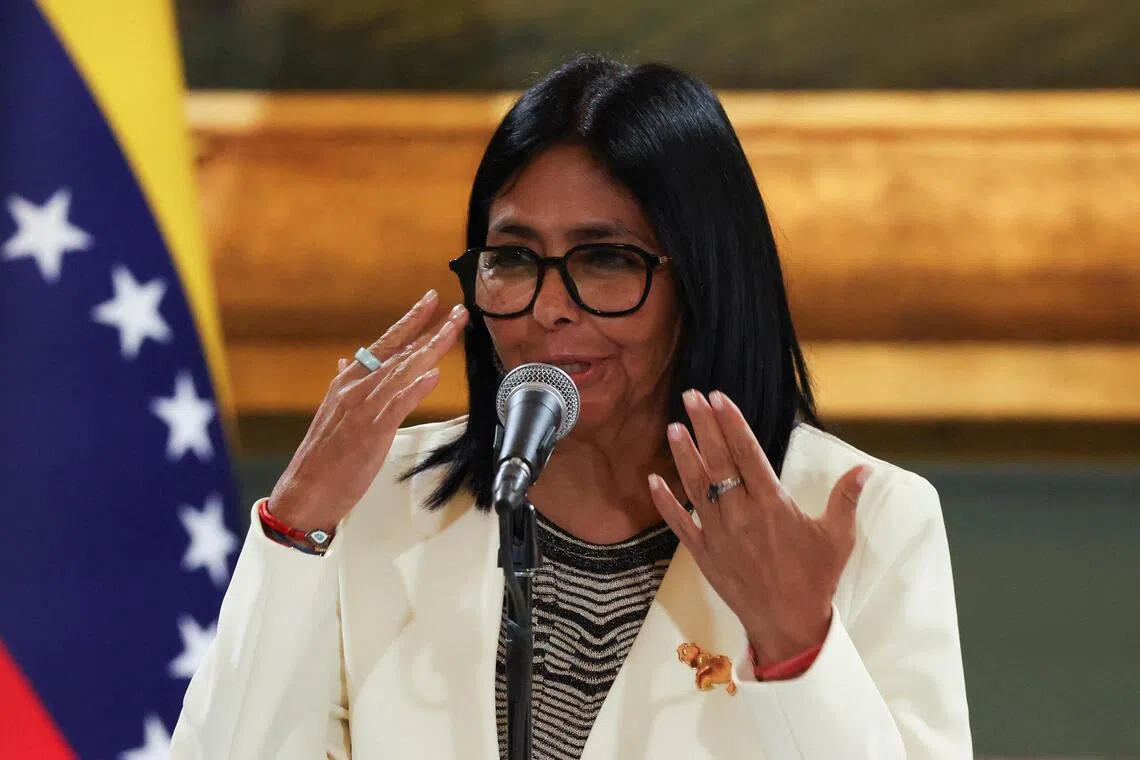
Venezuela’s interim President Delcy Rodriguez acknowledged on Sept 29 that the law was “improperly applied”.
CARACAS - Venezuela’s interim President Delcy Rodriguez acknowledged on Sept 29 that there had been “abusive use” of the country’s anti-hate law, an instrument used to justify the arrests of dozens of government critics.
Over the past decade, dozens of political leaders, activists, journalists, protesters and influencers were accused of “incitement to hatred” under the law, which provides for prison sentences of 10 to 20 years.
Rodriguez, who has governed since January after the ouster of president Nicolas Maduro in a US military operation, promoted an amnesty under pressure from Washington that has freed hundreds of political prisoners, many of whom had been convicted under this law.
The NGO Foro Penal said that 324 political prisoners still remain behind bars.
Rodriguez herself was the one who oversaw passage of the law in 2017 when she was president of the Constituent Assembly.
But on Sept 29, she acknowledged it was “improperly applied”.
There was abusive use of that law,” she said during a meeting with coffee producers in Portuguesa state, in the country’s west.
She said she still believes “in the principles of that law, the principle of tolerance, the principle of love, in our relationships with one another, so that hatred does not prevail but rather that we can coexist.”
Earlier, Rodriquez asked the National Assembly to reform the law as a result of US-sponsored political dialogue between the government and opposition lawmakers.
The reform seeks to “move forward with the decriminalisation of the conduct covered” by the law, according to a letter sent by the president to the National Assembly, which is headed by her brother, Jorge Rodriguez.
The anti-hate law “was used as an instrument of persecution and repression of dissent,” the opposition delegation said on X following the announcement.
“We express our solidarity with those who were victims of its application and with their families,” it added.
Parliament created a commission hours later to work on reforms, while non-governmental organisations are demanding the law’s complete repeal.
Human Rights Watch has recommended that this and other laws be repealed, following its first visit to the country in nearly 20 years. AFP