Vermont shooter claims NPR radio station commanded him to open fire on Palestinian students
A quiet college town became the backdrop for horror when an afternoon walk ended in bloodshed, leaving three childhood friends permanently altered and launching a high-stakes legal battle over mind, motive, and murder.
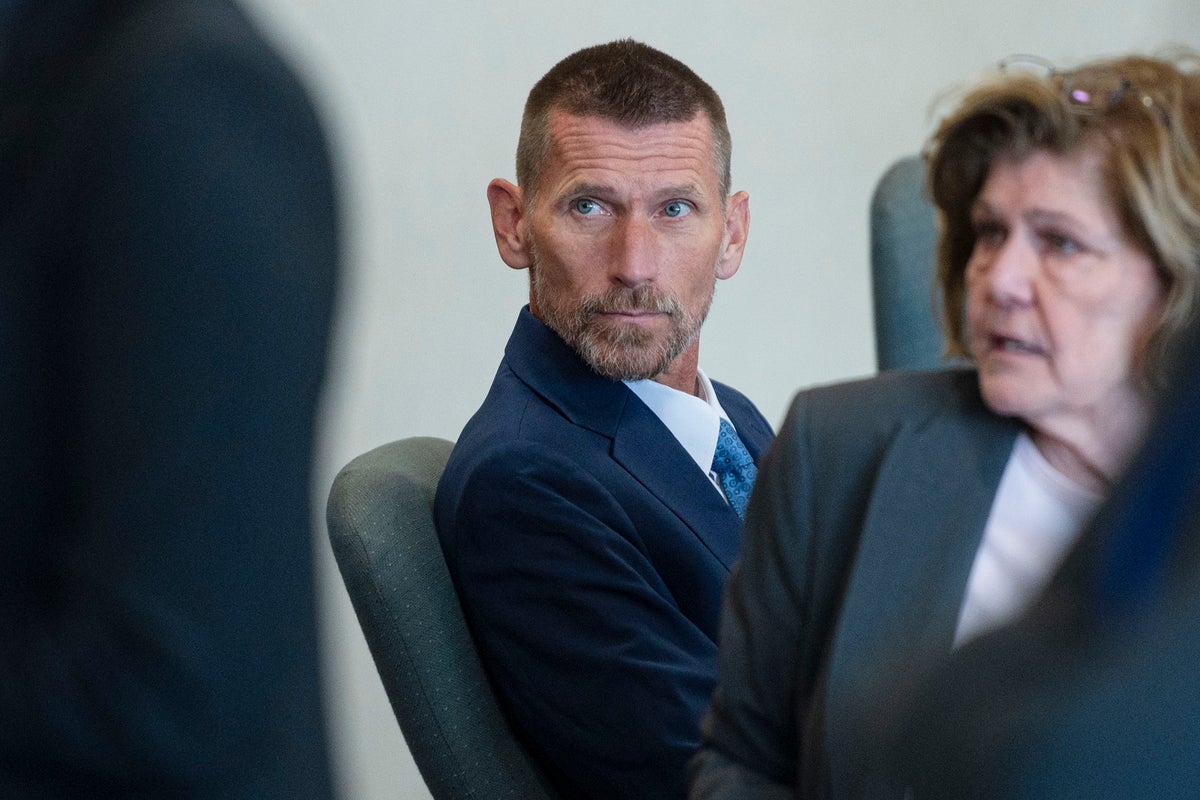
On Monday, 51-year-old Jason Eaton sat stoically at the defense table in a packed Chittenden County courtroom as opening arguments began in his trial. Eaton faces three counts of second-degree attempted murder for the November 2023 ambush of three Palestinian college students: Hisham Awartani, Tahseen Aliahmad, and Kinnan Abdalhamid, who were all 20 at the time of the shooting.
Eaton has pleaded not guilty by reason of insanity. He does not deny pulling the trigger, but his defense claims he was trapped in a psychotic break—convinced he was acting under direct instructions from the CIA, Mossad, and God.
The horrific incident unfolded just weeks after the start of the Israel-Hamas war, during a quiet Thanksgiving weekend visit to Awartani’s grandmother’s house in Burlington. The three young men—who grew up together in Ramallah before moving to the U.S. for university—had spent the afternoon celebrating a birthday at a local bowling alley. Just after dusk, they walked near the University of Vermont campus, speaking a blend of English and Arabic, with two of them wearing traditional Palestinian keffiyehs.
As they passed an apartment building, Eaton stepped off his porch and walked directly toward them without uttering a word. From just feet away, he drew a Ruger .380-caliber handgun and unleashed a barrage of bullets. Awartani was shot in the chest, the bullet shattering his scapula and severing his spinal cord, leaving him paralyzed from the waist down. Aliahmad was struck in the collarbone, while Abdalhamid was shot in the buttock as he scrambled for cover behind a neighboring home.
Taking the stand on Monday, Awartani, now 23 and testifying from a wheelchair, recounted the terrifying moment Eaton silently opened fire. Jurors listened to frantic 911 calls, including Awartani pleading for help as he lay bleeding on the pavement, believing he was about to die. A neighbor testified to bringing blankets to the wounded men while waiting for emergency responders.
Defense attorney Joshua O’Hara told the jury that Eaton was suffering from severe, delusional schizophrenia after losing his job at a credit union two weeks prior. According to O’Hara, Eaton believed his local NPR radio station was broadcasting covert messages commanding him to execute an "overwatch mission" to protect local Jewish families across the street. His attorney argued that Eaton was utterly incapable of understanding the wrongfulness of his actions at the time.
Prosecutors painted a drastically different picture, describing Eaton as an arrogant man driven by a desire for control who fully understood the criminality of his conduct. Deputy State’s Attorney Sally Adams pointed out that state psychiatric evaluations determined Eaton did not meet the legal threshold for insanity. Authorities noted that Eaton had legally purchased the handgun months earlier, hid inside a vehicle when police arrived to execute a search warrant, and harbored three shotguns inside his home.
Though the tragic attack sparked widespread condemnation and calls for hate crime charges, prosecutors have not filed hate crime enhancements, citing a lack of explicit evidence regarding anti-Palestinian bias as the legal motive. If convicted on the attempted murder charges, Eaton faces up to life in prison. If found not guilty by reason of insanity, he would be committed to a state psychiatric hospital for indefinite treatment.