Walmart Pasta Recall Update as FDA Sets Most Serious Risk Level
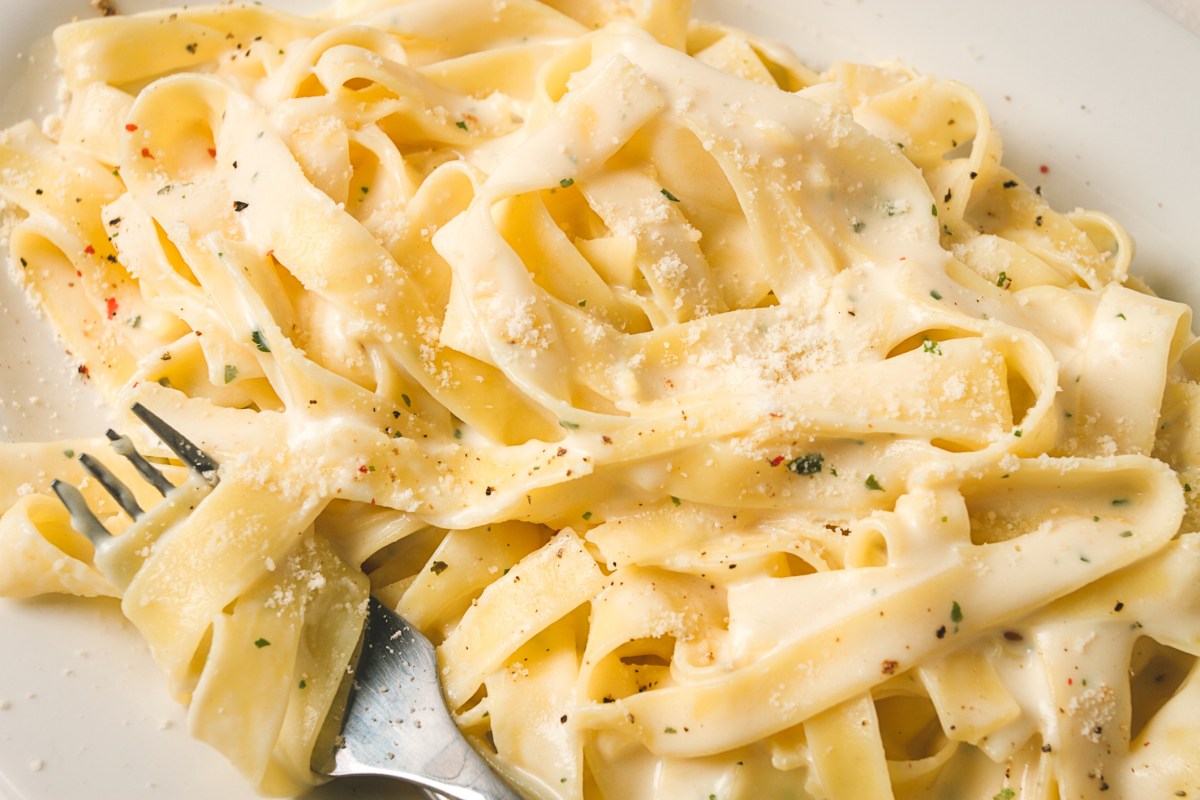
The U.S. Food and Drug Administration (FDA) has given a nationwide recall of frozen pasta sold at Walmart its most serious risk classification over concerns the product may be contaminated with Listeria monocytogenes.
The recall of bettergoods Authentic Italian Lemon Alfredo Fettuccine on September 15 followed routine sampling by the Washington State Department of Agriculture and Florida Department of Agriculture and Consumer Services, which found the product may contain Listeria. Producer Gias Foods has stopped distributing the affected product while the company and FDA investigate the possible source of the contamination.
Now, the product has been given a Class I designation, which means there is a “reasonable probability” that use of or exposure to a recalled product could cause serious adverse health consequences or death, according to the FDA.
Listeria can cause serious and sometimes fatal infections, particularly in young children, frail or older adults and people with weakened immune systems. Symptoms include fever, severe headache, stiffness, nausea, abdominal pain and diarrhea.
No illnesses had been reported as of when the recall was announced.
"Safety is a top priority," a representative for Walmart told Newsweek via email. "When notified of recalls, we move quickly to remove the impacted products from our stores and implement a sales block at registers and online. We are working closely with our supplier, and customers who have this should discontinue use and follow the recall instructions."
Newsweek has contacted Gias Foods via email for comment outside of regular working hours.
Gias Foods recalled two lots of bettergoods Authentic Italian Lemon Alfredo Fettuccine on September 15.
The affected 22-ounce frozen packages have UPC 194346442706 and are marked with either lot L6079C, with an expiration date of September 19, 2027, or lot L6080C, expiring September 20, 2027.
The pasta was distributed nationwide through Walmart stores.
"The company has ceased the distribution of the product as FDA and the company continue their investigation as to what caused the problem," the FDA confirmed in the recall announcement.
The recall comes during a year that has seen several major food borne illness outbreaks across the U.S., although no illnesses have been reported in connection with the bettergoods Alfredo pasta. Gias Foods said via the FDA that the recall followed routine sampling that indicated the product may contain Listeria.
The largest identified outbreak of 2026 has been a Cyclospora outbreak linked to processed iceberg lettuce from Taylor Farms de Mexico. The Centers for Disease Control and Prevention (CDC) recorded 12,883 illnesses across 21 states, including 570 hospitalizations and two deaths. The lettuce was recalled in July, and the CDC declared the outbreak over on September 11 after infections fell sharply and the affected products were no longer available in stores or restaurants.
Another major outbreak has involved Salmonella linked to jalapeño peppers from Sinaloa, Mexico. As of the FDA's latest update, 431 illnesses had been reported across 32 states, with 57 hospitalizations, but thankfully no deaths. The peppers were distributed to restaurants, food-service businesses and other distributors, prompting recalls of products sold through a number of major retailers. The FDA's investigation remains ongoing.
The Trump administration has faced questions over the federal response to food borne illness outbreaks during 2026, particularly after the major Cyclospora outbreak.
In July, Health and Human Services Secretary Robert F. Kennedy Jr. said officials had the outbreak “under control." He also rejected criticism that reductions to federal food-safety programs had weakened surveillance, saying there had been “no cuts in our surveillance program” and describing changes to the CDC’s FoodNet program as eliminating “redundant surveillance.”
FoodNet is a surveillance system that tracks rates of major foodborne illnesses in parts of the U.S. Since July, the program has reduced routine surveillance to just two pathogens: Salmonella and E. coli. Before then, it also tracked Cyclospora, Listeria, and four other pathogens that can cause illnesses.
The Trump administration has separately defended the administration’s food safety capacity amid criticism over staffing changes. A White House spokesperson told Stateline, which reported in August that CDC staffing had been reduced by 28 percent since December 2024, that the administration had “never cut FDA food inspectors or other frontline personnel for domestic disease response” and said the federal government remained capable of “robustly addressing any future outbreaks.”
The FDA’s 2026 priorities have included modernizing the recall process by speeding up classifications, improving recall communications and information sharing, and removing dangerous products more quickly.