Warning to universities: Build more houses to keep international students
Universities should invest more in residential housing for international students to ease pressure on supply, Premier Chris Minns says, arguing the tertiary sector needs to shoulder more responsibility for addressing the heat in the migration debate.
As the Albanese government prepares new migration laws expected to make it harder for international students to extend their stay, Minns says the university sector has a greater role to play housing new students.
NSW Premier Chris Minns has called on universities to shoulder more responsibility for housing.Dominic LorrimerMinns said that universities would be better placed to “ride the ups and downs of whatever political climate” if they invested more in housing, arguing the sector has more to do to address the concern about demand from international students impacting supply.
“They’ve got balance sheets, they’ve got land, they’ve got a captive market because they know that there’s x number of students coming in,” he said.
“They can help us with the residential accommodation demands of a big sector. You know, we say to the mining sector, you’ve got to manage tailings, you’ve got to manage offtake, you’ve got to have your planning and green credentials in place. I think the education sector’s got to think about the externalities associated with their industry.
“At the moment it’s ‘oh, it’s not our responsibility’. And then they’re tipping thousands and thousands of kids into the Sydney housing market, which is fine, but ultimately, when you live in the second most expensive city in the world, it’s going to have an impact.”
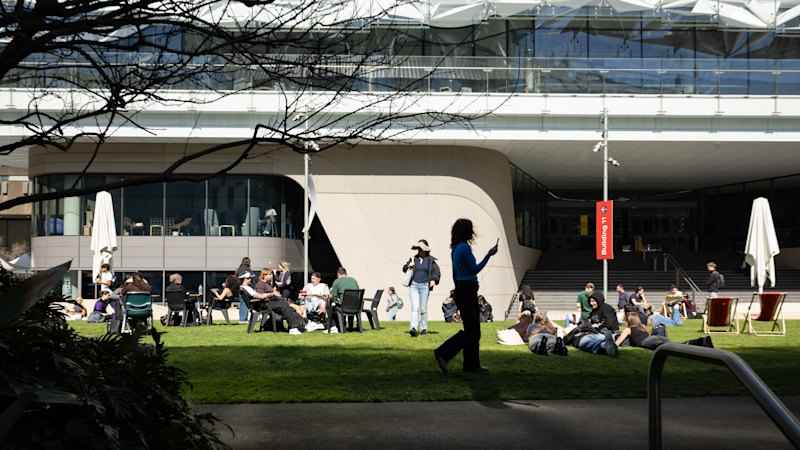
Students at the University of Technology, Sydney.Louie DouvisMinns has been increasingly willing to weigh in on the migration debate as his federal counterparts seek to neutralise an issue that has driven increased support for Pauline Hanson and One Nation.
While some state leaders, most notably South Australian Premier Peter Malinauskas, have cautioned against significant cuts to net migration, Minns has taken a different tack, arguing the states should have a greater say in overseas arrivals while also endorsing the Commonwealth’s looming changes.
He has also indicated he was open to a cut to overseas student numbers, despite warnings from the state’s universities about the economic impact of such a move. During a press conference alongside University of Western Sydney vice chancellor George Williams in New Delhi a fortnight ago, Minns said a cut to overseas students would be “challenging but not fatal” to the sector.
Overseas students have long been a crucial source of revenue for Australian universities. The NSW auditor-general’s most recent review into the state’s universities found that students from the top three countries of origin – China, India and Vietnam – contributed $3.5 billion in fees last year, or about 45 per cent of total student revenue in NSW.
But the growth in enrolments has led to criticism universities are not contributing enough to new housing stock for students.
“They can take a lot of pressure off us, and also take a lot of pressure out of the debate by saying, you know what, we’re going to contribute x percentage of WSU, Sydney Uni, UNSW accommodation to our students, so you don’t have to worry about it,” Minns said.
“It’s not going to put up with demand on the broader housing market.
“That would make it a more sustainable industry that would be able to sort of ride the ups and downs of whatever political climate.”
Since 2025, the Albanese government has capped international student enrolments in part based on universities’ ability to provide housing. The cap was increased last year, but the University of Sydney, which has the largest international student intake, did not have its allocation lifted in part due to a lack of “evidence of appropriate investment in new housing”.
Luke Sheehy, the chief executive of Universities Australia, has previously pointed out that overseas students make up only about 6 per cent of the private rental market, while also arguing barriers in state planning systems had hampered attempts to provide new housing.
The University of NSW has faced battles with Randwick Council over new student housing. The same council has also sought to restrict for-profit student housing developments in Kensington, and some universities have blamed planning rules for the rising cost of existing student accommodation.
But Minns said his government had proven it was willing to work with housing providers as it seeks to boost the state’s languid supply.
“Come to the government and say, ‘here’s our proposal, we want to do x, will you let us have y?’ We’ve been in up to our eyeballs making it easier for builders across NSW for 3½ years.”
Start the day with a summary of the day’s most important and interesting stories, analysis and insights. Sign up for our Morning Edition newsletter.
You have reached your maximum number of saved items.
Remove items from your saved list to add more.