Weaponizing Insecurity: Interrogating Kabir Marafa’s Two-Year Promise - The Guardian Nigeria News
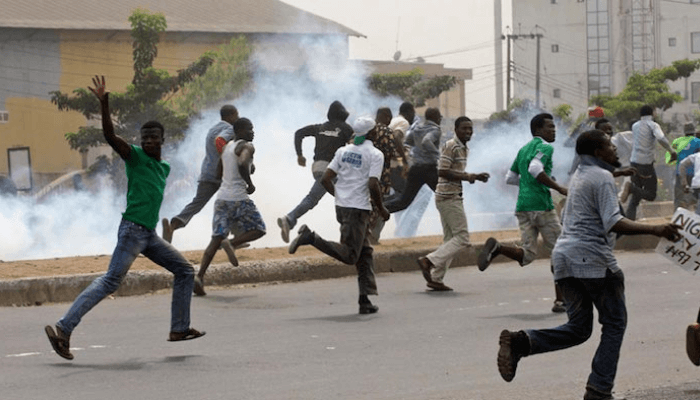
Any political message like that by Senator Kabir Garba Marafa, the Zamafara State governorship candidate of the Nigeria Democratic Congress (NDC), built around the security challenges is bound to attract enormous attention in Zamfara State and indeed beyond the North-West, the region hardest hit by the violence. The reason is obvious. For more than a decade, banditry, kidnapping, attacks on communities and restricted access to farmlands have imposed enormous social and economic costs on the people of Zamfara State and the neighbouring states. Families have suffered displacement, lost loved ones and livelihoods, while education, agriculture, trade and other economic activities have also been disrupted.
It is precisely because of the consequences of insecurity that Senator Marafa has reduced it to a campaign issue. A crisis that has displaced communities, and disrupted economic activities and claimed lives should not responsibly be exploited and presented as a problem with a convenient political deadline. The experience of counter-insurgency and counter-banditry operations across Nigeria and in several countries has shown that insecurity is sustained by a combination of criminal networks, difficult terrain, porous borders, intelligence gaps, limited policing capacity and socioeconomic vulnerabilities. Tackling it therefore requires more than the king of political declarations by Senator Marafa.
This is what makes the recent statement by Senator Marafa, the perennial governorship aspirant, worthy of closer examination. Marafa, who represented Zamfara Central Senatorial District from 2011 to 2019, had unequivocally declared that if elected governor in 2027, he would end insecurity in Zamfara State within his first two years in office and voluntarily leave office if he failed to achieve it.
The attraction of such a promise is easy to understand. After years of insecurity, Zamfara State people understandably want an end to the senseless violence. But precisely because the public has suffered so much, Marafa should explain not merely what he intends to do, but how he intends to achieve his lofty goal.
The first issue Marafa clearly did not factor into his unqualified statement is the constitutional reality. Nigeria’s 36 state governors have substantial responsibilities for the protection of lives and property within their states, but they do not command the military or exercise operational control over the Nigeria Police Force. They are glorified Chief Security Officers without direct command of the forces required to prosecute a war of this nature — generals without troops.
Yet Marafa spoke as though on becoming the governor would automatically make him the operational commander of the Nigerian Army, the Nigerian Air Force or the Nigeria Police Force. It would not. Under the Constitution of the Federal Republic of Nigeria, as amended, the Armed Forces of the Federation and the Nigeria Police Force are subject to the authority of the President as Commander-in-Chief, under a federal command structure. The reality, therefore, is that no state governor, including Governor Dauda Lawal, possesses the constitutional authority to unilaterally direct military operations or determine the operational deployment of the police.
That clarification seriously matters because while a state governor can provide financial resources, intelligence, and other logistics support within the limits of the law, and can work with federal security agencies, he cannot simply order the Army or Air Force into battle. Any promise to eradicate banditry within a fixed period must therefore be assessed against the actual constitutional powers available to the office.
This distinction is particularly important in Zamfara State, where the scale and nature of the security challenge require sustained military operations alongside police deployments, intelligence coordination and other federal interventions. More importantly, this is not a crisis that is confined to Zamfara State. The criminal networks operate across state boundaries, making a coordinated regional response essential.
This is another important difference between Marafa’s declaration and Governor Lawal’s approach. Lawal has consistently recognised that Zamfara State cannot tackle a regional security problem in isolation. He is working with other North-West governors and federal security authorities to promote intelligence sharing, coordinated operations and a more concerted regional response. The North-West Governors’ Forum has since adopted a 2026–2030 Peace, Security and Development Framework, underscoring the recognition that insecurity in the region requires collective action rather than isolated state-by-state responses.
None of this means that Governor Lawal is totally powerless. He is not. His record shows a governor who has consistently demonstrated a determination to confront terrorism, from his unequivocal opposition to ransom payments to the huge resources his administration has committed to supporting security operations. It’s important to stress that his no-negotiation position did not begin with his election as governor. It dates back to when, as a private citizen, his brothers were kidnapped and he bluntly refused to pay ransom.
That history is important because it shows that his position on ransom is not simply an official policy adopted for political convenience. It predates his assumption of office. And as governor, he has maintained and adopted that position as government policy.
The question, therefore, is not simply what Senator Marafa promises to do, but that his record hasn’t demonstrated the capacity to act. As governor, he would have to do far more than make declarations about defeating banditry. He would need to procure the vehicles, communications equipment, logistics and other support required by security agencies; strengthen intelligence gathering; work with traditional rulers and community leaders; improve access roads to vulnerable communities; and facilitate closer cooperation between security agencies and local communities. Unfortunately, Marafa’s record gives no room for cheer that he can undertake these responsibilities.
His promise, by itself, provides no answer. By contrast, Governor Lawal’s administration has made community-based security and support for security agencies part of its broader response to the crisis. He has shown a great sense of responsibility. But that is not the same thing as operational command of the federal forces that is in charge of conducting the security operations.
Governor Dauda Lawal’s administration has made security support a significant component of its governance programme, providing vehicles, logistics, communications equipment and other assistance to security agencies. Whatever assessment voters ultimately make of those interventions, the underlying reality remains the same: the governor operates within a security architecture in which the military and conventional police remain under federal command.
Therefore, if Marafa becomes governor (a delusional), he will not wake up on the morning after his inauguration and acquire command authority over the Nigerian Army, Nigerian Air Force or Nigeria Police Force. Neither will the state command structure of every federal security agency automatically become subordinate to him.
That is why his two-year deadline is a big joke. He is playing to the gallery and trying to emotionally manipulate the people. Marafa is not a newcomer to government. He served two terms in the Senate and has been deeply involved in Zamfara State political affairs for years. He is part of the swamp that Governor Lawal drained that has given Zamfara State a new lease of life.
If he believes he can eliminate insecurity within two years, the electorate is entitled to know the mechanism. And, critically, what measurable indicators will determine whether his two-year target has actually been achieved?
These are not unreasonable questions. They are the minimum questions that should accompany an extraordinary promise.
It is perfectly legitimate for Marafa to present the people of Zamfara State with his programme of action, but the failure to explain how he intends to address the security crisis makes it a political deception. A promise of this magnitude must be matched by a credible and workable plan. A categorical commitment to eliminate insecurity within two years raises fundamental questions about his understanding of the constitutional powers of a governor, the regional nature of the crisis and the nature of federal security agencies whose operational cooperation is indispensable.
If Marafa cannot explain how he intends to overcome these constraints and deliver on such an absolute promise, then the responsible thing would be to reconsider it rather than present the electorate with a certainty that the realities of the office will support. Political campaigns should be about offering voters credible programmes of action, not making promises that cannot be reconciled with the powers of the office being sought.
The problem becomes even more serious when insecurity is turned into a weapon for partisan political combat.
This is not the first time Marafa has been associated with the use of security allegations in political disputes. During his prolonged confrontation with former Governor Abdulaziz Yari in the period leading to the 2019 governorship election, Marafa had accused Yari and his deputy, Ibrahim Wakkala Muhammad, of sponsoring militia groups allegedly responsible for insecurity in the state. Once he lost out, he went to sleep until the NDC offered him its governorship ticket, which he had sought for many years.
Senator Marafa’s promise to completely eliminate insecurity within a fixed period is an issue that directly affects the lives and livelihoods of millions of people. Such a claim therefore deserves scrutiny proportionate to its seriousness.
Zamfara voters deserve more than a deadline. They deserve a strategy. They deserve to know what Senator Marafa intends to do with the powers available to a governor, how he intends to work with institutions outside his direct command, what resources he will commit, and what measurable outcomes he will use to demonstrate progress.
Insecurity is too costly to be reduced to a campaign slogan. The people who have lost relatives, abandoned farms, closed businesses or watched their communities become inaccessible deserve something more substantial than a promise. They deserve a credible plan, an honest assessment of what is possible and a government prepared to do the difficult, sustained work required to restore security.