What Putin’s war in Ukraine means for Russian elections this week
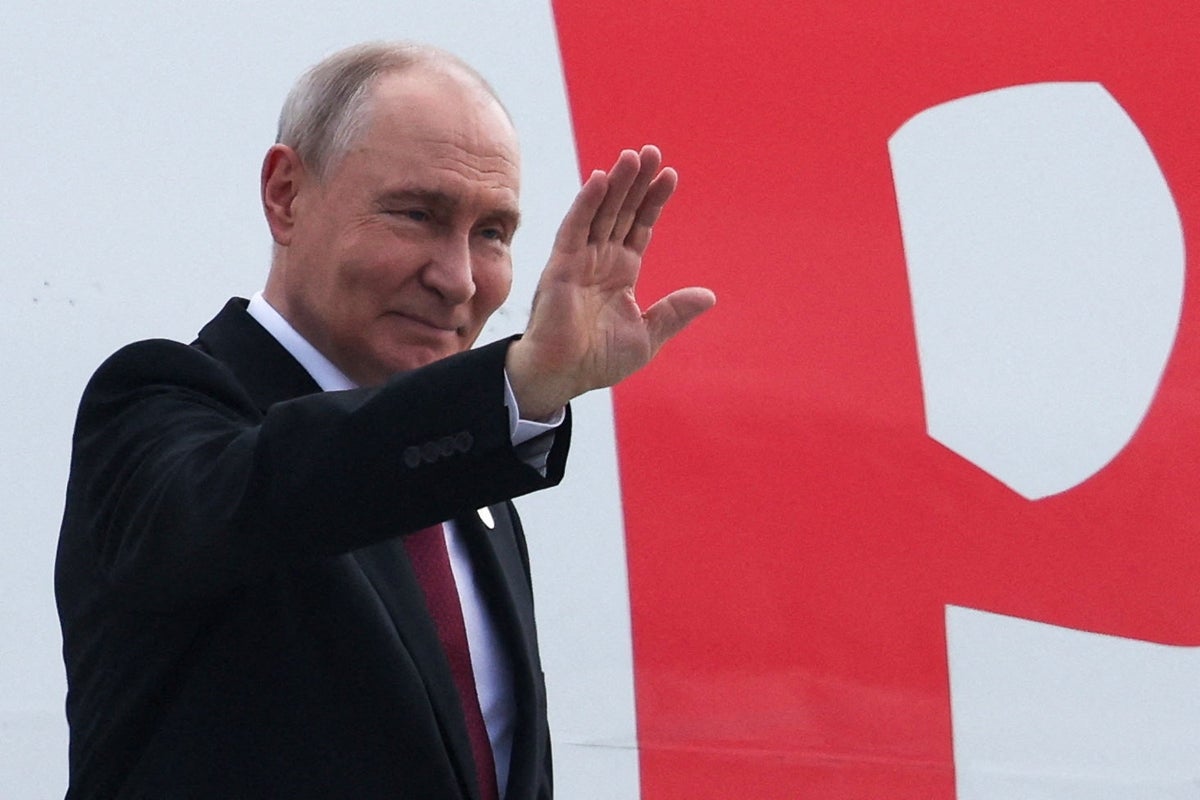
Russia is holding its first parliamentary elections this week since its full-scale invasion of Ukraine more than four years ago.
They come amid plummeting approval ratings for Vladimir Putin, mounting casualties on the frontline and minimal territorial gains in the grinding war.
The country’s electoral system is tightly controlled and Putin’s United Russia party is expected to retain its majority in the State Duma, which comprises 450 members. It currently has 310 seats and needs to win at least 300 in order to retain its supermajority.
Polling released ahead of the elections shows that United Russia enjoys 37 per cent of support while the next closest opposition, the Communist Party, lags behind at 11.6 per cent, according to state pollster VTsIOM. Elections will take place between 18 and 20 September.
The other opposition parties consist of the ultra-nationalist Liberal Democrat Party of Russia and the anti-Ukraine war liberal Yabloko Party, which was banned in the party-list ballot by the Supreme Court.
But Putin has been showing increasing signs of weakness, conceding that Ukrainian attacks on energy had been unprecedented and caused more impact than expected.
The Institute for the Study of War reported that “Ukrainian forces have held Russian forces to near-zero net gains since March 2026” in an assessment released on Sunday.
It suggested that the Kremlin is “trying to convince the United States to force Ukraine to cede territory that Russian forces have shown no ability to take on the battlefield” in an effort at “cognitive warfare”.
Support across the country is dropping with Putin’s approval rating falling by 12.2 percentage points between late December and late April to 65.6 per cent, in figures released by the state pollster in May this year.
The Kremlin expressed a more conciliatory approach on Tuesday, suggesting that Donald Trump’s proposal on a ceasefire with Ukraine on energy targets is a “good idea” after months of deadlocked negotiations amid the ongoing Iran war.
“He [Putin] believes he is winning, and that progress has not been faster because Russia is not fighting just Ukraine but a substantial part of Nato,” says John Lough, head of foreign policy at the New Eurasian Strategies Centre and Nato’s first permanent representative in Moscow.
“He has no incentive to stop now since this would signal weakness and would risk a response from the 10-15 per cent of society that is strongly pro-war.
“Part of this group might resort to violence if it felt betrayed. The elites and society are quiescent since criticism of the war leads to jail sentences.
“We should also remember that around a third of the population has benefited from the war as resources have been directed to increased defence spending. An anti-war constituency undoubtedly exists in Russia, but it is not organised and is forced to remain silent.”
Nearly 500,000 Russians have been killed in the conflict with a total of 1.5 million casualties in total, according to UK defence official Air Chief Marshall Sir Richard Knighton, Chief of the UK’s defence staff.
The limited progress on the battlefield could lead to further mobilisation after the elections. But support for compulsory mobilisation has continued to fall from 24 per cent in early 2023 to 11 per cent in 2026, according to the Kyiv-based Institute for Conflict Studies and Analysis of Russia (IKAR).
“The Russian army continues to suffer casualties of around 30,000 a month,” says Lough.
“It can recruit the same number, but this is not enough to relieve soldiers who have been serving for a year or more. This is creating pressure to consider further mobilisation but it’s not an option favoured by the Kremlin because society is worried about it.
“There are already reports of men of conscription age leaving the country in anticipation of another round of mobilisation.
“It’s likely that the Kremlin will try to boost the numbers by persuading more students, for example, to sign contracts. It needs better educated personnel to operate drones and other hi-tech equipment. It doesn’t just need infantry soldiers for the ‘meat grinder’.”
It means that Russia could potentially become desperate, with Lough stating that the Russian side is “becoming less inhibited” and “less worried about the risks of overspill into Nato territory in the case of drones and missiles missing their targets”.
This was evidenced by attacks on a train that missed a group of foreign dignitaries, including former prime minister Boris Johnson on Sunday.