What saved the flydubai plane: Smit Machchhar, fliers’ actions, and sheer luck - The Indian Express
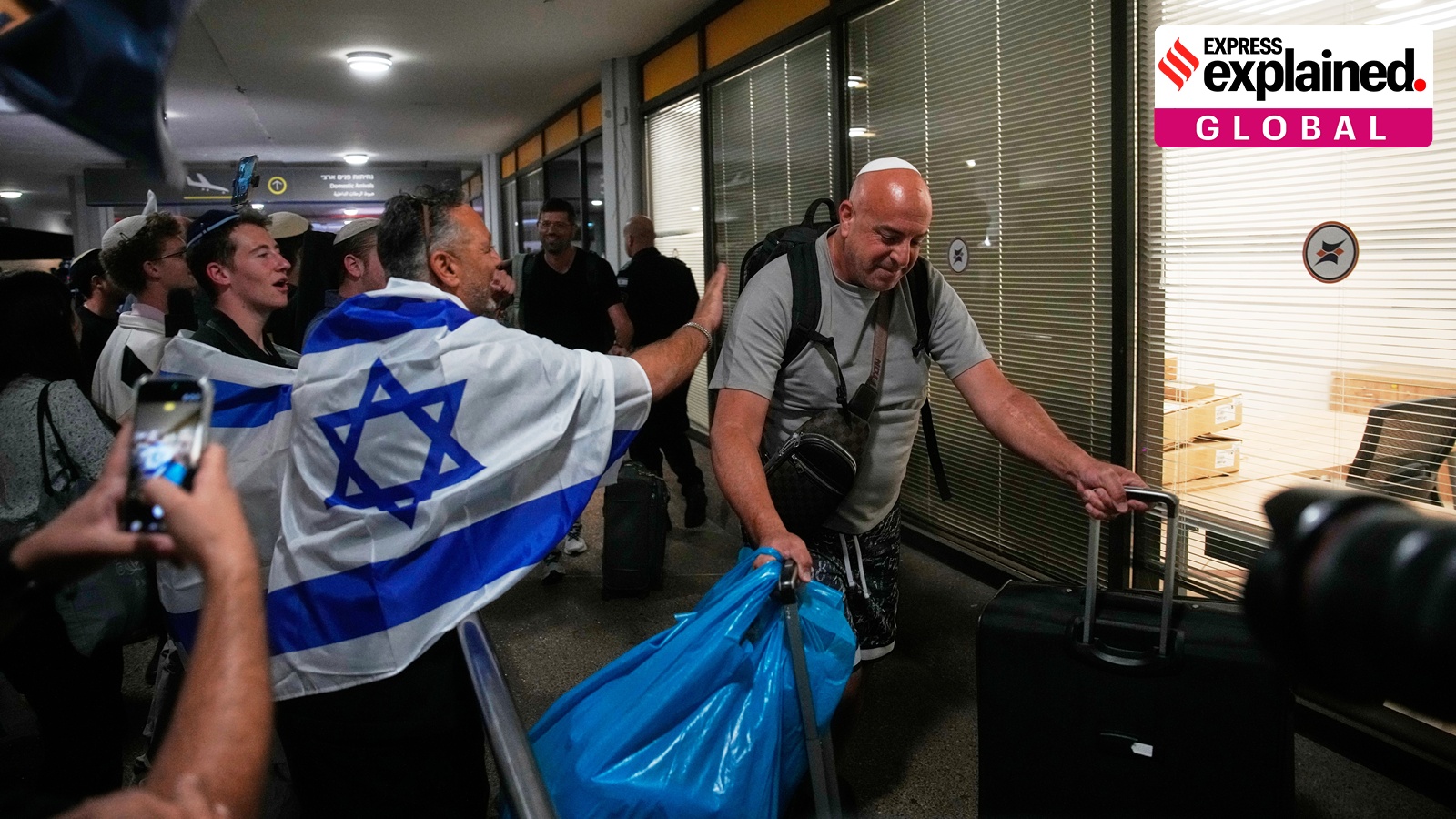
Flydubai Flight Incident: Captain Smit Machchhar, the pilot of flydubai flight FZ1073 from Dubai to Tel Aviv, is being hailed globally for heroic actions that saved the aircraft from disaster, after his co-pilot allegedly stabbed him in an apparent bid to crash the aircraft.
Machchhar’s most critical actions involved fighting back against the attacking co-pilot and, despite multiple stab wounds, unlocking the sealed cockpit door while raising an alarm.
Courage and presence of mind displayed by a few passengers, and a stroke of sheer luck — presence of relief pilots on board — followed Machchhar’s heroics in landing the aircraft safely at the Tabuk airport in Saudi Arabia.
Perhaps the first and the most consequential action taken by Machchhar was to fight back. Israeli Prime Minister Benjamin Netanyahu said that the Indian pilot “fought back, resisted, opened the cockpit door, and enabled passengers and crew to overpower the attacker”, and credited him with preventing a “catastrophic mid-air disaster”.
“He saved the lives of 174 people, including Israeli citizens and other nationals. I wish Captain Machchhar a speedy and full recovery. He is a true hero,” Netanyahu posted on social media platform X.
Then, while lying injured and bleeding on the cockpit floor, Machchhar managed to click open the release on the locked door of the cockpit. These doors are heavily reinforced and locked from the inside to prevent unauthorised entry into the cockpit, something that became a norm after the September 11, 2001 terrorist attacks in the US. Without this one action, no one on board the aircraft could have come to its rescue.
The underlying assumption of reinforcing the cockpit door and keeping it locked during flight is that the flight deck is occupied by trained pilots, and they need to be kept out of harm’s way in order to maintain control over the aircraft even if there is an attacker or a hijacker in the cabin. In this case though, the threat was not outside the cockpit, but inside it. This made the locked door a major hindrance to any intervention from outside.
The aircraft also transmitted the international emergency transponder code 7700 and later the code 7500, which communicates unlawful interference or hijacking. These signals were important because communication with the cockpit was reportedly disrupted during the incident, and these signals indicated to the air traffic controllers and the authorities about the problem on board. It is likely that Machchhar transmitted the codes while he was being attacked.
A few passengers then did something out of the ordinary, even as the aircraft had plummeted around 14,000 feet in a matter of seconds.
On possibly being alerted by the commotion in the cockpit, they moved towards the flight deck to try and intervene. As Machchhar opened the door, they stormed the cockpit and helped overpower the attacking co-pilot.
The co-pilot was restrained by some passengers and crew, who tied his hands with whatever they could access, including headphone cables. Meanwhile, one of the passengers, a dentist, tended to a badly injured Machchhar.
One passenger, Yaniv Hayoun, a plumber by profession, said he briefly took hold of the aircraft’s controls while its nose was pointed down. Hayoun had never flown a plane before but had watched a popular television series on air crash investigations. He apparently did two things — yank the copilot out of the cockpit and pull up the yoke (the steering wheel-like device) at a time when the plane was nosediving with such force that the rudder had ripped off the back of the plane.
By some accounts, he levelled the plane till a set of relief pilots on board the aircraft could intervene and take control.
It was a stroke of sheer luck that two flydubai pilots were on board the aircraft as off-duty or relief flight crew — pilots who travel as passengers because they are scheduled to operate a subsequent flight. “The aircraft was successfully secured by on-duty Flydubai crew travelling on the flight, who diverted and landed the aircraft safely at Tabuk Airport (TUU). All passengers and crew are safe and accounted for,” the airline said in a statement on Wednesday.
Once the cockpit crisis was brought under control, this other set of pilots took over the aircraft, stabilising it and then diverting to Tabuk, where it landed safely. Had another set of pilots not been on board the aircraft, the result would likely have been catastrophic.
Sukalp Sharma is a Deputy Associate Editor with The Indian Express and writes on a host of subjects ... Read More