What to expect at a mammogram and how to make it less scary - IOL
The uncertainty of not knowing what will happen during a mammogram is what causes fear.
If the word “mammogram” is enough to make you tense up, you are not alone.
For many women, the fear is not necessarily about the mammogram itself.
It is the uncertainty of not knowing what will happen, how much it will hurt or what the results might reveal.
October’s Breast Cancer Awareness Month is a useful reminder that mammograms can help detect breast cancer early, sometimes before there are symptoms.
But encouraging women to go for screening should not mean brushing aside the anxiety that can come with it.
Knowing what to expect can make the appointment feel much less daunting.
There is no single screening schedule that applies to every woman. Your age, family history and other risk factors all play a role.
In South Africa, the Cancer Association of South Africa (CANSA) recommends annual mammograms for women from age 40 who do not have symptoms.
Women aged 55 and older can have them every two years, although they can choose to continue annually.
Women at increased risk may need a different screening plan, so speak to your doctor about what is appropriate for you.
If you have noticed a new lump, nipple discharge, a change in the skin or nipple, or another unusual breast change, do not wait for your routine screening appointment.
Speak to a healthcare professional.
If you notice unusual breast change do not wait for your routine screening appointment.
There is no complicated preparation involved, but a few small things can make the appointment easier.
If your breasts tend to be particularly tender before your period, you can also ask about scheduling the appointment for a time when they are less sensitive.
This is the part many women worry about, so it helps to know exactly what to expect.
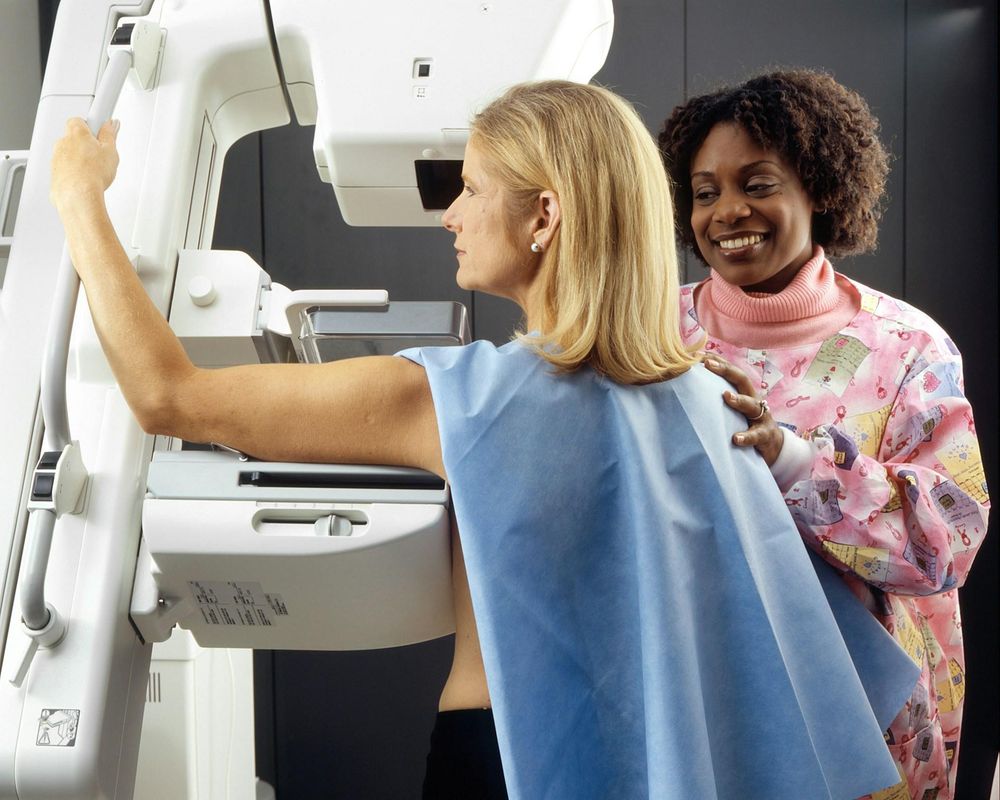
You will stand in front of the mammography machine while the mammographer positions one breast on the machine's platform. A plastic plate is then lowered to compress the breast.
For some women, the sensation is uncomfortable rather than painful. Others find the compression painful. If it hurts, tell the mammographer. You do not have to silently endure it.
Compression is necessary because it spreads the breast tissue out, helps prevent movement and allows clearer images to be taken using a lower X-ray dose.
Several images are usually taken of each breast from different angles. You may be asked to stand still and hold your breath briefly while an image is taken.
The entire appointment typically takes around 20 minutes, although this can vary between facilities.
The uncomfortable part itself is brief.
You will feel pressure during the procedure.
This is one of the biggest worries women have before their first mammogram, and the honest answer is that everyone's experience is different.
Some women describe the compression as uncomfortable, awkward or strange rather than painful.
Others find it genuinely painful, particularly if their breasts are tender or sensitive.
The important thing is not to assume that you have to tolerate severe pain simply because you are having a screening test.
Speaking up can make the experience easier and gives the mammographer an opportunity to help you through the examination.
After the images are taken, a radiologist reviews them and sends a report to your referring doctor or healthcare provider.
One of the most important things to know is that being called back does not automatically mean you have breast cancer.
Sometimes an image is unclear, an area needs a closer look, or additional views are needed.
This can happen more often after a first mammogram because there are no previous images available for comparison.
Further testing may include another mammogram or an ultrasound.
Your healthcare provider will explain what is needed.
Being called back does not automatically mean you have breast cancer.
Mammograms are an important screening tool, but they are not perfect.
Some cancers can be difficult to see on a mammogram, particularly in women with dense breast tissue.
This is why you should still speak to a healthcare professional if you notice a new or unusual breast change, even if your most recent mammogram was normal.
Do not wait for your next screening appointment if something feels different.
You do not need to pretend you are not nervous.
You can tell the mammographer that you are anxious.
You can speak up if the compression is painful. And you can ask what happens next before you leave.
A mammogram may not be the most comfortable few minutes of your day, but knowing what is coming can make the experience much less intimidating.
The important thing is not to let fear of the appointment become a reason to put off an important screening test.