Why affluent Chinese families prioritise local tutoring, not overseas exposure - South China Morning Post
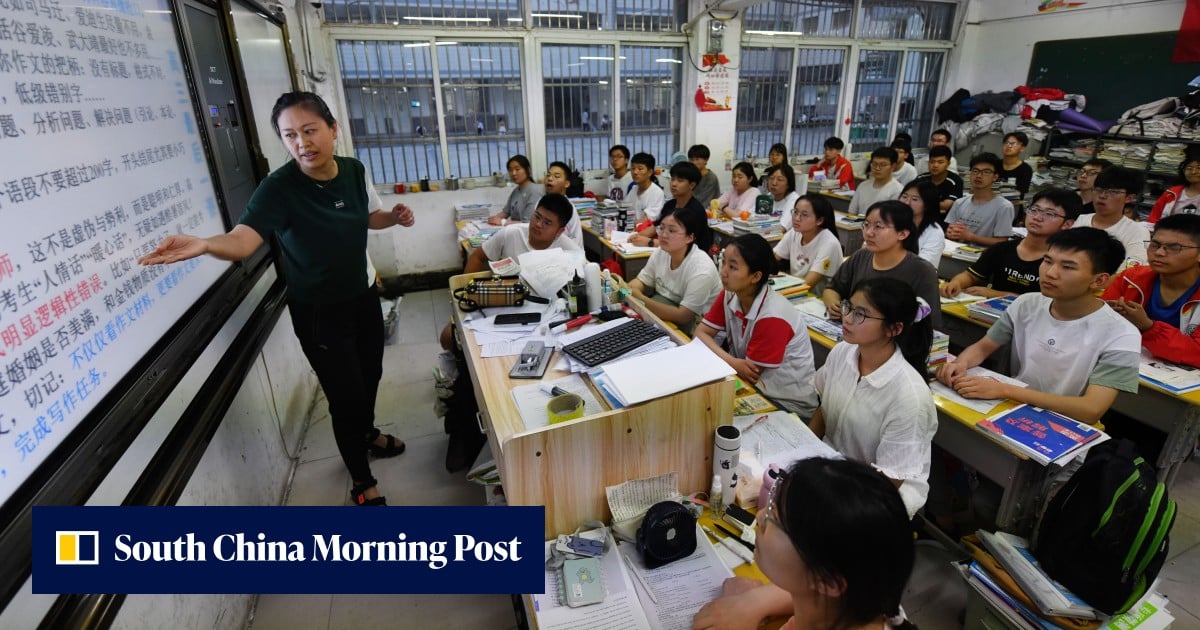
He Huifengin GuangdongPublished: 11:00am, 13 Sep 2026China’s upper-middle-class families are spending more on their children’s local education to help them compete in a tight domestic job market at the expense of summer programmes aimed at gaining admission to foreign universities, a recent survey found.
A survey of 277 affluent Chinese families by Babazhenbang, a parenting and education platform with a database covering hundreds of schools preparing students for overseas study, found that 84.5 per cent of families paid for subject-specific tutoring during the July–August public school holiday, up from 80.7 per cent last year.
The share of families spending more than 60,000 yuan (US$7,653) over the break doubled to 9.4 per cent, Babazhenbang found. It said maths, English and tutoring on preparing for exams remained the top choices, with average spending of 24,000 yuan.
An emphasis on getting children ready for work in China reflected a tough domestic job market along with thinning interest in overseas education, analysts said.
“Families that have given up the international route are putting the money into domestic tutoring instead,” said Kent Cai, founder of Zhejiang Newway, an international education consultancy. “Once they switch to the domestic education track, competition becomes even more intense, so parents are willing to spend more on tutoring to increase their sense of certainty.”
Babazhenbang’s survey found that average spending on summer break education programmes fell to a three-year low of 61,100 yuan this year, from 69,000 yuan last year.
The share of families spending more than 100,000 yuan on those activities was 12.5 per cent, similar to last year but sharply below 39.4 per cent in 2024 and 26.7 per cent in 2023. The survey also found also that 15.5 per cent of the families had spent less than 10,000 yuan on their children’s summer programmes, the highest proportion in recent years.