Why deep-red Kansas has become an unexpected Senate battleground

In a state that hasn't elected a Democratic senator since 1932, Republican Sen. Roger Marshall suddenly finds himself in a competitive race with weeks to go until the 2026 midterm elections.
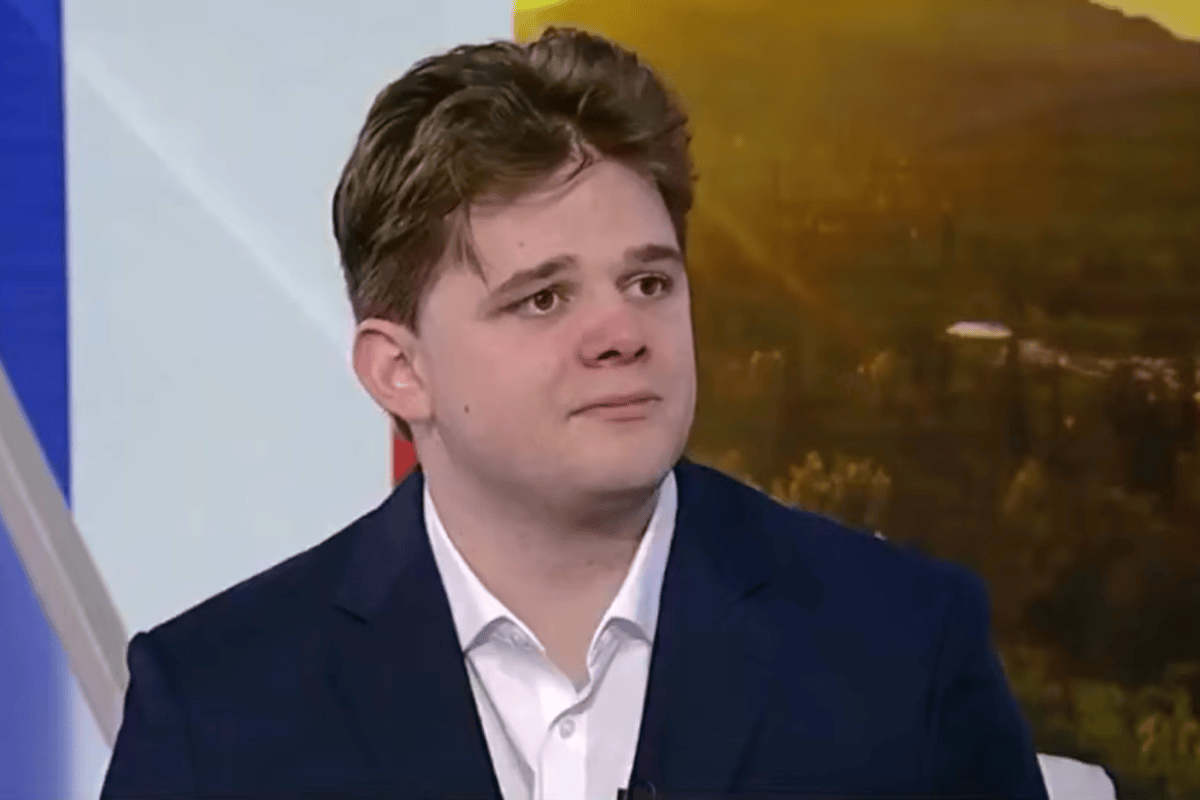
Stubborn inflation, blowback from White House trade policies, and a formidable Democratic challenger in megachurch pastor Adam Hamilton have combined to turn ruby-red Kansas into an unexpected Senate battleground.
The tightening contest has forced Marshall into a balancing act confronting a growing number of vulnerable Republicans: creating space from President Donald Trump on issues that pose risks at home without alienating his base.
"When a sitting Republican senator in Kansas starts running away from their leader in the White House, the five-alarm bell is ringing for the entire party," said Bob Beatty, a political scientist at Washburn University. "Loyalty to Washington is becoming a liability when voters are feeling the squeeze at home."
The Cook Political Report with Amy Walter shifted the race from "Likely Republican" to "Lean Republican" on Sept. 23.
A September Emerson College/Nexstar survey of 750 Kansas likely voters put Hamilton at 45% and Marshall at 43%, a dead heat within the poll's 3.6% margin of error. In the same poll, Trump's approval in Kansas stood at 40%, with 53% disapproving and nearly half of likely voters naming the economy their top issue.
National Republican groups have taken note. Outside groups are now pouring millions into Kansas to defend the seat that once sat safely outside the Senate battlefield. At stake is the GOP's Senate majority.
Marshall has been a stalwart Trump ally for years. Though Trump carried Kansas by 16 points in 2024, the senator has recently shown a willingness to distance himself.
In September, Trump threatened to ban U.S. sales of aircraft built by Canadian manufacturer Bombardier, potentially putting the future of many of the company's roughly 1,500 Wichita-based jobs in limbo. While Marshall offered little resistance to the broader trade dispute that spurred the threat, he insisted he had taken the fight for local aerospace jobs "inside the Oval Office."
Meanwhile, farmers are being squeezed from both ends. Trade disputes and retaliatory tariffs have weighed on grain and soybean markets just as the Iran war has driven up fuel costs. Diesel — essential for combines, tractors and transport trucks — jumped nearly a dollar a gallon during one 30-day stretch this harvest season, according to AAA.
Ranchers have been hit, too. In a bid to tamp down ground beef prices, Trump in August moved to lower tariffs on an additional 300,000 metric tons of imports for lean beef trimmings.
"The interference in Washington is causing more harm than good," said Matt Teagarden, chief executive of the Kansas Livestock Association. "Many of our members would prefer policymakers to let the market work."
The association endorsed Marshall in both his 2016 House race and his 2020 Senate campaign. This year, it has declined to endorse either Marshall or Hamilton.
Marshall, meanwhile, has offered calibrated pushback against several Trump administration policies, calling for "targeted relief" on fuel costs and arguing the administration took the wrong approach to food prices.
Immigration enforcement further complicated Marshall's balancing act. Immigration and Customs Enforcement raids have swept across southwestern Kansas, home to some of the nation's largest meatpacking plants and feedlots, stoking fear among immigrant workers.
"Workers stayed home, causing plants to shorten shifts, slow production lines or cancel shifts altogether," Teagarden told CNBC. "Canceled processing left feedlots holding cattle longer, driving up costs in an industry already facing labor shortages."
Marshall responded with measured critique: "When ICE operates in Kansas, it needs to coordinate with our local law enforcement," he posted on X on Sept. 23. "Our sheriffs and police know these communities better than anyone."
Adding to Marshall's troubles are controversies all his own.
The New York Times reported on Sept. 8 that Marshall, a physician, sued more than 700 patients of his medical clinic over unpaid bills. The Times found that patients were arrested in 81 cases after missing court dates; lawyers also garnished patients' wages and bank accounts, and patients were routinely charged 18% annual interest.
Democrats have also criticized Marshall for his ties to Florida, where he maintained a home.
Marshall's campaign rejected both attacks. Brent Robertson, Marshall's chief of staff, called the premise of Hamilton's medical-debt attack "a lie on its face," noting that the Kansas Bill of Rights prohibits imprisonment for debt. He also said, "Senator Marshall lives in Kansas, and his residence on 300+ acres is well established."
Marshall's tightening contest is part of a widening defensive perimeter for the GOP.
Cook moved Republican-held Senate races in Texas and Iowa to "Toss Up" in August. In September, it shifted Kansas toward Democrats and moved South Carolina onto the competitive map. As of Sept. 23, the publication rates control of the Senate a toss-up.
"Nobody had Kansas on their bingo card as a battleground when this cycle began," Kansas Democratic Party Chair Jeanna Repass said.
Hamilton brings unique crossover appeal to the race, political experts tell CNBC. He spent three decades building the largest United Methodist congregation in the country and entered the race with an established network reaching well beyond traditional Democratic circles.
"Hamilton is wildly popular in places where I can't even get a Democratic candidate to run for a House seat, a state legislative seat," Repass told CNBC, adding that Hamilton has supporters "knocking every door" in some of those communities.
Hamilton's background — he has previously been registered as both a Republican and a Democrat and briefly became unaffiliated this year while considering an independent bid — has also made it easier for him to appeal outside the Democratic base, Beatty said.
"He creates a permission structure for moderate Republicans and independents to cross the aisle," Beatty told CNBC.
That appeal is yielding endorsements from prominent former Republican Govs. Bill Graves and Mike Hayden, as well as Marshall's recent GOP primary challenger, Arch Naramore. Meanwhile, the September Emerson College poll found Hamilton leading Marshall among independent voters, 42% to 27%.
"Kansas isn't undergoing an ideological realignment overnight," said David Kensinger, a veteran Republican strategist and former chief of staff to Kansas Gov. Sam Brownback. "But voters are frustrated right now and Hamilton isn't the one in power."
Hamilton's strategy also depends on Kansas' recent penchant for bucking GOP orthodoxy.
In 2022, nearly 59% rejected an amendment that would have allowed lawmakers to further restrict abortion, then re-elected Democratic Gov. Laura Kelly three months later. In 2025, enough Republican legislators resisted Trump's push for mid-decade redistricting to block a special session. And in August, voters overwhelmingly rejected a Republican-backed proposal to change how state Supreme Court justices are selected.
"Kansas is still a very deep red state," Repass told CNBC. "We just have purple veins."
Despite the warning signs, Kansas Republicans have seen versions of this before.
After Bob Dole narrowly survived reelection in the aftermath of Watergate in 1974, every Republican Senate nominee in Kansas has won by double digits. More recently, Republican Sen. Pat Roberts appeared locked in a close contest with independent Greg Orman in 2014 before winning by roughly 11 points. Six years later, Marshall's race against Democrat Barbara Bollier also appeared competitive late in the campaign before he won by more than 11 points.
"This has happened regularly," Kansas Republican Party Chair Danedri Herbert told CNBC. "Republicans who drift or remain undecided often return to the party as Election Day approaches."
Marshall also retains a substantial financial advantage. As of July 15, the cutoff for the candidates' pre-primary FEC reports, his campaign held $5.4 million in cash, more than triple Hamilton's $1.7 million.
But Republicans aren't taking chances.
On Friday, the Senate Leadership Fund, the super PAC aligned with Senate Republican leadership, began a multimillion-dollar advertising campaign in Kansas to support Marshall while pausing additional spending in North Carolina, Semafor reported. The group has reserved nearly $8.2 million in Kansas through Election Day, according to AdImpact.
"Our mission is simple: help Republicans win throughout Kansas," Herbert said. "The Senate race is too critical to take for granted, and we are treating it that way."