Why did Delhi get 16% excess rain while India faces a 15% monsoon deficit?
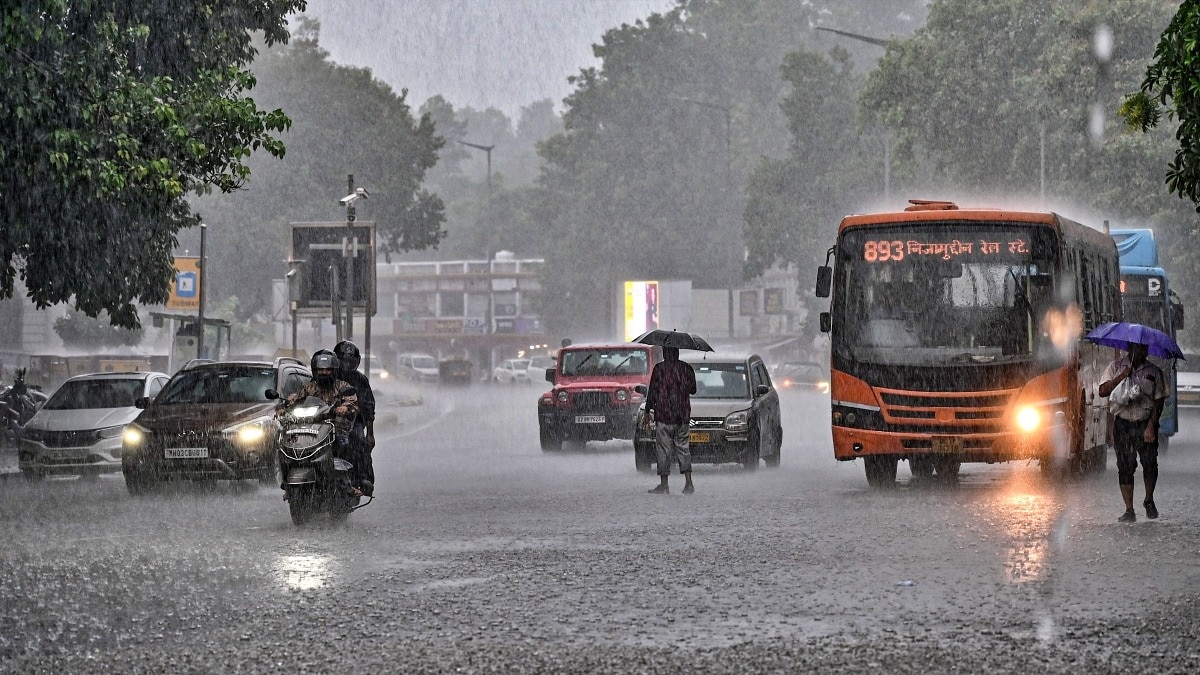
The southwest monsoon has withdrawn from Delhi, but not before leaving the capital with 16% more rainfall than normal, an unusual contrast in a year when India as a whole has recorded a 15% rainfall deficit.
The India Meteorological Department (IMD) declared the monsoon’s withdrawal from Delhi on September 23, two days ahead of its normal withdrawal date of September 25, based on the 1971-2019 climatology. The monsoon arrived late this year, reaching Delhi on July 2, compared with the normal onset date of June 27.
Yet at Safdarjung, Delhi recorded 728.6 mm of rain between June 1 and September 23, against a normal 629.7 mm. That is an excess of 98.9 mm, or 16%. Under IMD’s classification, however, this still falls within the “normal” rainfall category, which ranges from 19% below to 19% above normal.
So, why does Delhi have excess rain when India is facing a deficit?
The answer lies in the highly uneven distribution of monsoon rainfall. India’s national rainfall figure is an average across a huge geographical area. A nationwide deficit does not mean every state or city receives less rain than normal. This year, several regions have experienced substantial deficits even as pockets such as Delhi received more rainfall.
The IMD map also shows that even within Delhi, rainfall has not been evenly distributed.
The Southwest Delhi district had a 23% deficit and Northeast Delhi a 22% deficit, while several other districts remained within the normal range. The Safdarjung observatory’s 16% surplus therefore does not represent uniform rainfall across the entire capital.
The contrast also points to the fact that rainfall totals and monsoon duration tell different stories.
Delhi had a relatively short monsoon season this year, just 83 days between its July 2 onset and September 23 withdrawal, yet individual heavy-rain episodes were sufficient to push the seasonal total above normal.
Monsoon withdrawal itself is not determined by the seasonal rainfall total.
The IMD looks for at least five consecutive days of reduced rainfall, establishment of an anticyclonic circulation in the lower atmosphere and a significant fall in atmospheric moisture.
This year's Delhi monsoon therefore captures a larger feature of India's 2026 rainfall: a weak national monsoon can coexist with intense local and regional rainfall.
For farmers, reservoirs and flood managers, where and when rain falls can matter as much as the national seasonal number.
And with the monsoon now retreating, Delhi is moving into its next phase: drier weather, falling humidity, and eventually the return of the winter pollution season.- EndsPublished By: Sibu Kumar TripathiPublished On: Sep 24, 2026 11:06 IST