Why lessons from Hyderabad’s KBR faux pas must inform our future

You don’t have any Active Subscription.
Account subscription benefits alongside Premium Stories, Editorials, Opinions and more. Unlock these with Subscription
About two months ago, Special Chief Secretary, Metropolitan Administration & Urban Development Jayesh Ranjan and Commissioner, Greater Hyderabad Municipal Corporation R.V. Karnan had to field a few uncomfortable questions from a group of students and working professionals at a panel discussion on urban mobility, traffic congestion and city liveability.
Some of the questions were about the vertically spiralling city set against collapsing road infrastructure, under pressure from an explosion in private vehicles. Others were about the virtual absence of public transport and the increasingly restricted options for pedestrian movement. Both bureaucrats fumbled for answers.
The exchange exposed how detached the Government and its policymakers are from the reality millions face daily, working, travelling and struggling to get by in the city.
Less than two months after the event, news emerged that the seven flyovers and seven underpasses the Government had intended to build around the KBR National Park, at the heart of the city, have been dropped. Instead, two elevated corridors — one from Nagarjuna Circle to Road No. 36, another from Road No. 12 to Shaikpet — will be built by GHMC and HMDA, respectively, to ease traffic towards Madhapur, Gachibowli and Knowledge City.
The sad part is that the 14 structures planned under the Hyderabad City Innovative and Transformative Infrastructure (H-CITI) project have been jettisoned only after scores of fully grown trees were felled or reduced to skeletons for translocation, green median spaces were dug up for foundation work, and a large stretch of road around the park was left grey and barren. The project was awarded to an agency that must already have drawn its first tranche of funds.
The Government appears to have realised the futility of more road infrastructure only after the stretch around the park was converted to one-way traffic to facilitate the structures. That one-way system turned out to be a serendipitous fix for gridlocks the public had suffered for years.
That this handy, no-cost remedy was never considered as an alternative before the Government went full throttle into building more cost- and carbon-intensive infrastructure says a great deal about its priorities — priorities even seasoned bureaucrats were unable to reasonably explain.
Mr. Jayesh Ranjan, ironically, had been talking about building shelters for gig workers as a climate-change measure — after removing fully grown, shade-giving trees.
The push to rev up private transportation on city roads began with the Strategic Road Development Plan, conceived a decade ago by the then Bharat Rashtra Samithi Government. Under this scheme, around 40 structures in steel and concrete have risen so far, at a cost of more than ₹7,000 crore. Over the same period, public transport was severely neglected, feeding a massive surge in private vehicles eating up more and more road space.
Barring a few exceptions, such as the steel bridge between VST and Indira Park, the structures built under SRDP largely failed to meaningfully resolve traffic issues. In fact, they worsened matters at several junctions, merely shifting congestion to the next bottleneck.
An earlier proposal to build six flyovers around KBR National Park under SRDP was successfully thwarted by a citizens’ movement, which invoked the pending demarcation of the Eco-Sensitive Zone as a precondition. The H-CITI project is merely a poorly planned expansion of that earlier proposal, with more than twice the number of structures. Thanks to ever-compliant infrastructure and transport engineering consultants, this third version imagines the same 14 structures merging into two elevated corridors instead.
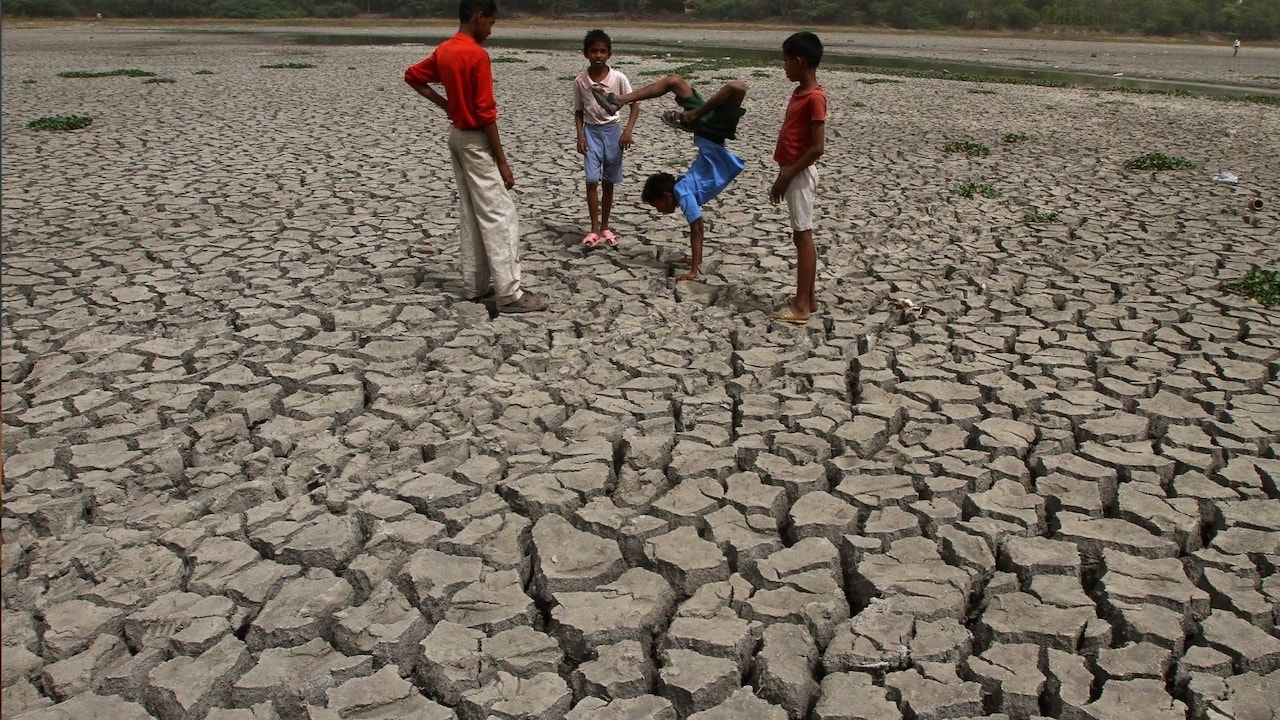
This year’s extended summer, coupled with Nepal’s devastating floods, has shown that global warming is not a hoax. Each fully grown tree brings down local temperature by 1–5°C; each concrete structure raises it by roughly the same measure. The maths is not difficult. All that is needed is the willingness to acknowledge it and factor it into every plan — a realisation that has been absent in successive Governments, blinkered by immediate, parochial concerns.
Comments have to be in English, and in full sentences. They cannot be abusive or personal. Please abide by our community guidelines for posting your comments.
We have migrated to a new commenting platform. If you are already a registered user of The Hindu and logged in, you may continue to engage with our articles. If you do not have an account please register and login to post comments. Users can access their older comments by logging into their accounts on Vuukle.