Why no acting president was appointed during Ramaphosa’s illness - IOL
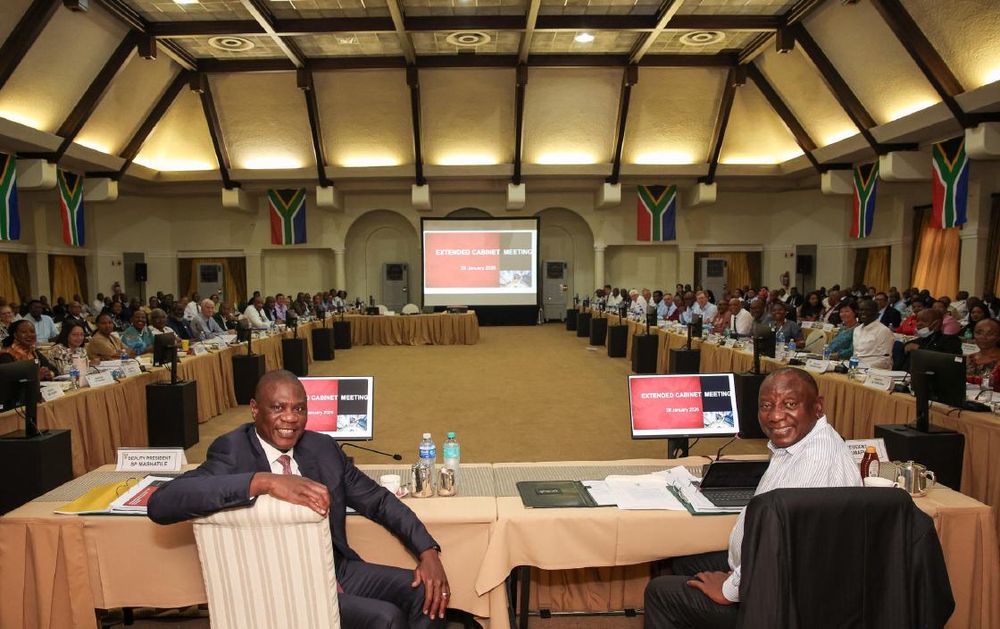
With President Cyril Ramaphosa recovering from illness following the BRICS summit and Deputy President Paul Mashatile extending his medical leave, the country faces a unique constitutional moment.
For the first time in its modern democracy, South Africa faces an unprecedented leadership vacuum, with both President Cyril Ramaphosa and Deputy President Paul Mashatile being incapacitated by sudden illness, leaving the country effectively without a sitting head of state.
On Wednesday, the Presidency announced that Ramaphosa has been booked off public engagements due to ill health.
This is after his medical team advised him to step away to rest and recover after attending the BRICS Summit in India.
However, instead of appointing an acting president, Ramaphosa requested Cabinet ministers to represent him at public events.
“President Ramaphosa, who returned from the BRICS Summit in India on Monday, has been advised by his medical team to rest and recover. Where possible, the president has asked the respective ministers to represent him at scheduled public engagements,” the statement read.
On the other hand, Mashatile recently announced that he was admitted for a minor surgical procedure and observation after becoming unwell at his Johannesburg home.
He said that his recovery is progressing well and he is regaining strength, though he remains on medical leave and continues to rest on his doctor’s advice.
Asked who signed laws and executive orders in his absence and how responsibilities were split for international obligations, Ramaphosa’s spokesperson, Vincent Magwenya, did not respond to specific questions, saying: “You are being unnecessarily dramatic. We said he has cancelled his public engagements. We did not say he was incapacitated.”
Political analyst Zakhele Ndlovu said Ramaphosa could have appointed any member of the Cabinet as an acting president, as the late former president Nelson Mandela did when he appointed the late Inkatha Freedom Party (IFP) leader Mangosuthu Buthelezi.
Mandela named Buthelezi as acting president many times when he and the deputy presidents were out of the country. This included notable absences in February 1997 and 1998.
In 1998, Buthelezi authorised the South African African intervention in Lesotho, known as Operation Boleas while serving as acting president.
The military operation was launched under the banner of the Southern African Development Community (SADC) to stabilise Lesotho following a controversial general election that sparked fierce anti-government protests, riots, and a military mutiny.
The intervention faced intense backlash and was widely labelled a failure or an outright “invasion” due to the chaos that followed.
It resulted in the deaths of nine South African soldiers, 29 Lesotho soldiers, and approximately 47 Basotho civilians.
Ndlovu said Ramaphosa could be avoiding an acting president to ensure that no temporary custodian can exercise full executive authority.
“Section 90 of the Constitution sets out the rules to be followed. If both the president and his deputy are off sick, then a minister designated by Cabinet through a collective decision takes charge.
“It's possible that he is avoiding a formal acting president to ensure no temporary custodian can exercise full executive authority. But what would be his rationale? This is an election year and with less than two months before the November 4 elections, Ramaphosa is trying to be careful and cautious,” Ndlovu said.