Why Samajwadi Party fielded Reliance executive Dhanraj Nathwani in Rajya Sabha polls - The Indian Express
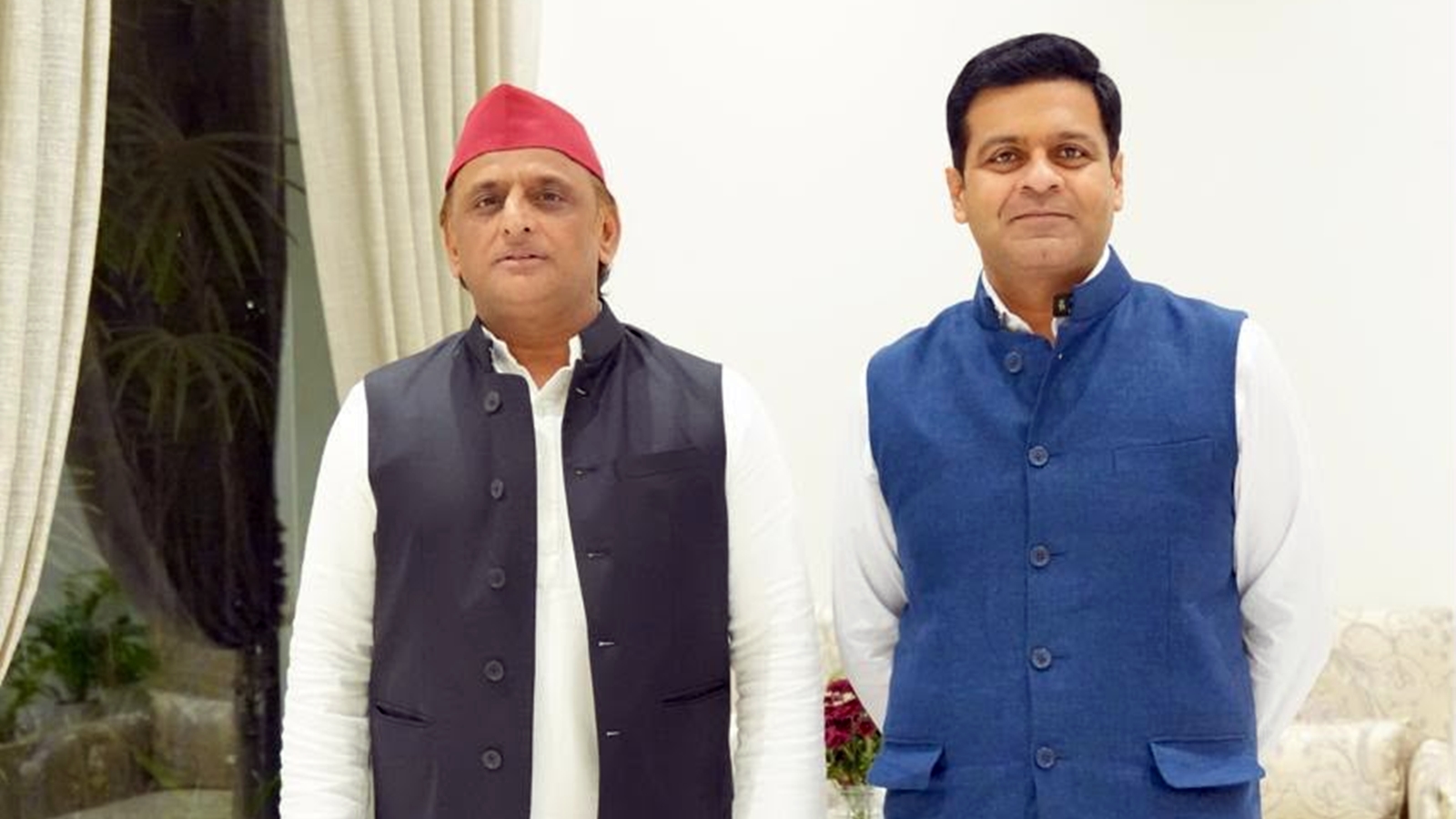
The Samajwadi Party’s (SP) decision to nominate corporate executive Dhanraj Nathwani for the Rajya Sabha election has raised questions about the political messaging behind the choice, particularly when the party is building its 2027 Uttar Pradesh campaign around the Pichhda, Dalit aur Alpasankhyak, or PDA, plank.
Nathwani is the son of top Reliance Industries executive Parimal Nathwani, the Director of Corporate Affairs for Reliance Industries Ltd (RIL), who was re-elected to the Rajya Sabha from Jharkhand as an NDA-backed Independent this June, securing his fourth consecutive term in the Upper House.
The 40-year-old has been associated with Reliance Industries for about 16 years. He oversees the group’s Jamnagar manufacturing division, one of the world’s largest integrated refining and petrochemical complexes, and also works with Reliance Jio in Gujarat. Nathwani also leads the engineering, procurement, and construction vertical and supervises all construction and infrastructure projects in the Reliance ecosystem. He also oversees Reliance Jio Defence System Ltd, which focuses on high-tech manufacturing of advanced military equipment and aerospace propulsion systems.
The decision initially surprised sections within and outside the party. Senior SP leaders, however, maintain that the party will field a third candidate who will be from a PDA community, potentially a Dalit or a Muslim. The party, however, does not have the numbers on its own to get a third candidate elected. The SP and the Congress together effectively have 102 MLAs on their side, with the numbers enough to elect two MPs (37 first-preference votes are required). They are, however, nine first-preference votes short of getting a third candidate elected. As of now, the SP has announced the candidatures of veteran Ram Gopal Yadav and Nathwani.
This is where a candidate such as Nathwani becomes important. The arithmetic of the contest has brought the possibility of attempts at cross-voting to the fore. SP leaders claimed that some BJP MLAs who feel they may not be considered for another term could be open to supporting the Opposition candidate.
Within the SP, the candidature is being defended not as a departure from its socialist ethos, but as an attempt to widen both its social and industry outreach.
“His selection is in tune with the socialist ideology. (Ram Manohar) Lohia talked of sampannata aur samta (prosperity and equality) going hand in hand. When there are people who are taxpayers, they help build the welfare state,” a party leader said, explaining the rationale behind Nathwani’s candidature.
The SP argues that Nathwani’s corporate background should not be viewed as an ideological departure, presenting the candidature as part of an existing, if limited, effort to establish a relationship with the business and corporate community and expand its political constituency.
An SP leader cited the example of businessman Sanjay Seth who was elected to the Rajya Sabha on an SP ticket in 2016. Seth later joined the BJP in 2019 and was subsequently re-elected to the Rajya Sabha as a BJP member.
“Now it is our turn. There are many within the BJP who are unhappy and want to join. We are not sure how much and what kind of space we would be able to give them, but they are ready to support us. The upcoming Rajya Sabha election will make it clear when we field the third candidate,” the leader said.
“We are fielding the third candidate and it would be from PDA. But what is important is the perception that Nathwani’s inclusion will create. Imagine, in the current situation, if someone from the corporate sector is seeing an opportunity in the SP, it means they are seeing prospects in the SP. It is a good narrative for us before 2027 and also at the national front,” said another SP leader.
The internal reading in the SP is that the candidature can help counter the perception that the SP’s political appeal is restricted to its traditional social constituencies. A corporate executive agreeing to contest for the party is being seen by party leaders as evidence that the party is seeking — and attracting — constituencies beyond its conventional political base. This, party leaders said, could be helpful in the run-up to the 2027 elections.
The BJP is also closely watching the developments, with the Nathwani nomination taking many in the ruling party by surprise.
For a party preparing for a 2027 contest in which it wants to present itself as a broad-based political alternative, the Nathwani nomination allows the SP to make a different argument: that PDA politics and engagement with the corporate sector are not mutually exclusive and that economic prosperity and social equality can be presented as parallel components of its political narrative.