Why unions say Canada's new labour bill will make strikes 'all but impossible' in regulated sectors - Toronto Star
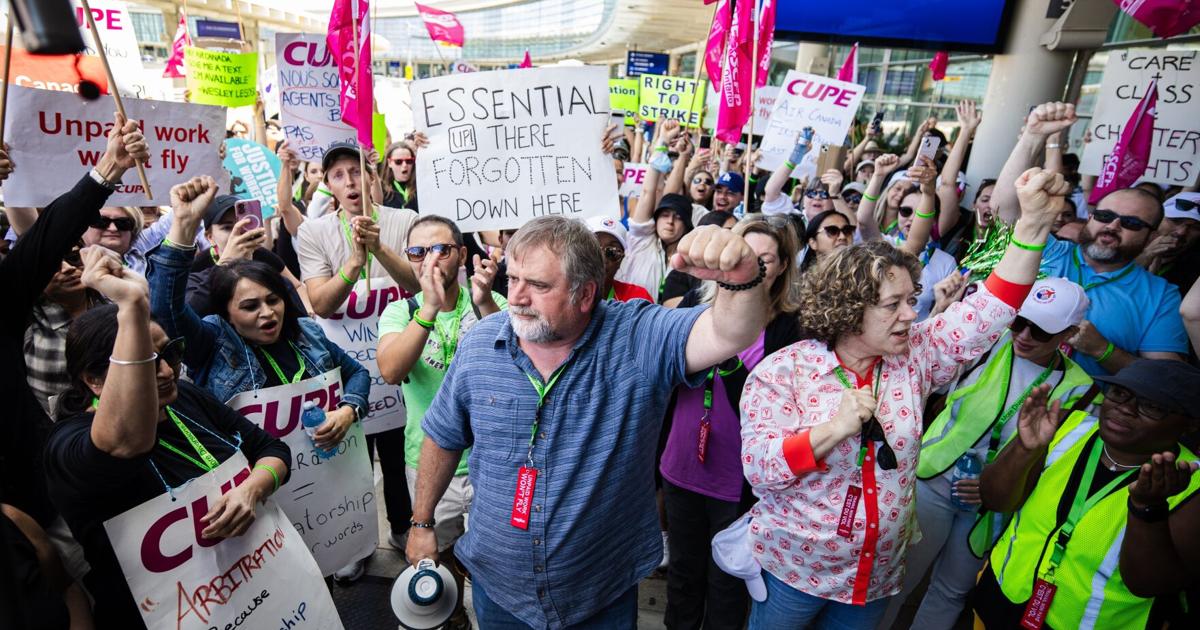
Experts say Ottawa's Building Canada Strong Act hands the labour minister and government 'unchecked' authority to suspend strikes based on 'national interest.'
Last summer saw striking Air Canada flight attendants ignore a federal back-to-work order and a directive from the Canada Industrial Relations Board before returning to the bargaining table.
While Ottawa’s new legislation overhauling labour law includes worker-friendly tweaks, unions across the country say it will make strikes in federally regulated sectors all but impossible.
The Building Canada Strong Act introduced Monday reinforces the authority of the labour minister to order the Canada Industrial Relations Board to end a strike or lockout with binding arbitration if it has potential to harm the national interest.
The minister already had that power under Section 107 of the Canada Labour Code, but the changes make it more likely to be used pre-emptively, says the head of the Canadian Labour Congress.
“There’s a real potential for those workers that they’ll have the right to strike, but they won’t ever be able to exercise it,” CLC president Bea Bruske said.
And Bruske warns the act will backfire on Ottawa by leading to more labour disruptions such as the August 2025 strike by Air Canada flight attendants.
“I think the Air Canada flight attendants were round one of what we’re going to see,” Bruske said. “Workers are going to be so frustrated by this. We’re definitely going to see an increase in wildcat strikes and work slowdowns.”
Last summer, Air Canada flight attendants represented by the Canadian Union of Public Employees ignored a federal back-to-work order and a directive from the Canada Industrial Relations Board, before returning to the bargaining table.
Patty Hajdu, the federal minister for jobs and families, said the changes protect workers’ right to strike, and includes several steps the minister needs to take before using Section 107, including the appointment of a special mediator who will evaluate negotiations and provide a public report which the minister must consider.
Bea Bruske, president of the Canadian Labour Congress, said the Liberal government’s proposed Bill C-39 would roll back the right to strike. Jobs Minister Patty Hajdu said the legislation is meant to encourage unions and employers to focus on getting a negotiated deal. (Sept. 22, 2026)
“The changes will strengthen good-faith bargaining, protect the right to strike, and deliver better outcomes for workers, businesses, and the economy,” said Hajdu in a written statement. Hajdu also noted that the bill says the minister must consider how a strike or lockout would affect the “national interest.”
“Protecting workers’ rights and strengthening our labour relations go hand–in-hand and it is central to building a strong labour framework,” Hajdu said. “Together, these changes will help build a modern, resilient, and fair labour relations system that supports good jobs, stable workplaces, and a stronger Canada.”
Breaking news, interactive polls, video, and voice notes. Star stories you’ll want to share, delivered where you’re already chatting. Follow the Star on WhatsApp.
But the Section 107 “guardrails” in the new legislation still leave ultimate power in the minister’s hands, said York University labour law professor David J. Doorey.
“The Minister’s power remains unchecked,” Doorey wrote in a blog post. “All they need to do is demonstrate that they ‘considered’ the criteria.”
Roughly 10 per cent of Canadian workers are in federally regulated sectors including transportation, docks, telecommunications and banking.
The bill also says that companies who take over a contract at a federally-regulated workplace such as an airport must respect any collective bargaining agreements already in place, including keeping unionized workers at the same wage.
The head of the union representing B.C. dock workers said the bill gives the federal labour minister such broad powers that it makes a legal strike by his members effectively impossible.
The government frames this law as part of its “Canada Strong” plan — and frankly, some parts are good — but toxic with good is still bad.