Will India's 49.9% stake in Russian oil giant shield it from US curbs over crude?
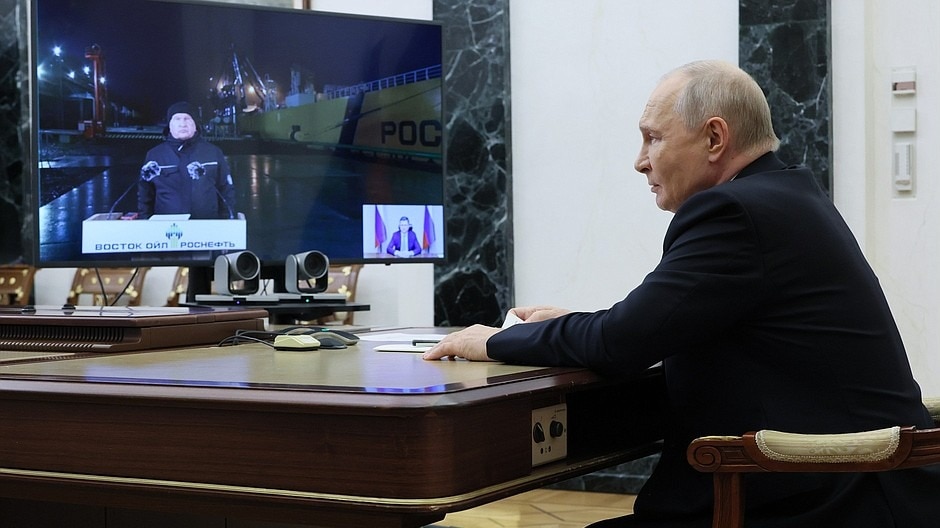
Russia launched the Vostok Oil project on September 5, the country's largest oil development of its kind since the Soviet era. Indian oil companies have a significant indirect stake in Vostok Oil. So, a question has emerged: Can Indian ownership of a Russian oil-producing asset provide a way around Washington's sanctions on Russian crude? India faces the risk of 100% tariffs for dealing in Russian crude.
Indian oil companies jointly hold a 49.9% stake in JSC Vankorneft, a Rosneft subsidiary whose Vankor assets form part of the broader Vostok Oil project.
But does such substantial Indian ownership in the Rosneft subsidiary make the crude extracted from these Russian oilfields "Indian oil"?
According to experts, the answer depends on how India acquires its share of the crude, but ownership does not change the oil's country of origin. Crude extracted from Russian oilfields would remain Russian-origin crude, meaning its treatment under US sanctions and tariffs would still depend on the applicable rules governing Russian energy.
The reason this distinction is important is that US President Donald Trump signed the Lindsey O Graham Sanctioning Russia and Iran Act of 2026 on September 18. This law, which garnered support from both Republicans and the Democrats, gives the US president powers to impose tariffs of up to 100% on goods from major buyers of Russian oil and gas.
India, which acquires more than half of its crude requirements from Russia, is thus among the countries which could come under renewed scrutiny and pressure from Washington DC. WHAT IS VOSTOK OIL AND HOW IMPORTANT IS IT?
At the centre of the debate is the assumption, mainly on social media, that if an Indian entity owns part of an oil-producing company, and then extracts crude equivalent to its equity share, that oil could be treated as Indian-origin crude. But Rahul Chopadekar, Vice President (Marketing) at Mumbai-based Rubix Data Sciences, told India Today Digital that this interpretation does not hold.
"Indian ownership of a Russian upstream asset does not, by itself, change the origin of crude extracted in Russia," Chopadekar said.
For companies operating in sanctions-sensitive markets, Rubix provides sanctions screening, cross-border ownership mapping and continuous compliance monitoring. Its assessment is, that the place where crude is extracted remains "central to determining its origin". So, will India's stake in the Vostok project help it evade American sanctions?
For context, Vostok Oil is a massive oil extraction project in Russia's northern Krasnoyarsk Krai, centred on the Taimyr Peninsula well within the frigid Arctic Circle. It brings together the Vankor oil cluster and newer fields such as Payakha and West-Irkinskoye, with pipelines connecting them to the Bukhta Sever terminal for exports via the Northern Sea Route.
Rosneft estimates Vostok Oil's resource base at 6–7 billion tonnes of oil. The project is designed to become one of Russia’s largest oil-producing regions, potentially adding tens of millions of tonnes of annual production while creating a major new Arctic export route. Its development, however, is facing significant logistical, financial and sanctions-related challenges. Many of the core fields comprising the Vostok Oil cluster on the Taimyr Peninsula and in Eastern Siberia were first mapped and discovered by Soviet geologists decades ago. (Photo: Rosneft Press Office) INDIA'S INVESTMENT IN RUSSIAN VOSTOK OIL PROJECT IS NOT DIRECT
The first thing that needs to be cleared up is the state of ownership currently held by Indian entities.
Indian state-run oil companies do not hold any stake in the Vostok Oil project. Rather, the 49.9% stake owned by Indian entities, is in JSC Vankorneft, a subsidiary of the Russian refining company, Rosneft.
ONGC Videsh owns 26% of JSC Vankorneft, while Oil India, Indian Oil Corporation and Bharat PetroResources hold the remaining 23.9% through Vankor India Pte Ltd. Rosneft retains 50.1% and control over the company.
Vostok Oil, on the other hand, is a much larger Rosneft-led project in the Arctic. Rosneft's subsidiary RN-Trade has historically held 85% of the project's total shares, with other investors holding the remainder. The project includes the Vankor group of fields, among several other fields across Russia's Taimyr region.
That distinction is crucial because Indian ownership of Vankorneft does not translate into Indian ownership of Vostok Oil as a whole.
And even where Indian companies have an equity interest, that interest gives them an economic entitlement to production. It does not change the nationality or origin of the crude extracted from Russian territory. In simple terms, the equity stakes of Indian companies might provide them with dividends and not the name of "Indian oil". advertisementWHY CRUDE PRODUCED IN VOSTOK PROJECT WON'T BE INDIAN CRUDEThe idea of "India crude" relies on a basic misunderstanding of how the origin of crude works.
Just because an Indian company owns a stake in a Russian oilfield does not automatically make the crude produced there Indian crude. The oil remains Russian-origin even if part of its economic value accrues to an Indian shareholder.
"If an Indian company owns a stake in the producing asset, the underlying crude remains Russian-origin crude," Chopadekar told India Today Digital.
The same logic applies if Indian companies lift their share of production directly from the Russian field and transport it to India.
The route does not change the origin of the crude. Sending the cargo directly to India does not turn it into Indian crude. Nor would routing the cargo through a third country automatically change its origin.
This distinction becomes particularly relevant for Vankorneft, the Rosneft subsidiary where Indian refineries have substantial stakes in.
The Office of Foreign Assets Control (OFAC), the US Treasury's sanctions authority, added CJSC Vankorneft to its sanctions lists, back in October 2025.
The designation identified the Russian company as subject to Directive 2 and Directive 4 under Executive Order 13662 and also flagged secondary-sanctions risk under the relevant Russia sanctions framework. OFAC identified Vankorneft as linked to Rosneft.
For context, Directive 2 restricts certain US financing involving designated Russian financial institutions, while Directive 4 prohibits the provision of goods, technology, or services in support of certain deepwater, Arctic offshore, and shale oil projects involving designated Russian entities. The company was also flagged for potential secondary-sanctions risk under the relevant Russia sanctions framework. OFAC identified Vankorneft as linked to Rosneft.
"The existence of Indian shareholders does not by itself remove the sanctions exposure attached to the producing entity or transactions involving it," according to Rahul Chopadekar. Commencing operations and physical crude exports in September 2026 of the Vostok marks a symbolic and practical operational breakthrough for Moscow. The project has overcome years of sanctions, investor exits, and logistical hurdles. (Photo: Rosneft Press Office) OWNERSHIP IN AN OIL GIANT CHANGES THE DEAL, AND NOT THE ORIGIN OF THE CRUDE
There is an important difference between buying Russian crude on the open market and receiving production through an equity interest.
In a conventional purchase of crude, an Indian refiner might buy crude from a producer, trader or intermediary under a commercial contract. But, an equity-lifting structure is different. An Indian shareholder might have a direct economic entitlement to a proportion of the production because it owns part of the producing asset.
This arrangement can impact the contractual chain, payment arrangements and reliance on intermediaries. But it does not create a blanket exemption from sanctions like the one the US can impose under the Lindsey O Graham Act.
"The sanctions analysis would still depend on the producing entity, counterparties, financing arrangements, payment mechanisms, shipping, insurance, technical services, and applicable US authorisations," Chopadekar said.
Which means, terming an Indian company an "investor" or "producer" rather than a "buyer" might accurately describe its commercial relationship with the asset. But the terminology does not create a safe harbour from sanctions.
The Vankorneft example is important here to understand the situation because Indian companies already have a long-standing ownership interest there.
Rosneft said in 2016 that ONGC Videsh's additional 11% purchase would take the Indian state companies' combined stake in Vankorneft to 49.9%. Rosneft retained 50.1%, including control over operations.
Oil India's current disclosures also show Rosneft with 50.1%, ONGC Videsh with 26% and Vankor India Pte Ltd with 23.9%.
So the 49.9% figure is substantial. But it does not change the legal and geographical identity of the production. Russian crude, thus, will remain Russian. WHY INDIAN STAKE DOESN'T MAKE VOSTOK OIL INDIAN
The debate around whether Indian ownership will let Russian crude be classified as Indian crude has become more relevant because Vostok Oil has now moved from being a giant development project of Russia towards actual exports.
Reuters reported on September 24 that Russia had begun commercial oil exports from Rosneft's Vostok Oil project, with crude being loaded at the newly built Bukhta Sever terminal on the Taimyr Peninsula.
The project was once billed as capable of producing up to 2 million barrels per day (bpd), although initial exports are much lower, according to two industry sources of Reuters.
Amsterdam-based digital news outlet, The Moscow Times, had earlier on September 9 reported that the first tanker associated with Bukhta Sever had spent 84 days waiting beside the terminal before loading, while another tanker was heading towards the facility. It also reported Rosneft's plans for a much larger fleet to service the project.
The distinction between Vankor and the wider Vostok Oil project therefore becomes important. Vankor is already a producing asset in which Indian companies hold a 49.9% combined interest. Vostok Oil is the much larger development project into which the Vankor group has been incorporated.
Rosneft describes Vankor as part of the Vostok Oil project. Its first oil shipment from the new Arctic project was launched in September, marking a significant step in the project's development.
But none of these changes the US sanctions question, because, according to energy expert Anas Alhajji's X post, "The law [Russia sanctions] primarily strengthens Washington's leverage rather than automatically shutting Russian oil out of global markets.
As Rahul Chopadekar of Rubix Data Sciences told India Today Digital that "origin, ownership, and transaction structure should not be treated as interchangeable triggers". These factors cannot simply be collapsed into one question of ownership. HOW SIGNIFICANT ARE THE STAKES IN THE RUSSIAN OIL GIANT?
With the growing investment, India could, in theory, deepen its participation in Russian energy through a model that combines upstream equity, direct entitlement to crude, refining in India and the international sale of petroleum products.
Such a structure could also give Indian companies greater control over supply and potentially strengthen energy security. It could also reduce dependence on traders and provide a more integrated commercial relationship with Russian producers.
But even these models would not automatically remove US sanctions exposure.
Just as cars manufactured by Land Rover in the UK are considered British-made despite the company being owned by India's Tata Motors, crude extracted via the Vostok Oil project remains Russian-origin crude. Once it reaches an Indian refinery, it may enter a different commercial and refining chain, but that does not retrospectively change its country of origin.
This is why the 49.9% stake, while commercially significant, cannot by itself be treated as a shield from US sanctions.- Ends
Multimedia journalist and cub reporter with the India Today Group (Digital) | Indian politics connoisseur with a nose for the truth | Bringing you anything and everything that makes news | Keenly follow the economy and realpolitik 'cause it matters to you.