With their families barred, international students say they face an agonising choice
Anxiety had been building among Australia’s international students for weeks as a promised migration crackdown targeting them loomed.
On Thursday, family WhatsApp chats exploded as overseas relatives weighed up sweeping reforms that will bar family members coming to Australia on conditions attached to student visas.
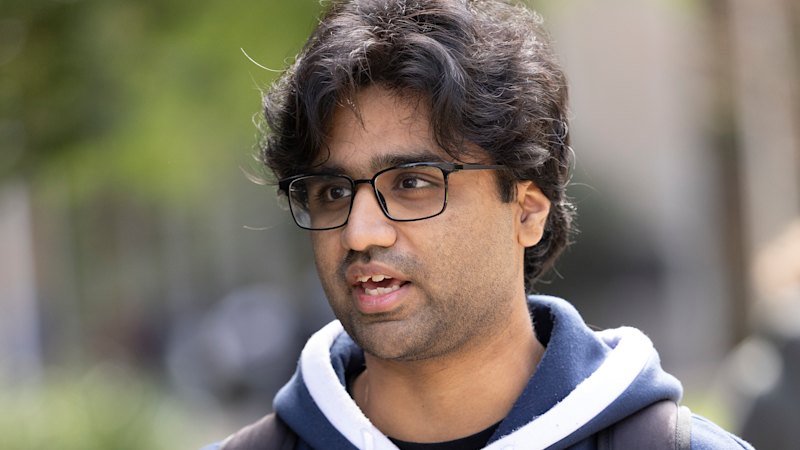
Ali Chatha says the policy will deter many international students.Jason South“The biggest issue will be leaving a child or your partner behind,” said Pakistani international student Ali Chatha, who is two years into an undergraduate science degree at the University of Melbourne. “In the end, you’re going to choose your family over your career and opportunities.”
The federal government plans to curb net migration from about 300,000 to 225,000 next year using a suite of measures. The biggest group in the government’s sights is international students, whose numbers will be curbed by targeting visa-hopping and by reducing the influx of family members.
But the changes have been opposed by the university sector, which warns of funding shortfalls that will throw projects into disarray.
The government’s plans include exemptions for family members of students from Pacific and ASEAN countries, as well as students studying specific courses such as PhDs.
Cho Shwe plans to bring her mother to Melbourne. Jason SouthMyanmar is one of countries with such exemptions. Myanmar national Cho Shwe moved to Australia this year to study a master’s of environmental science and has plans to bring her mother to Melbourne for support. She would then depart when Shwe finishes the degree.
“Moving here for study, it is really challenging to not have family members here. You emotionally rely on them,” she said.
For countries without exemptions, Chatha believed the policy would lead to many undergraduates reconsidering studying in Australia. He said the policy fails to consider cultural backgrounds where students start families at a younger age.
“The biggest issue is leaving a child or your partner behind. It’s really going to affect them,” he said.
Australia’s universities are heavily reliant on funding from international students, who pay extremely high course fees, which underwrite locals’ education and fund research.
This is particularly so for the prestigious Group of Eight. NSW’s two biggest universities – the University of Sydney and the University of NSW – each reported $1.7 billion in revenue from international students last year.
University of Sydney vice-chancellor Mark Scott said care must be taken to ensure international students did not feel unwelcome.
“All migration is not the same – international students attend the University of Sydney for a defined period, make a vital contribution across the economy and overwhelmingly return home.”
He also flagged a probable funding shortfall.
“It is important to remember that Australian students are among the greatest beneficiaries; international student fees support teaching, infrastructure and research and help lift our global standing.”
The University of Melbourne, Monash University and the University of NSW did not respond to questions.
“[The proposed changes] create huge gaps in the way we fund our buildings, our teaching and our important breakthrough research,” Universities Australia CEO Luke Sheehy said.
“Who is going to pay the bill? Who is going to pay the gap in funding for universities? Who is going to pay the gap in the support for the tourism industry, hospitality and property industries that benefit from this?”
Government data shows that international student numbers are already declining – 680,582 international students studied in Australia in the 12 months to May 2026, which was a 6.9 per cent decline on the same period in 2025. The number of new students coming to Australia in 2026 (91,468) declined by 6 per cent.
So-called “soft caps” – using the migration system to ease the flow of international students – led to that decrease. International students are also being deterred by negative migration rhetoric, a government crackdown on non-genuine applicants, and an increase to the world’s highest student visa processing fee (from $2000 to $2500).
Each international student contributed about $70,000 to the Australian economy, Sheehy said.
In 2024, the Universities Accord, a federally funded 12-month review of higher education, warned of a worsened skills shortage, a damaged economy and weakened sovereign interests if the tertiary education system declined.
Ben Liu is a masters student from China who believes there aren’t enough jobs in computer science to keep many international students in Australia after their degrees. Jason SouthBen Liu, a masters of software engineering student studying in Melbourne from China, said he did not have any concern with the policy.
“Most Chinese students don’t want to bring their families here,” he said.
He has plans to return to China after finishing his degree, believing the job market isn’t strong enough for him to stay.
“It’s really hard to get a job here … [there’s] not enough big IT companies,” he said.
“I think there should be more jobs for people rather than just reducing the people.”
Get the day’s breaking news, entertainment ideas and a long read to enjoy. Sign up to receive our Evening Edition newsletter.
You have reached your maximum number of saved items.
Remove items from your saved list to add more.