Workers' gains depend on ANC-Cosatu unity - IOL
Ahead of COSATU’s 15th national congress and the November local government elections, ANC KZN Convenor Michael Mabuyakhulu makes the case for preserving the political alliance he says has delivered decades of gains for South African workers.
As the Gallagher Convention Centre in Midrand prepares to welcome delegates for the Congress of South African Trade Unions' 15th National Congress from tomorrow, Monday, to the 17th, on Thursday, the African National Congress in KwaZulu-Natal extends its heartfelt wishes to the union federation, its affiliates, delegates and all the progressive workers of our country.
Cosatu's congresses have always carried weight far beyond its own membership because the resolutions its delegates adopt at the Congress ripple through the lives of every working family in this country.
We have no doubt delegates will bring to this gathering the seriousness, discipline and, above all, togetherness that the moment demands because when workers gather united, our whole revolution stands more secure.
To understand why we regard this Congress with such hope, it helps to remember how far the organised working class in this country has travelled to earn the right to gather in a hall like Gallagher Estate at all. That journey began under conditions designed to make organisation impossible. Yet the workers forged ahead.
We stand at a point where organised black labour began. From the 1890s, the mineral revolution on the then Witwatersrand produced a migrant labour system built on compounds, on wages calculated as though a rural homestead rather than an employer carried the cost of feeding a family, and on a pass system that criminalised the mere presence of an African worker in a town without official sanction. In substance, it was forced labour dressed in the language of a voluntary contract.
Out of those conditions came the Industrial and Commercial Workers Union, founded in Cape Town in 1919 by Clements Kadalie with 24 dockworkers. Within less than a decade, it had grown, by some estimates, to a quarter of a million members, the largest black organisation this country had yet produced.
Our own province gave that movement one of its most consequential sons. Allison Wessels George (AWG) Champion, known as uMahlath'amnyama, built the union's Natal branch into the largest and wealthiest in the country before being exiled from Natal and Zululand in 1930 under repressive legislation for the offence of organising too well.
Unfortunately, the ICU did not survive the decade. It fractured under internal rivalry and state pressure. But its lesson outlived it. African workers had proven, for the first time, that they could organise themselves as a class and unsettle an economy built on their sweat.
The alliance between the trade union movement and the political movement for liberation was forged in the years that followed, under conditions of open hostility. The Industrial Conciliation Act of 1956 removed African workers from the legal definition of employee altogether, denying them any standing to bargain collectively.
Against that wall, the South African Congress of Trade Unions (Sactu) was founded in Johannesburg in 1955, taking its place in the Congress Alliance alongside the African National Congress itself. That same year, at the Congress of the People in Kliptown, the Freedom Charter declared that workers shall have the right to form trade unions, elect their own officers and make wage agreements with their employers, at a time when every one of those sentences was an illegal challenge to the law of the land.
The cost of that alliance was paid in banning orders, detention without trial, exile and even death. Comrade Vuyisile Mini, a Sactu organiser from Tsomo who worked and organised in this country, was hanged in 1964, one of many trade unionists whose names appear far less often in our commemorations than they should. That generation kept an illegal alliance alive under conditions engineered specifically to destroy it. Unity was their only weapon when every other had been taken from them.
It is worth remembering, too, that open trade unionism was forced almost entirely underground for more than a decade after the Sharpeville massacre, and that it was reborn decisively here in KwaZulu-Natal.
In January 1973, workers at the Coronation Brick and Tile Company, KwaMagenqe, on the outskirts of Durban, downed tools over wages that had failed to keep pace with the cost of living. The strike spread with astonishing speed through Durban's textile, engineering and municipal sectors, drawing in tens of thousands of workers who belonged to no registered union because none existed for them. The Durban strikes of 1973 broke the silence the state had imposed since 1960, and our province carries real historical pride in that fact.
Three years later, in 1976, the students of Soweto rose against Bantu Education, and the reconnection of industrial militancy with mass political anger forced the apartheid state into a strategy of reform from above, producing the Wiehahn and Riekert reforms of 1979. These granted African trade unions legal recognition for the first time while attempting, in the same breath, to manage and divide the very movement it was compelled to recognise.
Independent unions did not wait for the state's permission or accept the terms it tried to set. The formation of the Federation of South African Trade Unions (Fosatu) in 1979 set the stage for the establishment of Cosatu. On December 1, 1985, more than 760 delegates from 33 unions convened in Durban to officially launch Cosatu, with Elijah Barayi serving as its first president.
It would be dishonest to present the period that led to the founding of Cosatu as one of uncontested unity. A real and, at times, sharp debate ran through the independent union movement in those years over whether trade unions should align formally with a political movement or preserve a narrower focus on shop-floor matters alone.
That debate was resolved decisively in Cosatu in favour of what history now calls the Charterist position, not by decree but by the persuasion of delegates representing real workers and arguing the matter among themselves. In 1987, Cosatu's own Congress adopted the Freedom Charter as its guiding document, deliberately aligning the federation with the Congress movement's vision of a non-racial, democratic South Africa.
That history matters for how we think about the Congress now gathering in Midrand. The question of how closely organised labour should stand with a political movement has never been settled once and for all. Workers in the room work it through, provisionally, at every congress.
What has never changed is the outcome those debates have produced across four decades because so-called Charterist trade unionism has always understood that a movement of national liberation without a mass working-class base cannot shift the balance of forces, just as a trade union movement without political power to match its industrial strength cannot secure what it has won on the shop floor alone.
The unbanning of our movement in February 1990 and the democratic breakthrough of April 1994 opened the way to the formal codification, in the highest law of the land, of rights that generations of workers had died, been imprisoned and been exiled to win.
The Labour Relations Act of 1995 rebuilt the entire architecture of collective bargaining on a non-racial foundation. The Basic Conditions of Employment Act of 1997 set, for the first time in our history, a statutory floor beneath every worker regardless of sector. The Employment Equity Act of 1998, strengthened again through amendment in 2022, made workplace discrimination unlawful rather than merely undesirable. Our Constitution itself, in Section 23, placed the right to organise, bargain and strike beyond the reach of any future Parliament that might wish to erode it.
The National Minimum Wage Act of 2018 gave South Africa its first statutory wage floor covering every sector of the economy, a demand the trade union movement had carried since the days of the Freedom Charter's promise of work and security.
Land legislation gave dispossessed families and farm labour tenants legal standing to reclaim land that did not exist for a single day of colonial or apartheid rule. The National Health Insurance Act, signed into law in May 2024, established in principle the end of a health system in which the quality of a person's care depends on the size of their wallet.
We do not offer this short catalogue as a claim that our movement's record in government is beyond criticism, or that each of these gains has been fully realised. But the pattern across three decades is unmistakable. Since 1994, almost every legislative achievement benefiting the everyday worker, whether at home, in the workplace or in their finances, can be traced back to a political movement that organised labour played a crucial role in establishing and continues to hold accountable.
The Congress of South African Trade Unions (Cosatu) has made a significant declaration reaffirming its non-partisan role within the tripartite alliance ahead of the elections with ANC and SACP contesting elections independently from each other. ANC KwaZulu-Natal Convenor Michael Mabuyakhulu argues that the federation must remain united with the ANC to protect workers’ rights and the gains of the democratic era.
We are aware that our own movement's participation in the Government of National Unity, formed after the May 2024 election returned the African National Congress with a reduced share of the national vote, has prompted honest questions within the broader Alliance about what that arrangement means for workers. Those questions deserve an honest answer, not a defensive one.
Lenin, in his pamphlet Left-Wing Communism: An Infantile Disorder, written precisely to correct revolutionaries who mistake dogmatism for principle, drew a sharp distinction between compromise forced on a movement by the objective conditions it faces, which he said does not diminish revolutionary devotion in the least, and compromise by people who dress up their own self-interest in revolutionary language.
The difference between the two is demonstrated by whether a movement entered an arrangement because the balance of forces required it rather than because it was convenient, whether its own programme and organisational independence remain intact inside that arrangement, and whether the arrangement is treated as conditional rather than as a permanent fusion with those sitting alongside it.
Measured against that test, our position in the Government of National Unity was not a preference. It was the arithmetic the electorate handed us. Our programme has not been suspended for the duration of the arrangement, and our own structures continue to organise, mobilise and prepare for the ballot exactly as they always have. That is the kind of compromise Lenin said does not diminish revolutionary devotion. It is adapting to the conditions of the time to advance the revolution.
Cosatu's 15th Congress meets six weeks before South Africans return to the polls for the local government elections on November 4, and the two moments cannot honestly be separated.
There is, beyond any doubt, a concerted campaign under way to roll back the legislative gains this movement has delivered since 1994. The BELA Act, which returns school admission decisions to communities and provincial government, has been dragged to court. The National Health Insurance Act has been starved of support within our own Government of National Unity and challenged on process. Land reform legislation has drawn litigation and a campaign of disinformation reaching as far as Washington DC. Employment equity targets and broad-based black economic empowerment itself, the redress mechanism built to correct centuries of dispossession, have been targeted for outright abolition through a private member's bill, folded into the very same campaign now building towards the November elections.
This is not a series of isolated policy disputes. It is one campaign, waged by one alliance of interests opposed to redress, against the entire architecture this movement built, and it will be defeated only as every previous attack on these gains was defeated: through organisation and through unity between the political movement and the workers whose lives that architecture protects.
We raise this not to dictate to Cosatu's delegates what they alone must decide on the floor of their own Congress. That decision, as always, belongs to them. But four decades of shared struggle have taught those of us who have walked this road together a lesson too important to leave unstated.
Industrial strength without political power committed to the same programme leaves workers exposed precisely when that exposure matters most. In a period when the gains built since 1919 face a coordinated campaign to undo them, the wisest course for organised labour is to stand, deliberately and with open eyes, alongside the movement that has carried this fight from Kadalie's dockworkers to Section 23 of our Constitution and that remains prepared to carry it forward from here.
As Cosatu's 15th Congress opens its doors, our hope is straightforward: that delegates will leave Midrand more united than they arrived; that the debates on that floor, however sharp, will strengthen rather than fracture the federation, in the same way the so-called workerist and Charterist unionists of the early 1980s disagreed sharply and still built Cosatu together; and that the outcome will reflect what has always animated this movement from its founding – the plain and urgent interest of the working class in a South Africa that keeps faith with the promises made to it.
We wish Cosatu strength for its deliberations and success in its Congress. The road from here to November 4, and beyond it, is one we remain convinced is best walked together, as it always has been.
(Mabuyakhulu is the ANC KwaZulu-Natal Convenor. His views do not necessarily reflect those of the Sunday Tribune, IOL, the National Media Group or its affiliated brands)
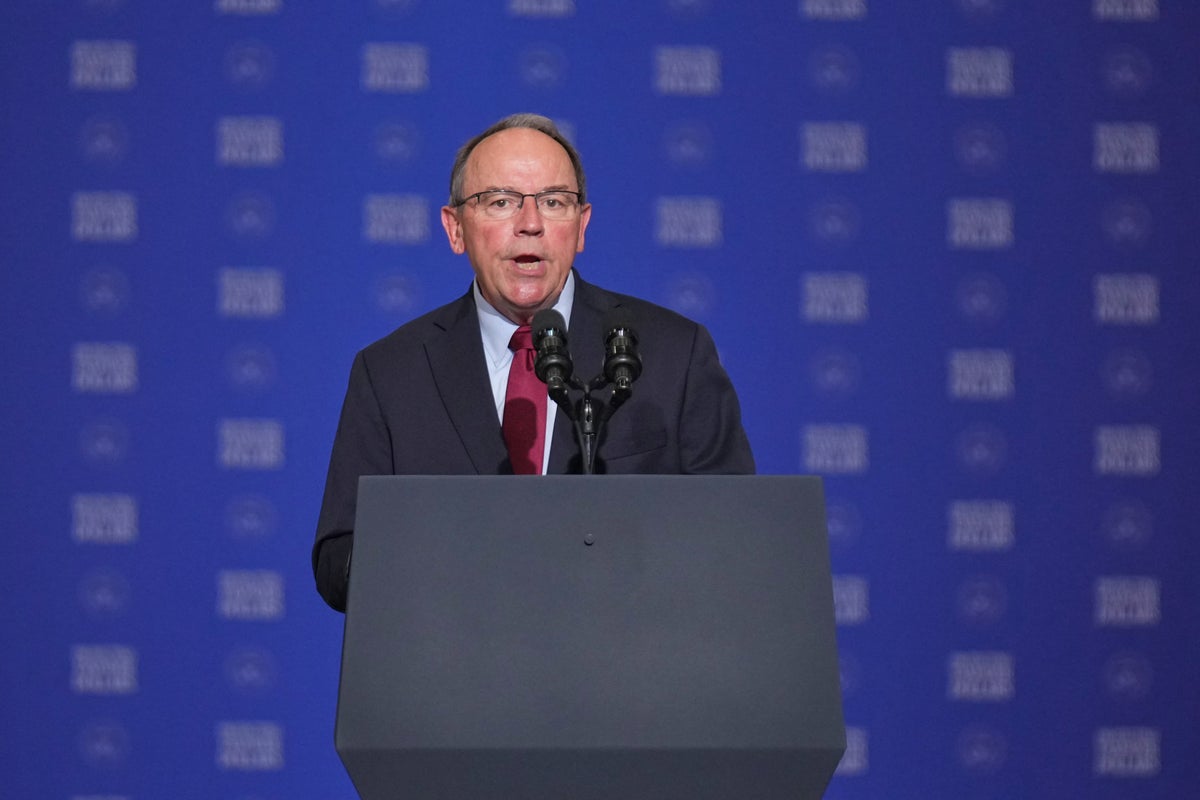
Michael Mabuyakhulu, ANC KZN Convenor.