Worshippers should not obstruct major roads - The Guardian Nigeria News
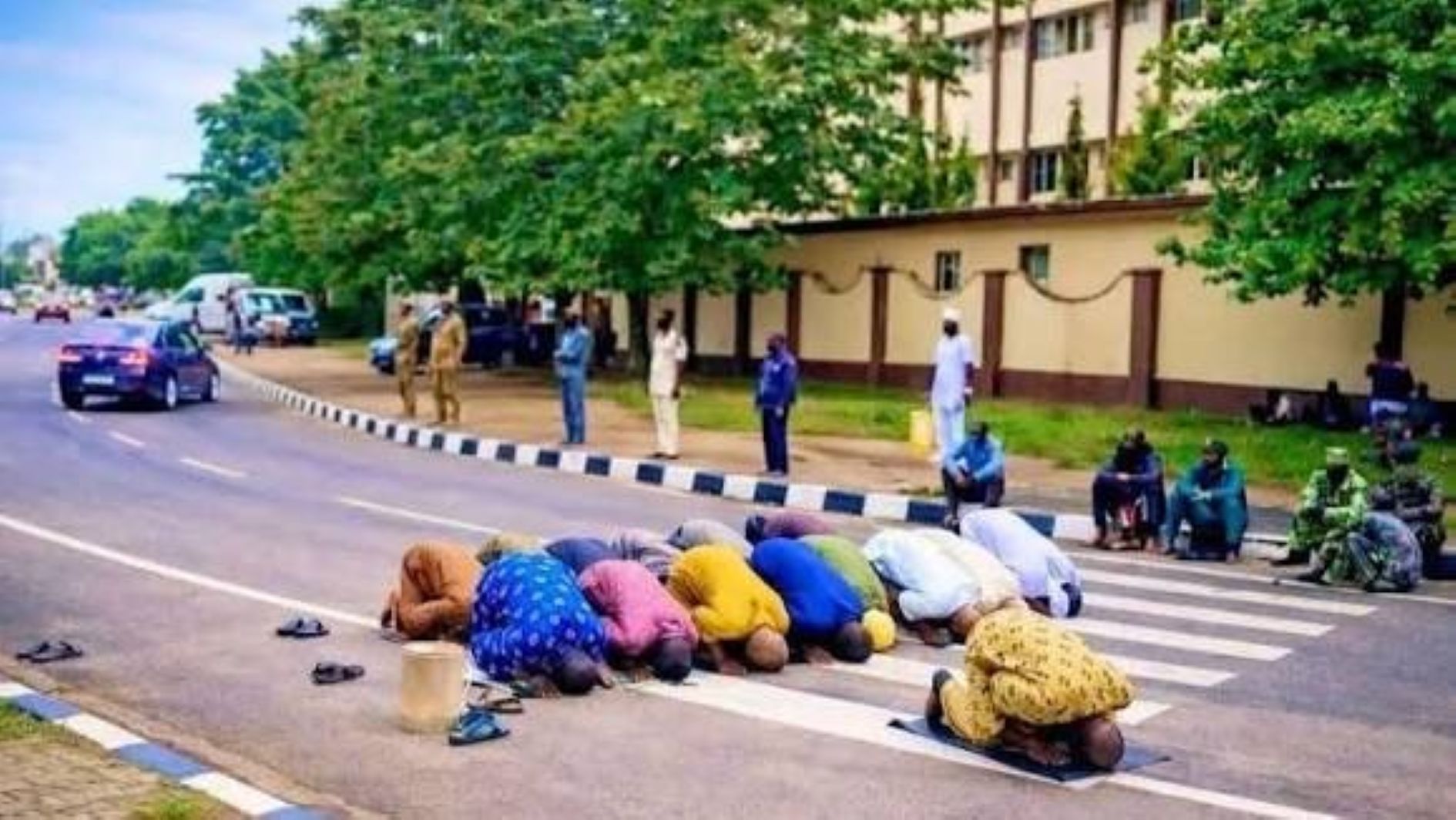
Sir: A public road is a shared public space. Muslims, Christians, traditionalists, atheists and agnostics all have the right to use it. No religious group should unnecessarily prevent others from using a major public road.
It has been observed that in some communities, worshippers obstruct roads and cause unnecessary hardship to road users. This sometimes happens around Muslim places of worship, and it also happens in some Christian communities. But whether it is done more by Muslims or Christians is not the issue. The practice is wrong, regardless of who does it.
In a multi-religious country like Nigeria, public roads are public infrastructure meant for everyone, regardless of religious affiliation.
I recently saw a video of a lady expressing her anger over Muslims obstructing a road. My message to her, and to others who may have experienced similar obstruction by Muslim worshippers, whether on Fridays or during Ramadan, is this: do not blame Islam for poor logistical planning by mosque leaders.
Islam does not instruct Muslims to unnecessarily obstruct public roads or cause avoidable hardship to others. Worship should not become a reason for denying other citizens access to public infrastructure.
People have important appointments, businesses to attend to, emergencies to respond to and livelihoods to pursue. They should not be kept in traffic because others are worshipping. Some of those affected may not even share our faith.
It is also wrong to conclude that Muslims are the only people who obstruct roads on Fridays. Some of us have, at one time or another, experienced long delays because a church was holding a programme. As I indicated earlier, we should not focus on which religion is more guilty. We should simply acknowledge that the practice is wrong and should be stopped.
Leaders of worship centres should plan adequately for large congregations. Where a church or mosque has insufficient space, arrangements should be made for additional space without unnecessarily blocking major public roads, particularly where road users have no reasonable alternative route.
Worship centres with limited space should consider expansion, while those planning new mosques or churches should think about future growth and provide adequate parking and worship space.
Mosques and churches are places of worship. Roads are public infrastructure. We should not turn major public roads into temporary worship centres and inflict avoidable hardship on other citizens.
I have seen some non-Muslims mistakenly assume that road obstruction during Muslim worship is a fundamental feature of Islam. It is not. In fact, I have seen the practice cited by some Christians in discussions about a recent proposed government bill concerning preaching in public vehicles, with arguments that government should also restrict Muslims from blocking roads during worship.
Such arguments should not be necessary. Road obstruction is not a teaching of Islam, and it should not be defended simply because the people involved are Muslims.
At the same time, this issue should be addressed with wisdom. Fighting worshippers or verbally abusing them will only make matters worse. Polite engagement with the leaders of affected religious centres, alongside appropriate intervention by relevant authorities, can achieve much more.
The same principle should apply to preaching in public vehicles. Public buses are shared spaces used by people of different religions and beliefs. Mosques and churches exist for worship and religious instruction. Those who wish to preach have appropriate places to do so without imposing their religious activities on unwilling members of the public.
The issue is not which religion is preaching. A Muslim preacher, Christian preacher or preacher of any other religion should not assume that a public bus is a religious gathering where everyone on board must listen.
Public transport should remain a shared space where passengers can travel without being subjected to organised religious activities they did not choose to attend.
Respect for religious freedom should also include respect for the freedom of others not to participate in religious activities. We should be able to worship freely in our appropriate spaces without imposing our worship on others in shared public spaces.
The principle is simple: Worship freely, but respect the rights of others.
No religion has a monopoly on public roads.
Abdul-Ganiyy Raji is the National Da’wah Officer of NASFAT Wordwide. He can be reached via: 08063482369.